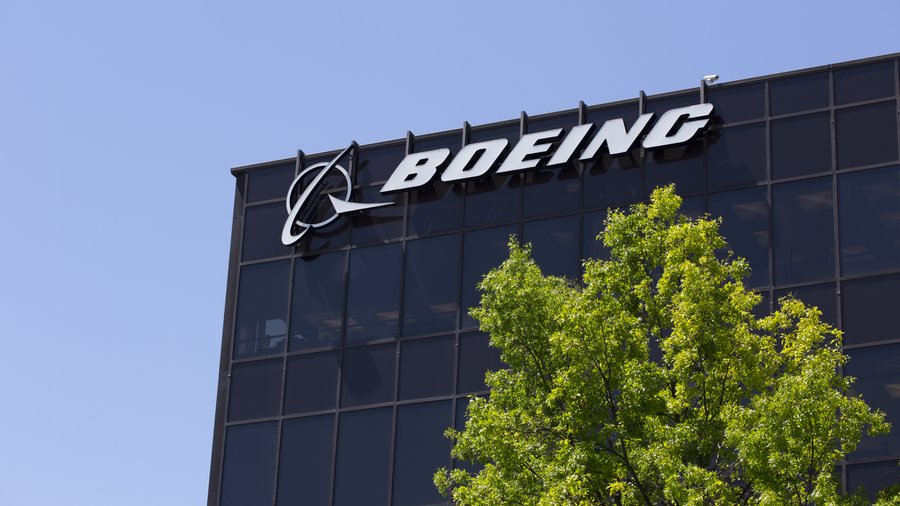
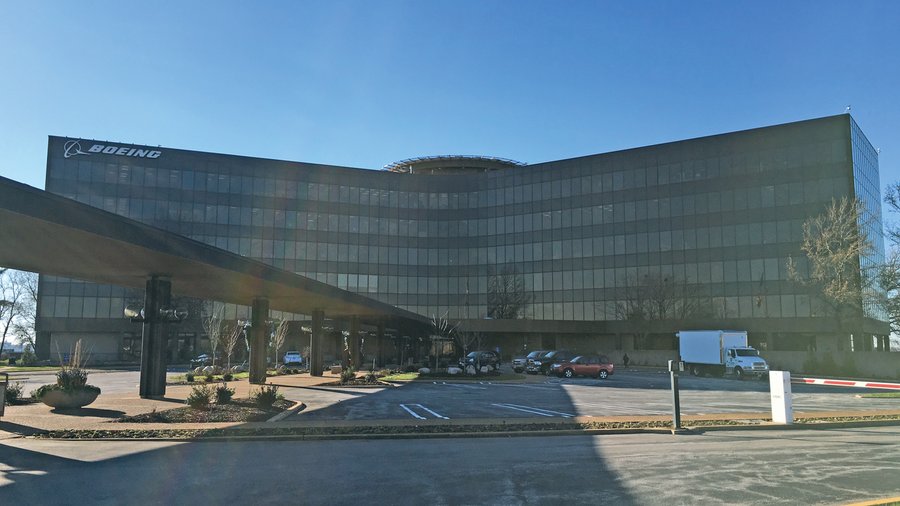
A Boeing facility in North County.
![]()
By James Drew – Reporter, St. Louis Business Journal
Dec 5, 2024
Updated Dec 5, 2024 4:00pm CST
The U.S. Air Force on Thursday announced that a decision on whether to build a sixth generation of fighter jet — a potentially critical issue for The Boeing Co.’s defense operations in the St. Louis area — will be made by the Trump administration.
“The Secretary of the Air Force will defer the Next Generation Air Dominance way ahead decision to the next administration, while the Department of the Air Force continues its analysis and executes the necessary actions to ensure decision space remains intact for the NGAD program,” an Air Force spokesperson said in a statement.
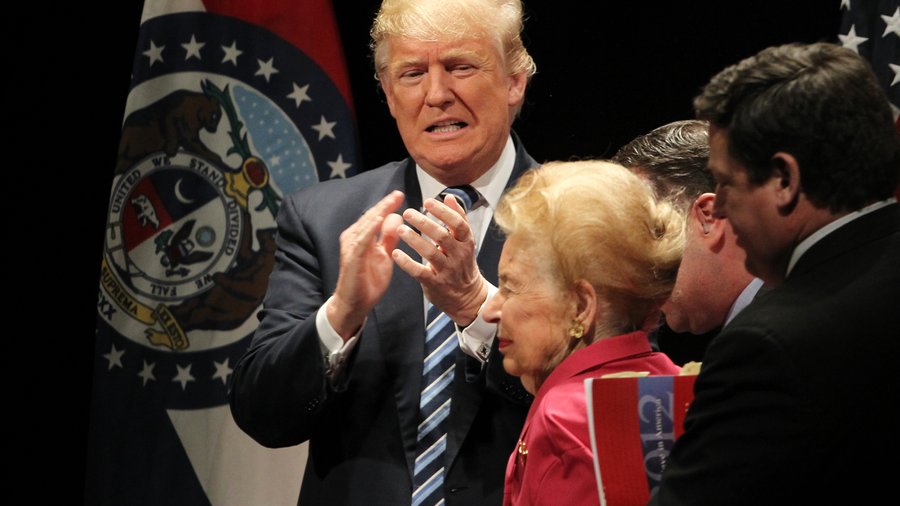
President-elect Donald Trump
BILL GREENBLATT
The spokesperson added that the Air Force also requested that bidding vendors “update their proposals” for the stealth jet, Breaking Defense reported.
The U.S. Air Force was expected to award a contract this year for its Next Generation Air Dominance (NGAD) platform, with reports that Boeing and Lockheed Martin were competing for the lucrative contracts. Industry officials had expected an announcement this month.
Federal budget constraints and rapid development of new drone technology had the Air Force in June questioning the fate of its next stealth fighter jet. Boeing confirmed last year that it was competing with Lockheed Martin and Northrop Grumman for the contracts to build the U.S. Navy’s next-generation fighter jet program, called the F/A-XX. It's unclear what the timetable is on that decision.
Boeing’s $1.8 billion expansion project at its north St. Louis County operations has moved forward this year, with construction of an aircraft assembly building.
In June, Steve Nordlund, vice president and general manager of the Air Dominance Division of Boeing Defense, Space & Security and leader of the St. Louis-area site, and a Boeing spokesperson declined to discuss what type of aircraft will be assembled in the building, citing "multiple classified opportunities."
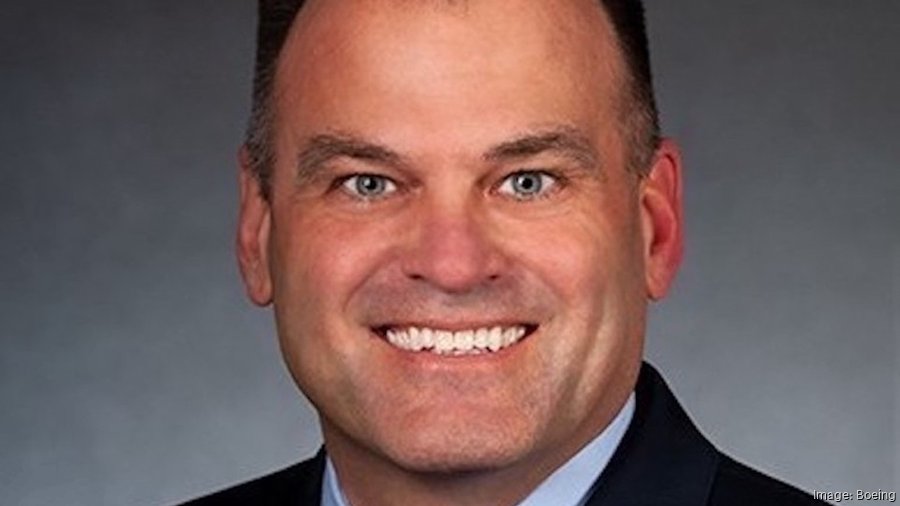
Steve Nordlund, vice president and general manager of the Air Dominance Division of Boeing Defense, Space & Security
Boeing
Nordlund also declined to comment in June when asked about NGAD during a media briefing. But he said the questions about the next-gen fighter jet are the "when and then the who."
A Boeing spokesperson declined comment Thursday on the Air Force's NGAD announcement. The spokesperson confirmed that Nordlund plans to retire next year and will be succeeded by Dan Gillian, the vice president of Mobility, Surveillance & Bombers.
The most likely scenario is NGAD begins to materialize after the current Air Force spending surge diminishes, which could be in the 2030s, said Richard Aboulafia, managing director of AeroDynamic Advisory, an aerospace and defense management consulting firm.
The reason: The price of the next generation of U.S. land-based intercontinental ballistic missile, initially known as the Ground Based Strategic Deterrent and now dubbed Sentinel, has nearly doubled in size from its original projections of $62.3 billion in 2015 to over $130 billion.
"It's huge and it's growing and it's sucking up everything. But then you have the other problems. Do you want a $300 million fighter? Do you want to make it bigger to cope with the Pacific or do you want to make it smaller to get it at a lower cost? And then most of all, if you are not happy with either Boeing or Lockheed Martin, do you incentivize Northrop Grumman to come back into the team?" Aboulafia said. He referred to Northrop Grumman last year dropping out of NGAD, but indicating recently it may reconsider if details of the project are revised.
The Air Force’s announcement comes as Boeing, based in Arlington, Virginia, has faced a series of crises this year.
In July, Boeing agreed to plead guilty and pay a $243.6 million fine to settle criminal charges that it failed to implement a proper safety and compliance program following the crashes of two 737 Max jets in 2018 and 2019 that killed 346 people in Indonesia and Ethiopia.
On Thursday, a federal judge in Texas threw out the plea agreement, ruling that the proposed settlement would improperly require race to be considered in the hiring of an independent monitor and his role would be minimized in ensuring that Boeing complied with the deal, Bloomberg reported.
In January, a Boeing 737 suffered a near-catastrophic Alaska Airlines midair incident in which a door plug fell off. A strike by machinists in the the Pacific Northwest and California intensified the storm clouds mounting over Boeing, which said it burned through $1.3 billion in cash in the quarter ended Sept. 30 as credit agencies warned that its rating could be cut to junk status. The machinists voted Nov. 4 to end their seven-week strike against the company, ratifying a four-year contract that will give them a 38% pay increase.
Boeing Defense, Space & Security has not been immune to the problems.
Boeing CEO Kelly Ortberg announced in October that the aerospace giant planned to cut the size of its workforce by 10% – about 17,000 jobs – and that the reductions would include executives, managers and employees.
Nearly 700 employees at The Boeing Co.’s St. Louis-area locations in Missouri are being laid off, according to a notice filed by the aerospace giant with the state. Of the total 692 job cuts, 111 were represented by the International Association of Machinists and Aerospace Workers District 837 and laid off last month. The remainder of salaried and non-union employees will lose their jobs on Jan. 17.
Kelly Ortberg, former CEO at Rockwell Collins Inc., was named Boeing president and CEO on July 31, 2024.
Boeing
Shortly after Ortberg replaced Dave Calhoun as CEO, Boeing announced that Ted Colbert, the head of BDS since 2022, had left the company. The unit suffered an operating loss of $913 million in the three months ending June 30, and an operating margin decline of 15.2% in the second quarter, compared with a 8.5% drop in the same period of 2023.
On Oct. 23, Boeing reported a net loss of $6 billion in the third quarter. Boeing Defense, Space & Security lost $2.4 billion in the quarter that ended Sept 30, posting overruns on fixed-price contracts that included the KC-46 tanker and the problem-plagued Starliner spacecraft.
Boeing is one of the largest employers in the St. Louis region, with nearly 16,000 employees working at three facilities, in St. Louis, St. Charles and Mascoutah, Illinois, according to St. Louis Business Journal research. It produces a number of military aircraft and weapons systems locally including the F/A-18 Super Hornet, EA-18G Growler, F-15 Eagle, eT-7A Red Hawk, MQ-25 Stingray, Joint Direct Attack Munition, Harpoon and Small Diameter Bomb. Additionally, the St. Louis Composite Center of Excellence manufactures composite parts for the Boeing 777X commercial aircraft.