dredger wrote: ↑Jul 23, 2020
^ Gone Corporate, you have to wonder how many more industrial parks based on warehousing can be supported by a slow growth, slow population growth region? Bring it up because of another industrial development near Mid America posted that you posted on as well. I think you noted on how that development might help with air cargo yet you got an empty old MD factory literally on top of a runway begging to be developed for air cargo yet nothing happens or simply not nearly enough demand. Plus the new industrial developments are all being built farther from the regions core so you will continue to see the historical industrial areas along the Mississippi River on both sides of the river remain stagnant and or become weed invested areas of the inner core.
On the other hand. In some respects you are looking at the new normal when it comes to retail goods. Big warehouses distributing goods from the factory to be delivered directly to home.
Dredger: I wonder that as well sometimes, how much warehouse space the region can handle, and with that the continuation of growth in logistics management. My thoughts look less at the STL region’s population growth rate, however, and more towards macro trends of logistics, i.e. we’re an Amazon world, especially in this new age of pandemics. When even Schnucks is reliant on a large portion of their business being delivered, you know things have changed. We both see that becoming a new normal, and I think it could be even bigger than that.
My thoughts on how STL is positioned in this world focuses more on our geography and infrastructure assets. Our geography is a huge competitive advantage, noting our continental centrality, favorable weather, and catchment area. As the Freightway points out at every opportunity, STL has 4 interstates, 6 Class A railroads, the second-busiest inland port in the US (“the Ag Coast”) with the opportunity for Container-on-Vessel, and 2 large airports with excess capacities. Meanwhile, the more large industrial buildings get built, the more likely we are to see many of them being occupied by manufacturers rather than just distributors. Assets like these are a hell of a lure to get more companies here. STL has an existing workforce with high talent in advanced manufacturing, whether that be aerospace, pharma, or other high-end products. Same time, you don’t need a degree or much else to work the floor of a warehouse, and we have enough people that would be happy with such stable employment. We also have lots of open space for industrial development especially on the near East Side: immediately outside a major US city but with roads open enough to ensure ease of travel outside of the city center. Yes, I’d love to see an extreme amount of industrial building going on for the North Broadway corridor, but for logistics management and high-capacity warehousing, buildings outside of the congested urban core are essential. It’s hard to sell trucking industries on developing hub distribution sites on land next to gridlocked traffic.
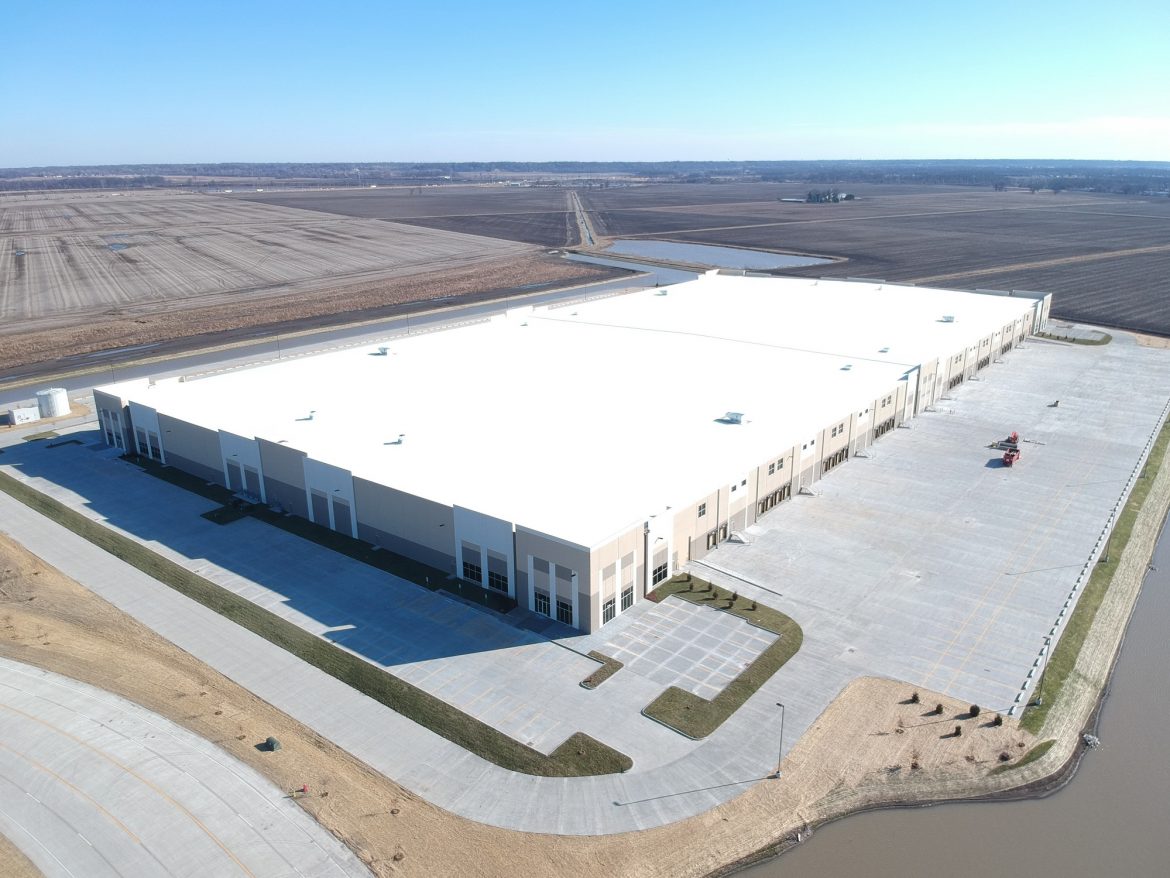
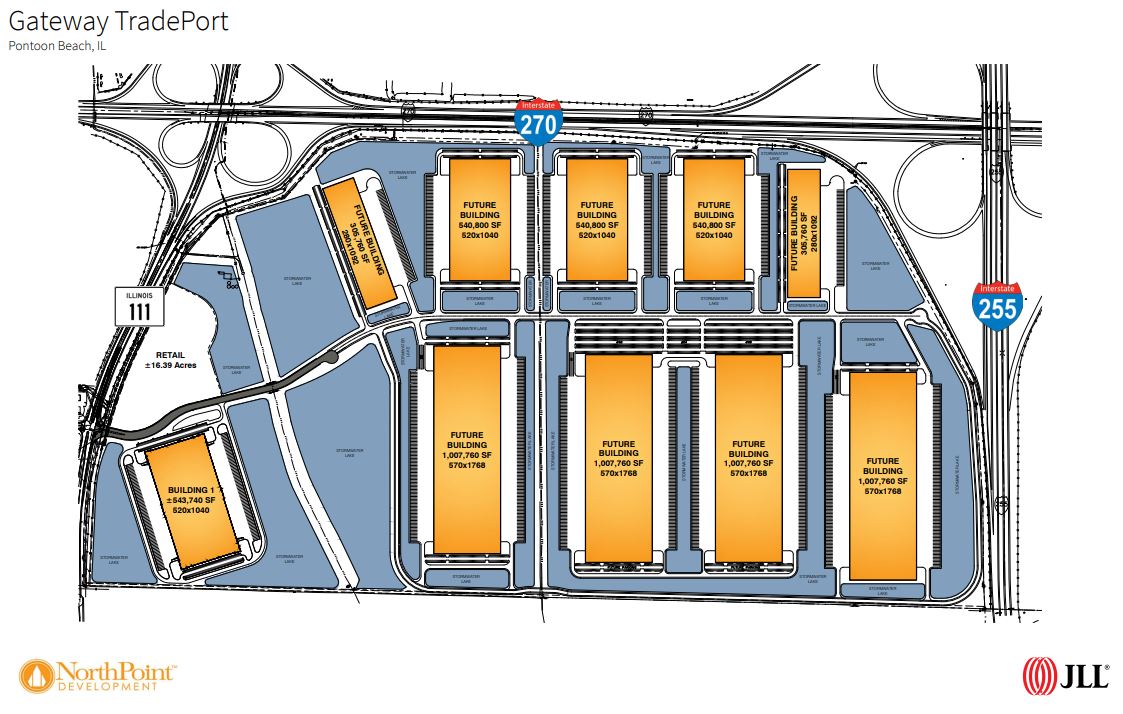
Right now, I see STL recognizing a solid opportunity with warehousing and logistics that could turn into the region becoming a larger component in the nation’s supply chain infrastructure. From what I’m seeing, lots of spec buildings are being occupied in developments along 255/270, including North Lindbergh, 370, Earth City, Fenton, and all over the near East Side, especially at 255/270, which is fast turning into a national logistics hub. You ever drive into Chicago up 55, how all those warehouses are at the edges of Chicagoland? STL can have that in our exurbs, too. Let’s keep in mind that two of the most significant hubs for logistics in the US are Memphis and Louisville, which are both definitely smaller than STL. Amazon chose to hub their Prime Air cargo airline at Cincinnati/Northern Kentucky because of capacities and geography (as well as a metric ton of incentives). There’s lots of competition nationally for logistics growth; based on our geography, our infrastructure assets, and our workforce, I think STL is primed to compete heads-up with most anyone out there. And, if CoV really becomes what it looks like it could be, we can expect a hell of a lot more industry growth.
If the private investors want to build more warehouses, I wish them Godspeed and good luck, because STL succeeds as they succeed with building up this major industry. What do I really want long-term?
1. I want the logistics companies to base their corporate HQs here, not just their outposts, although I’m glad to have those jobs all the same.
2. I want high demand for air cargo in the bellies of passenger jets, leading to more passenger jets, leading to a reinvigorated Lambert Airport, leading to new jobs throughout the region and for STL to grow again.