

Cool video by America's Central Port furthering Granite City for warehousing tenants. Good stuff.
Global Trade Magazine: 20 INLAND PORT CITIES THAT ARE MAKING A DIFFERENCE IN THE SUPPLY CHAIN
At the top of their list: Saint Louis
At the top of their list: Saint Louis
St. Louis, MO
From a supply chain perspective, St. Louis is fairly close to ideal. The region, which stretches along 15 miles of the Mississippi River, includes four ports, six Class I railroad carriers, four interstate highways and two international cargo airports. It also offers more grain handling capacity than anywhere else on the Mississippi, which is why the region is known as the “Ag Coast of America,” according to Inbound Logistics. St. Louis is also very attractive to manufacturers, brought by in low tax rates and close proximity to a highly skilled workforce, much of which has been trained in Supply Chain Management at local colleges.
STL Biz Journal had a good editorial recently from Dan Mehan at the Missouri Chamber and John Sebree with the Missouri Association of Realtors:
Commentary: Despite Covid-19, Missouri’s logistics market running high
TL/DR: Missouri has solid momentum in logistics and needs to invest more in transportation infrastructure. If we do, we'll reap a solid economic return.
Commentary: Despite Covid-19, Missouri’s logistics market running high
TL/DR: Missouri has solid momentum in logistics and needs to invest more in transportation infrastructure. If we do, we'll reap a solid economic return.
Logistics Management magazine: Ocean Carrier Trends: Steady as she goes
From the article...
From the article...
Ocean Trends: Container-on-vessel service to serve U.S. Midwest
Efforts to deliver a new container-on-vessel service to efficiently and affordably transport freight along the underutilized inland waterways took a major leap forward late last year.
The plan calls for patented new waterway vessels that will move large volumes of goods and commodities along both the Mississippi River and Missouri River and their tributaries, serving key consolidation ports in St. Louis, Mo., and Memphis, Tenn., and several other feeder ports.
This might effectively create an all-water, north-south trade lane connecting the Midwest to the lower Mississippi River and on to worldwide destinations. Service on the new route could be available to shippers within the next 30 months.
“Recent milestones signal progress for the ambitious plan, which has been in the works for four years,” says Mary Lamie, executive vice president of multi-modal enterprises at Bi-State Development and head of the St. Louis Regional Freightway, one of the entities working to bring the new service to Missouri and the St. Louis region.
Lamie adds that St. Louis has the geographic advantage of being in the center of the U.S. and strategically located on the Mississippi River within a 500-mile radius of 80% of all agriculture production in the U.S. “But it’s the infrastructure and intermodal capabilities we already have in place in Kansas City, Jefferson City and the St. Louis region that are key to providing a new containerized shipping option to reduce freight transportation costs and increase efficiency and reliability for shippers,” Lamie adds.
A key milestone in the effort was reached in August, when American Patriot Holdings and Plaquemines Port Harbor and Terminal District in Louisiana announced that it had signed a letter of intent to develop a multimodal, state-of-the-art container terminal at its facility near the mouth of the Mississippi River, which would accommodate the new vessels delivering the service. The signing of the letter marked the beginning of a significant due diligence process with key strategic partners.
“Our due diligence includes vetting all the components of the new system—the individual upriver ports, the gateway terminal in Plaquemines, and the vessels themselves,” says Sal Litrico, CEO of American Patriot Container Transport, which is developing the new vessels.
Litrico expects that they will complete the due diligence phase in the first quarter of 2021, at which time they and their strategic partners, including potential investors, and will have all the information in hand to make a final investment decision. If everyone signs on the dotted line, the project will then move full-steam ahead.

I can't wait to see what this might mean for St. Louis if they pull the trigger on it.

^ 18 months for the first ship to be constructed, with the following ships emerging on a 6 month cycle after the first one. I believe I can source that to a conference the Freightway had with them a couple years ago. APH is to have their due diligence report finished this Quarter. I've heard earlier that this new shipping lane could mean companies may be able to cut their shipping costs by up to 30-40%, which is ridiculously huge and makes the STL region incredibly attractive. Should everything be favorable, then they will likely commence with construction not long after. It wouldn't surprise me if they take on an investor for the construction and deployment, perhaps an international maritime company such as Maersk (speculation here, nothing more).
Now, if they get a green light from their due diligence report's release, I would think there would be a massive opportunity for developments related to this. On the construction angle, I'd expect to see even more activity going on at the Port of Jefferson County in Herculaneum (the northern "hub") as well as the ("spoke") ports of the City of Saint Louis and America's Central Port in Granite City. I'd think it likely to see some serious container cranes going up.
![]()
Maybe something like this? To be determined, I suppose... I'm curious how much the City's port can expand, not just the docks but room behind it for a container yard and loading/unloading trucks (and maybe trains). Could this lead to another port being developed that can hold a container yard? Long term, maybe...
Regional manufacturers can definitely look to what this could mean for cost savings in shipments. Especially for products that they currently send along trains to the West Coast for international shipment, this development may be a huge cost-saver (i.e. 30-40%). Decreasing shipping costs by that much would be a game changer for logistics operations in the central US and really could make STL one of the nation's largest shipping hubs, more than we already are.
Concurrently, should this progress forward, this could be a windfall for industrial real estate developers. If STL becomes a gateway port to international waters, then we could see a massive influx of warehousing and manufacturing. If I was a speculative real estate developer, I'd be looking at building industrial parks full of warehouses along the highways. First, I'd see what would be possible near Herculaneum, although I'm not sure how much proximate developable space there is right next to the port (maybe closer to I-55). Second, we can have increased warehousing near the two local ports: North Broadway's industrial district in the City, and new developments at ACP in IL as well as up & down IL Route 3. Third, and perhaps most significantly, I'd want to be building along all I-255, from the current warehouse hubs near Edwardsville all the way down to Dupo and Columbia IL. Proximity to innerbelt highway and the ports, plus relatively cheap and open land right next to a major City that all of a sudden finds its value on the rise.
It's not just products coming in; I see the possibility of multiple major companies having their products warehoused here, maybe even manufactured AND warehoused here, to be proximate to this shipping lane. We definitely have the market for containerized agriculture, but I'm interested in non-commodity finished goods being built here for export. Add-in that STL has 4 interstate highways and 6 national rail hubs, and the opportunity scale increases exponentially.
Yeah, I'm kind of excited for this one.
Now, if they get a green light from their due diligence report's release, I would think there would be a massive opportunity for developments related to this. On the construction angle, I'd expect to see even more activity going on at the Port of Jefferson County in Herculaneum (the northern "hub") as well as the ("spoke") ports of the City of Saint Louis and America's Central Port in Granite City. I'd think it likely to see some serious container cranes going up.
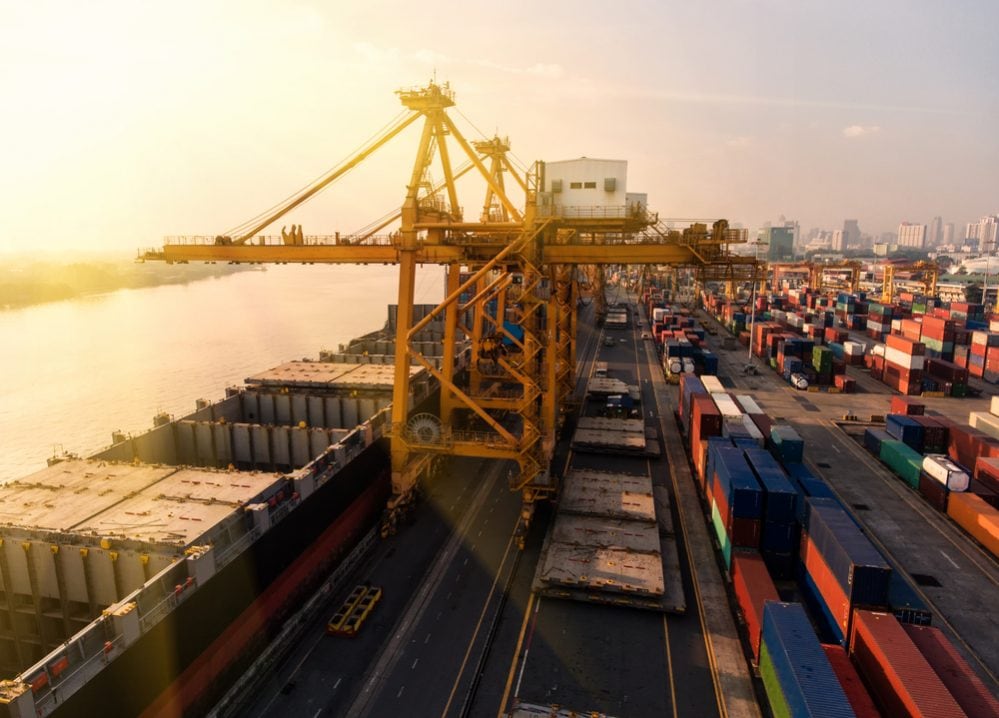
Maybe something like this? To be determined, I suppose... I'm curious how much the City's port can expand, not just the docks but room behind it for a container yard and loading/unloading trucks (and maybe trains). Could this lead to another port being developed that can hold a container yard? Long term, maybe...
Regional manufacturers can definitely look to what this could mean for cost savings in shipments. Especially for products that they currently send along trains to the West Coast for international shipment, this development may be a huge cost-saver (i.e. 30-40%). Decreasing shipping costs by that much would be a game changer for logistics operations in the central US and really could make STL one of the nation's largest shipping hubs, more than we already are.
Concurrently, should this progress forward, this could be a windfall for industrial real estate developers. If STL becomes a gateway port to international waters, then we could see a massive influx of warehousing and manufacturing. If I was a speculative real estate developer, I'd be looking at building industrial parks full of warehouses along the highways. First, I'd see what would be possible near Herculaneum, although I'm not sure how much proximate developable space there is right next to the port (maybe closer to I-55). Second, we can have increased warehousing near the two local ports: North Broadway's industrial district in the City, and new developments at ACP in IL as well as up & down IL Route 3. Third, and perhaps most significantly, I'd want to be building along all I-255, from the current warehouse hubs near Edwardsville all the way down to Dupo and Columbia IL. Proximity to innerbelt highway and the ports, plus relatively cheap and open land right next to a major City that all of a sudden finds its value on the rise.
It's not just products coming in; I see the possibility of multiple major companies having their products warehoused here, maybe even manufactured AND warehoused here, to be proximate to this shipping lane. We definitely have the market for containerized agriculture, but I'm interested in non-commodity finished goods being built here for export. Add-in that STL has 4 interstate highways and 6 national rail hubs, and the opportunity scale increases exponentially.
Yeah, I'm kind of excited for this one.
Kansas City is planning a new transload facility near their downtown with the option to build a container port. This will include direct highway access, warehouses, and rail yards. Site is about 420 acres and Port KC is well on the way when it comes to design and applications. They also received a federal grant and have already applied to form a railroad. I expect STL will need to do something similar.
![]()
![]()
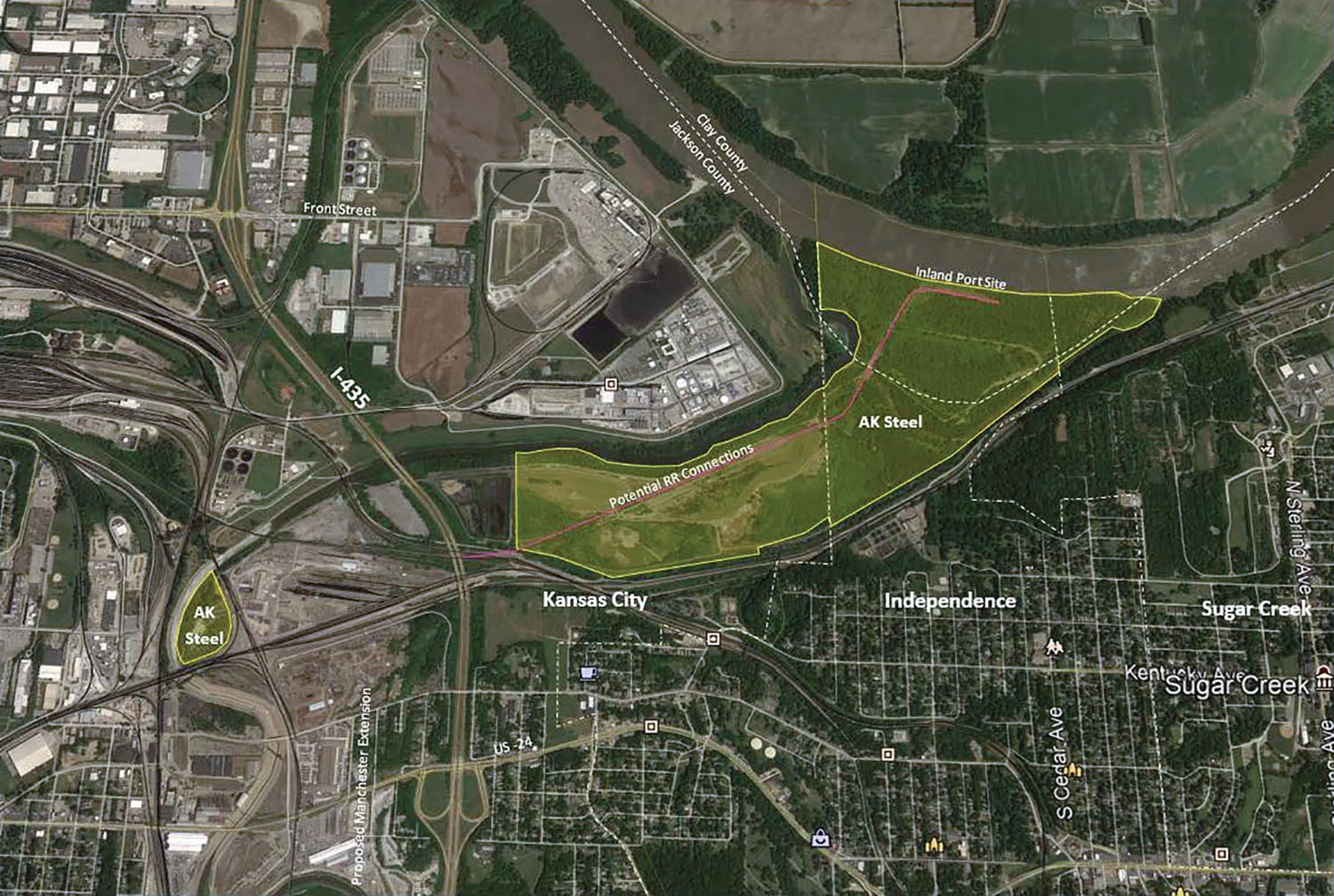
I wish the area around Herculaneum was better suited for warehousing and industrial development. You gotta move a lot of earth and do a lot of blasting to build down there. I say that with no knowledge, it just looks difficult.
With respect, the operation GC is describing is very much larger and more ambitious. St. Louis already has several ports with more acreage, capacity, and warehouse space, some with several times more. Midcoast alone is more than 1200 acres, its own railroad, direct highway access, and two million feet of warehouse space. And now they have both roll on-roll off and lock free harbors. The thing is basically its own city. Used to be an army depot. Best reuse of an old military facility I've seen. It's pretty stunning what it's become in the last twenty years.ldai_phs wrote: ↑Feb 11, 2021Kansas City is planning a new transload facility near their downtown with the option to build a container port. This will include direct highway access, warehouses, and rail yards. Site is about 420 acres and Port KC is well on the way when it comes to design and applications. They also received a federal grant and have already applied to form a railroad. I expect STL will need to do something similar.
But the port in Herculaneum would be something new. And it would help both your KC project and all of St. Louis's already extant ports. Honestly, the container option is probably predicated on the port in Herculaneum. (No reason to build a container terminal until you have a way to get containers to it.)
I hope the KC terminal is a stunning success. But it's not a sign of what needs to be done here. It's not in competition with Patriot Holdings. In fact, the two projects can only help each other. The folks behind the Herculaneum project have been doing their homework and beating the pavement on this one for quite a long time now. And yes, it's making me excited. It's good stuff.


First post here, so here we go.
Couple of concerns here
1. Transit time, right now I believe a barge takes 10-15 days transit from NOLA to STL. This about half to 2/3rds the transit time from Asia-West Coast. Maybe these new ships will make it far quicker but at what cost? Southbound transit is quicker so exports would benefit here.
2. Just like STL is better located than KC for this mode, sell me STL over Memphis? I realize we're the southern most lock/dam port on the Mississippi, but I would think that all of the benefits of STL over KC would still apply to Memphis here.
3. Perhaps exports are driving this mode more so than imports.
Couple of concerns here
1. Transit time, right now I believe a barge takes 10-15 days transit from NOLA to STL. This about half to 2/3rds the transit time from Asia-West Coast. Maybe these new ships will make it far quicker but at what cost? Southbound transit is quicker so exports would benefit here.
2. Just like STL is better located than KC for this mode, sell me STL over Memphis? I realize we're the southern most lock/dam port on the Mississippi, but I would think that all of the benefits of STL over KC would still apply to Memphis here.
3. Perhaps exports are driving this mode more so than imports.
Let me try to respond to each concern as best I can.pappysoulard wrote: ↑Feb 11, 2021First post here, so here we go.
Couple of concerns here
1. Transit time, right now I believe a barge takes 10-15 days transit from NOLA to STL. This about half to 2/3rds the transit time from Asia-West Coast. Maybe these new ships will make it far quicker but at what cost? Southbound transit is quicker so exports would benefit here.
2. Just like STL is better located than KC for this mode, sell me STL over Memphis? I realize we're the southern most lock/dam port on the Mississippi, but I would think that all of the benefits of STL over KC would still apply to Memphis here.
3. Perhaps exports are driving this mode more so than imports.
1. Barges move up-river at about 5mph. APH's liner is supposed to cruise upriver at 13mph. In terms of the cost of the new liners, I really can't say. I don't know the energy needs, the crew size, construction, etc. However, I believe the margins on moving containerized goods is higher than barges. Also, and correct me if i'm wrong, barge moving up river are frequently empty. The plan here is not to just move empty boxes upriver. The Asia-West Coast time is not really the concern driving the APH. Its the significant delay sitting in the harbor waiting to be unloaded. Its the significant delay that labor troubles on west coast ports frequently produce. Its the significant delay sitting in the yard waiting to be loaded on a train for Chicago. Its the significant delay waiting around in switchyards in Chicago to be finally put on a train for its final destination. APH's plan provides shippers an alternative.
2. APH says they intend to create an integrated system and not just have their ports competing with each other. If we are in competition with Memphis, St. Louis has more Class I railroads and more interstate connections. The port of St. Louis is the busiest and most efficient inland port in the country. St. Louis is also closer and better connected to large metros in the Midwest and northeast, and certainly better connected to the grain belt. Importantly, StL moves an incredible amount of grain which is what will likely be filling these containers, at least to start. However, Tennessee is a right to work state.
3. I think that is certainly the case rn. Primarily grain. Processors want the ability to acquire smaller amounts of grain than a barge load at a competitive price. Containerized shipping on the river may make that a reality.
I've also been curious about how slow barges are supposed to be more cost-effective than fast freight trains. A unit train can move, what, one or two hundred containers? How many will these new barges carry?
Not arguing here; genuinely curious how the two compare.
Not arguing here; genuinely curious how the two compare.
The APH ship can hold 2500 TEUs or 1250 containers. I think the savings come from reduced time and labor.framer wrote:I've also been curious about how slow barges are supposed to be more cost-effective than fast freight trains. A unit train can move, what, one or two hundred containers? How many will these new barges carry?
Not arguing here; genuinely curious how the two compare.
I would think that St. Louis, Memphis, and New Orleans all have quite a bit to gain from this if it works out.
At end of the day, the real deal of things are moving forward is when APH signs a shipyard contract and keel is layed. Waiting for that article to pop up in the waterway journals and publications.ldai_phs wrote: ↑Feb 11, 2021The APH ship can hold 2500 TEUs or 1250 containers. I think the savings come from reduced time and labor.framer wrote:I've also been curious about how slow barges are supposed to be more cost-effective than fast freight trains. A unit train can move, what, one or two hundred containers? How many will these new barges carry?
Not arguing here; genuinely curious how the two compare.
A single hopper barge of grain is equivalent to 15 jumbo hopper rail cars. The economies of scale on barges another levelframer wrote: ↑Feb 11, 2021I've also been curious about how slow barges are supposed to be more cost-effective than fast freight trains. A unit train can move, what, one or two hundred containers? How many will these new barges carry?
Not arguing here; genuinely curious how the two compare.
There is not a direct intermodal line from NOLA to STL. One would have to be created and if one did exist, I doubt that cost would be any cheaper than from the East Coast ports. Further, KC CHI and Memphis all have more established intermodal presence and box STL in.framer wrote: ↑Feb 11, 2021I've also been curious about how slow barges are supposed to be more cost-effective than fast freight trains. A unit train can move, what, one or two hundred containers? How many will these new barges carry?
Not arguing here; genuinely curious how the two compare.
Agreed. Based on the projected growth of logistics industry, there should be plenty of opportunity for everyoneKansasCitian wrote: ↑Feb 11, 2021I would think that St. Louis, Memphis, and New Orleans all have quite a bit to gain from this if it works out.
So, I was offline for a couple days after that big damn post I did earlier on this whole thing, and I see a bunch of good comments and questions. As best I can, here’s a couple quick thoughts…
1. Estimates for Container-on-Vessel (CoV) total cost savings are 30-40%+. This will definitely drive new demand as logistics are fundamentally cost-driven. For my understanding, this is the most significant lure to this business model. BellaVilla is right to note the importance of Economies of Scale.
2. The KC harbor plan ldai_phs wrote about looks great. We mustn’t look at this as direct competition, however, or that they’re going to take an opportunity from STL. Very much, I hope this KC project comes to fruition. This is especially if KC elects to include a container port, as this would only further the market viability for CoV. Plus, what they ship out of KC has to stop in STL before it gets sent to NOLA anyways.
3. Geography plays an incredible amount into this opportunity. STL is effectively the geographic center of the country. Our catchment area is very strong as we will attract manufacturers who could potentially ship via this route from Chicago, Indianapolis, etc. We also have well established shipping networks here, as demonstrated by STL being the second-largest inland port system in the country (Cincinnati is first, but their defined “port” is about 200 miles long while STL’s is about 70) – and gaining ground.
4. Further, our intermodal logistics assets are sound and getting stronger. I note our existing infrastructure beyond the rivers to include 6 major rail yards, 2 international airports, and 4 interstate highways, all situated at the geographic center of the country. We also have strong, and growing, warehousing networks that are increasing in volume. Should CoV come to be, this industry’s development should seriously accelerate physical infrastructure and the strength of our business community.
5. Regarding competing with Memphis… I seriously hope they can keep up with us. This whole thing must not be seen as a “winner take all” scenario. For this new venture to succeed, it will need multiple markets to thrive. The biggest winners will be STL, MEM, and NOLA as these are the hubs. There will be many spokes as well. The STL spokes will include those markets up the Missouri and Mississippi Rivers, including KC, Omaha, the Great Plains, and maybe all the way up to Minneapolis. These will all consolidate at STL. Should we include the Illinois River, we could extend this all the way up to (Peoria and) Chicago via Joliet (although Chicago may not be too fond to such competition to their freight routes and rail networks). Meanwhile, the MEM hub will include those river cities up the Ohio River, including Louisville, Cincinnati, and Pittsburgh, all of which will consolidate at the MEM yards. They have a lot more market to cover. Of these metro areas, STL is the largest hub; while we are smaller than Minneapolis and Chicago, they will hub here if they participate in this. We are larger than all the spoke metro areas on the MEM/Ohio River group. And, Memphis will likely focus on their two biggest logistics-centric businesses feeding their CoV line: Walmart (Bentonville, AR) and FedEx (through which Memphis is a true “aerotropolis” according to the academic understanding of the term). Meanwhile, STL has a much greater economic presence, not only in total goods shipped but in total major corporations that can utilize this system. Our business community is far, far beyond what MEM has, and we have more than a million more people than they do. Add-in the catchment area we have, and I have no fear of MEM eating our lunch.
6. Addendum: Competition for STL’s potential CoV business is NOT Memphis; it’s the trains that go from Long Beach to Chicago.
7. Dredger is spot-on right when he says we must all be patient until we hear APH has signed a shipyard contract and the keel is laid. Promises don’t matter until the check clears. I hope we hear of such news this Quarter.
8. There’s no need to build a new rail line from NOLA to STL. The Mississippi River is our direct intermodal line between our cities. Much of this entire initiative is based on capitalizing on our rivers as a transportation network, something that this new technology in shipping can fundamentally further. Good times.
1. Estimates for Container-on-Vessel (CoV) total cost savings are 30-40%+. This will definitely drive new demand as logistics are fundamentally cost-driven. For my understanding, this is the most significant lure to this business model. BellaVilla is right to note the importance of Economies of Scale.
2. The KC harbor plan ldai_phs wrote about looks great. We mustn’t look at this as direct competition, however, or that they’re going to take an opportunity from STL. Very much, I hope this KC project comes to fruition. This is especially if KC elects to include a container port, as this would only further the market viability for CoV. Plus, what they ship out of KC has to stop in STL before it gets sent to NOLA anyways.
3. Geography plays an incredible amount into this opportunity. STL is effectively the geographic center of the country. Our catchment area is very strong as we will attract manufacturers who could potentially ship via this route from Chicago, Indianapolis, etc. We also have well established shipping networks here, as demonstrated by STL being the second-largest inland port system in the country (Cincinnati is first, but their defined “port” is about 200 miles long while STL’s is about 70) – and gaining ground.
4. Further, our intermodal logistics assets are sound and getting stronger. I note our existing infrastructure beyond the rivers to include 6 major rail yards, 2 international airports, and 4 interstate highways, all situated at the geographic center of the country. We also have strong, and growing, warehousing networks that are increasing in volume. Should CoV come to be, this industry’s development should seriously accelerate physical infrastructure and the strength of our business community.
5. Regarding competing with Memphis… I seriously hope they can keep up with us. This whole thing must not be seen as a “winner take all” scenario. For this new venture to succeed, it will need multiple markets to thrive. The biggest winners will be STL, MEM, and NOLA as these are the hubs. There will be many spokes as well. The STL spokes will include those markets up the Missouri and Mississippi Rivers, including KC, Omaha, the Great Plains, and maybe all the way up to Minneapolis. These will all consolidate at STL. Should we include the Illinois River, we could extend this all the way up to (Peoria and) Chicago via Joliet (although Chicago may not be too fond to such competition to their freight routes and rail networks). Meanwhile, the MEM hub will include those river cities up the Ohio River, including Louisville, Cincinnati, and Pittsburgh, all of which will consolidate at the MEM yards. They have a lot more market to cover. Of these metro areas, STL is the largest hub; while we are smaller than Minneapolis and Chicago, they will hub here if they participate in this. We are larger than all the spoke metro areas on the MEM/Ohio River group. And, Memphis will likely focus on their two biggest logistics-centric businesses feeding their CoV line: Walmart (Bentonville, AR) and FedEx (through which Memphis is a true “aerotropolis” according to the academic understanding of the term). Meanwhile, STL has a much greater economic presence, not only in total goods shipped but in total major corporations that can utilize this system. Our business community is far, far beyond what MEM has, and we have more than a million more people than they do. Add-in the catchment area we have, and I have no fear of MEM eating our lunch.
6. Addendum: Competition for STL’s potential CoV business is NOT Memphis; it’s the trains that go from Long Beach to Chicago.
7. Dredger is spot-on right when he says we must all be patient until we hear APH has signed a shipyard contract and the keel is laid. Promises don’t matter until the check clears. I hope we hear of such news this Quarter.
8. There’s no need to build a new rail line from NOLA to STL. The Mississippi River is our direct intermodal line between our cities. Much of this entire initiative is based on capitalizing on our rivers as a transportation network, something that this new technology in shipping can fundamentally further. Good times.
I brought up the KC project more so to say that STL should look into doing a dedicated port facility. It is my understanding that they are building one near New Orleans too.
^100% agree. I've been wondering for some time where we can build a container yard along the riverfront, because I'm not sure if the Port of St. Louis has the capacity to handle such a potentially huge influx of containers. Maybe they're waiting for the thing to become more of a reality before any announcements are made? Guess we'll wait and see. Whoever can get this done could potentially make bank.