5,705
Life MemberLife Member
5,705

PostJul 21, 2020#121

I think the rebuild of Merchants rail bridge will play a big part for St. Louis as it essentially takes a slow one track bridge and brings it back to dual track at better speeds as it was originally intended.  Beyond that, I think the region has kinda of a mini version of Chicago CREATE program with a group of small rail projects that make incremental improvement but not under one umbrella as Chicago's plan to improve rail plan.   Some of the projects have gotten some funding and grants to more forward and others not.  

Believe Gone Corporate has posted a regional priority infrastructure list that has the rail projects on it.   Just don't have the time right now to locate and post the most recent

sc4mayor
sc4mayor

PostJul 21, 2020#122

^ 2020 List

4,553
Life MemberLife Member
4,553

PostJul 22, 2020#123

ldai_phs wrote:
Jul 20, 2020
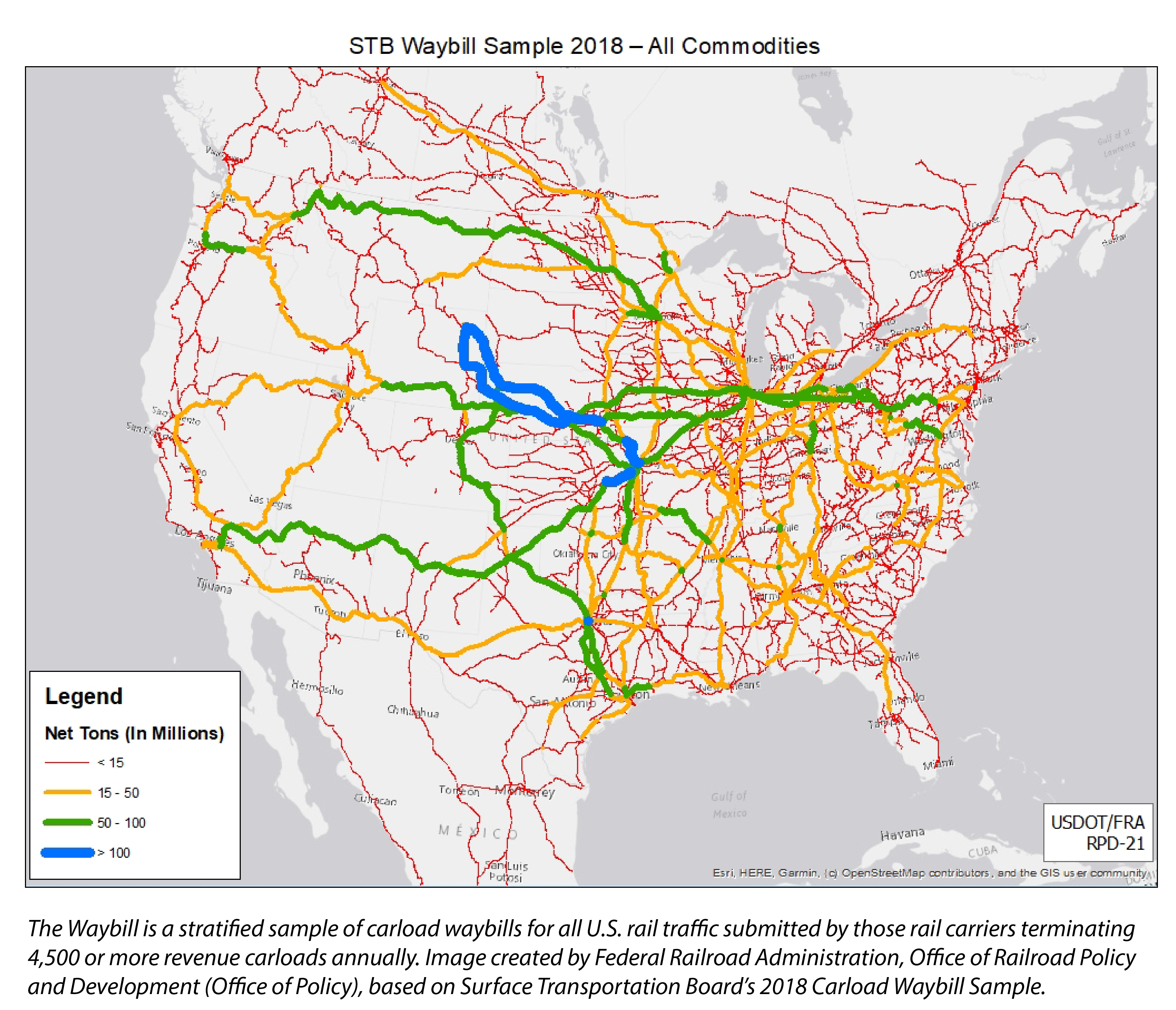
Map of US rail traffic coded by net millions of tons of cargo carried in 2018.

The cargo flowing from Wyoming through KC is likely decreasing in lockstep with the rapid declines in Wyoming coal production as electricity generation shifts to other inputs. 

5,705
Life MemberLife Member
5,705

PostJul 22, 2020#124

^ Yep, Especially if a few more transmission lines get developed & approved to carry more wind power east from the plains, as more power lines get developed to bring hydro power into Northeast from Quebec, as more offshore turbines get added and finally, as a few gas pipelines clear environmental hurdles to bring shale gas across the Appalachia.   A lot of things happening that fundamentally reducing the need for coal for decades to come, hopefully forever, especially coal out of Wyoming going south and east to power electric plans.  

6,123
Life MemberLife Member
6,123

PostJul 22, 2020#125

^While that's not impossible, I wouldn't bet on it, as they also see a lot of unit train petroleum and chemical traffic between the Gulf Coast and Canada. They're not really a one-trick pony. In the days before run-through power you might have had more need to hand off a train in a place like Chicago or St. Louis, where both the eastern and western roads have terminals. But these days you can probably make the handoff about anywhere you want, so long as the crews are familiar with both host roads and their territories and operating procedures.

KC is probably a better facility for both UP and BNSF. There's another part of it that probably comes down to the cost and ease of modernizing a terminal. UP's North Platte yard is almost certainly one of the largest railroad gateways in the country all by its lonesome thanks to the fact that it's central to their system and land is dirt cheap, so they can lay track as far as they want in as dizzying an array of configurations as you can imagine. That single yard might well be able to hand more cars in an hour than the entire St. Louis gateway combined. They have special tracks to service unit trains six thousand feet long without so much as disconnecting the power. And there's nothing that would prevent them from lengthening the track to handle ten mile trains. Dupo might be the only yard in St. Louis where you could even yard a six thousand foot unit train without splitting it.

Argenitine, by the way, should have no problem with a six thousand foot train. Nor should UP's Neff and Armourdale, nor KCS's Joint Agency Yard.

Rebuilding the Merchant's Bridge will help. We need it. But it's not going to magically bring the traffic back. It might help stop the hemorrhaging. But to really make the gateway work . . . we'd probably need modern yards. Large, efficient yards capable of handling more than merely local traffic. St. Louis's yards date to an era when a dozen railroads handled four thousand foot mixed freights in and out of town, handing freight to other railroads by the carload. That's not really the business model anymore. Now it's frequently six thousand foot unit trains handed off intact, moving from end to end unsorted. And that's not just coal. It's chemicals. It's petroleum. It's grain. It's aggregate. It's intermodal. It's the way it's done now. Load an entire train of raw material at a collection point near the source, move it untouched to the processing center a half a continent or a continent away.

Anyway, don't mind me. But KC is pretty set for now. I don't think losing Powder River coal is going to hurt them especially. They're still squarely astride BNSF's primary route LA to Chicago, and they will still be a great place for UP and BNSF to hand trains to KCS and NS. They're functionally convenient to the chemical coast and in the middle of grain train country.

If anyone gets the chance to hit the Barriger library out at UMSL (part of the Mercantile Library collection) you can look over TRRA's grand plan to fix this problem. At some point in the seventies they proposed closing three quarters of the yards in town and combining them into a mammoth east side super-yard with subsidiary bits for each tenant railroad and an enormous classification yard. Was this insane Y shaped thing with receiving, classification, and departure all separated out. It would have eliminated nearly all the east side junctions and their headaches. Would have reduced the volume of restricted speed trackage in the area. Would have increased sorting capacity considerably. And it would have cost a fortune . . . paid for on a per share basis by the tenants. It was probably a fantasy from the first moment, but the maps and studies are sure pretty. Lots of flow charts and graphs and geeze that study made some consultant a lot of money. Shame we never did it. Of course . . . it probably would have required the demolition of half the east side.

2,929
Life MemberLife Member
2,929

PostJul 23, 2020#126

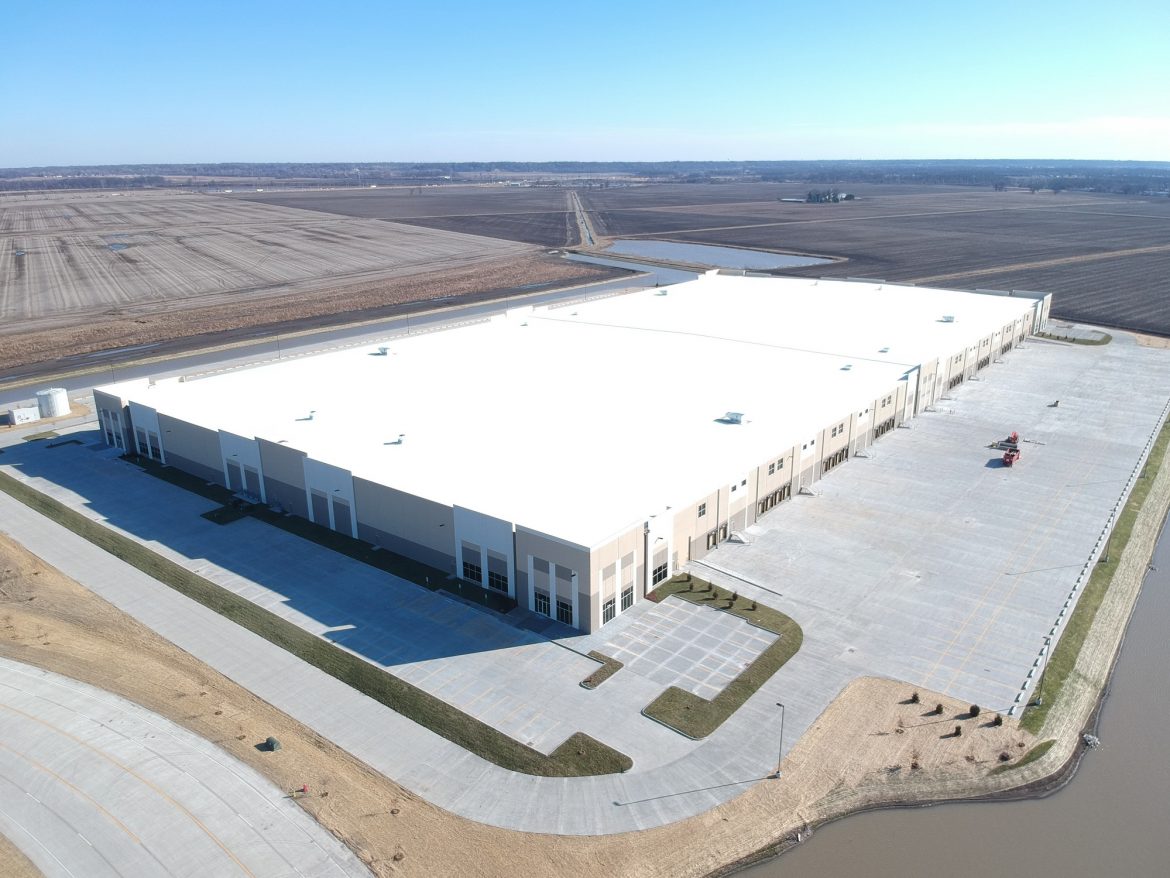
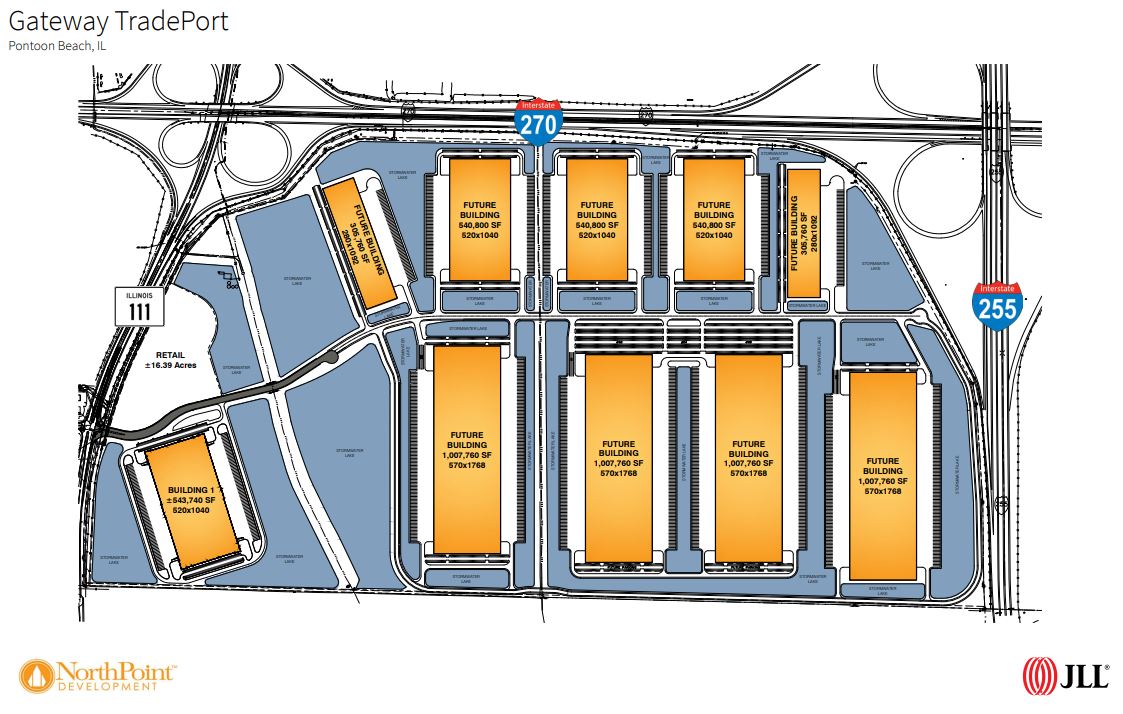
Construction Forum STL: Contegra Completes First Industrial Warehouse At Northpoint Development’s Gateway Tradeport

Gateway Tradeport is being built at the SW corner of I-255 and I-270. The NE & NW corners of this intersection are home to Gateway Commerce Center and Lakeview Commerce Center. Only the SE corner remains open. 


This is the first of eight warehouses, along with some retail, planned to be built at Gateway Tradeport. 


5,705
Life MemberLife Member
5,705

PostJul 23, 2020#127

^ Gone Corporate, you have to wonder how many more industrial parks based on warehousing can be supported by a slow growth, slow population growth region?   Bring it up because of another industrial development near Mid America posted that you posted on as well.   I think you noted on how that development might help with air cargo yet you got an empty old MD factory literally on top of a runway begging to be developed for air cargo yet nothing happens or simply not nearly enough demand.  Plus the new industrial developments are all being built farther from the regions core so you will continue to see the historical industrial areas along the Mississippi River on both sides of the river remain stagnant and or become weed invested areas of the inner core.  

On the other hand.  In some respects you are looking at the new normal when it comes to retail goods.  Big warehouses distributing goods from the factory to be delivered directly to home.  

3,968
Life MemberLife Member
3,968

PostJul 24, 2020#128

dredger wrote:
Jul 23, 2020
^ Gone Corporate, you have to wonder how many more industrial parks based on warehousing can be supported by a slow growth, slow population growth region?   Bring it up because of another industrial development near Mid America posted that you posted on as well.   I think you noted on how that development might help with air cargo yet you got an empty old MD factory literally on top of a runway begging to be developed for air cargo yet nothing happens or simply not nearly enough demand.  Plus the new industrial developments are all being built farther from the regions core so you will continue to see the historical industrial areas along the Mississippi River on both sides of the river remain stagnant and or become weed invested areas of the inner core.  

On the other hand.  In some respects you are looking at the new normal when it comes to retail goods.  Big warehouses distributing goods from the factory to be delivered directly to home.  
I’d guess, and someone can correct me if I am wrong, the regions slow growth doesn’t mean it wouldn’t make a great location for distribution hubs. It’s location can serve more than the metro area. Good rail connections, Mississippi River, airport options, and highway networks make it a good place to move freight all over.

sc4mayor
sc4mayor

PostJul 24, 2020#129

^ I’d agree with this. St. Louis has a logistical advantage for this kind of stuff.

And even with slow population growth, there are almost always workers around to fill jobs at these kinds of places.

1,292
Veteran MemberVeteran Member
1,292

PostJul 24, 2020#130

Going over the Freightway's 2021 Project List, it's good (and exciting) to see that a lot of the projects listed now have some level of funding, including several that didn't even in the 2020 Project List. Should be a good decade for logistics in the STL Metro with a few of the larger, most urgently-needed projects getting underway and/or finishing, not to mention a good portion of the smaller projects. 

2,929
Life MemberLife Member
2,929

PostJul 24, 2020#131

dredger wrote:
Jul 23, 2020
^ Gone Corporate, you have to wonder how many more industrial parks based on warehousing can be supported by a slow growth, slow population growth region?   Bring it up because of another industrial development near Mid America posted that you posted on as well.   I think you noted on how that development might help with air cargo yet you got an empty old MD factory literally on top of a runway begging to be developed for air cargo yet nothing happens or simply not nearly enough demand.  Plus the new industrial developments are all being built farther from the regions core so you will continue to see the historical industrial areas along the Mississippi River on both sides of the river remain stagnant and or become weed invested areas of the inner core.  

On the other hand.  In some respects you are looking at the new normal when it comes to retail goods.  Big warehouses distributing goods from the factory to be delivered directly to home.  
Dredger: I wonder that as well sometimes, how much warehouse space the region can handle, and with that the continuation of growth in logistics management. My thoughts look less at the STL region’s population growth rate, however, and more towards macro trends of logistics, i.e. we’re an Amazon world, especially in this new age of pandemics. When even Schnucks is reliant on a large portion of their business being delivered, you know things have changed. We both see that becoming a new normal, and I think it could be even bigger than that.
 
My thoughts on how STL is positioned in this world focuses more on our geography and infrastructure assets. Our geography is a huge competitive advantage, noting our continental centrality, favorable weather, and catchment area. As the Freightway points out at every opportunity, STL has 4 interstates, 6 Class A railroads, the second-busiest inland port in the US (“the Ag Coast”) with the opportunity for Container-on-Vessel, and 2 large airports with excess capacities. Meanwhile, the more large industrial buildings get built, the more likely we are to see many of them being occupied by manufacturers rather than just distributors. Assets like these are a hell of a lure to get more companies here. STL has an existing workforce with high talent in advanced manufacturing, whether that be aerospace, pharma, or other high-end products. Same time, you don’t need a degree or much else to work the floor of a warehouse, and we have enough people that would be happy with such stable employment. We also have lots of open space for industrial development especially on the near East Side: immediately outside a major US city but with roads open enough to ensure ease of travel outside of the city center. Yes, I’d love to see an extreme amount of industrial building going on for the North Broadway corridor, but for logistics management and high-capacity warehousing, buildings outside of the congested urban core are essential. It’s hard to sell trucking industries on developing hub distribution sites on land next to gridlocked traffic.
 
Right now, I see STL recognizing a solid opportunity with warehousing and logistics that could turn into the region becoming a larger component in the nation’s supply chain infrastructure. From what I’m seeing, lots of spec buildings are being occupied in developments along 255/270, including North Lindbergh, 370, Earth City, Fenton, and all over the near East Side, especially at 255/270, which is fast turning into a national logistics hub. You ever drive into Chicago up 55, how all those warehouses are at the edges of Chicagoland? STL can have that in our exurbs, too. Let’s keep in mind that two of the most significant hubs for logistics in the US are Memphis and Louisville, which are both definitely smaller than STL. Amazon chose to hub their Prime Air cargo airline at Cincinnati/Northern Kentucky because of capacities and geography (as well as a metric ton of incentives). There’s lots of competition nationally for logistics growth; based on our geography, our infrastructure assets, and our workforce, I think STL is primed to compete heads-up with most anyone out there. And, if CoV really becomes what it looks like it could be, we can expect a hell of a lot more industry growth.
 
If the private investors want to build more warehouses, I wish them Godspeed and good luck, because STL succeeds as they succeed with building up this major industry. What do I really want long-term? 
1. I want the logistics companies to base their corporate HQs here, not just their outposts, although I’m glad to have those jobs all the same.
2. I want high demand for air cargo in the bellies of passenger jets, leading to more passenger jets, leading to a reinvigorated Lambert Airport, leading to new jobs throughout the region and for STL to grow again. 

PostSep 11, 2020#132

Two big pieces of funding news for America's Central Port at Granite City have just been published. 

Illinois Business Journal: America’s Central Port wins $630,000 from Illinois Department of Commerce & Economic Opportunity for Opportunity Zone development
- $630K for road construction inside the port area
- This program matches public funding towards infrastructure as private investment comes into being 

Website of Congressman Mike Bost (12th District, IL): BOST, DAVIS & SHIMKUS ANNOUNCES $20 MILLION GRANT FOR AMERICA’S CENTRAL PORT DISTRICT
- $20.84MM BUILD grant for the port district
- Bipartisan efforts delivering on new funding: credit to Reps Mike Bost (IL-12), Rodney Davis (IL-13), and John Shinkus (IL-15)
- From the press release: 
At America’s Central Port, funding will be used for 2,050 linear feet of new railroad track, a new terminal access roadway, a new belt system, and barge loading system replacement. The St. Louis Port Authority project includes 7,300 linear feet of new railroad track, barge loading equipment modernization, conveyor replacement, loading shed updates, and flood mitigation work. Southwest Regional Port District in Dupo will use funding for loading shed and electrical system updates, hoist system and barge loading upgrades, and flood mitigation work.

5,705
Life MemberLife Member
5,705

PostSep 11, 2020#133

^ Gone Corporate,  maybe you understand better but is the BUILD grant a regional award because they discuss three ports in press release?

At America’s Central Port, funding will be used for 2,050 linear feet of new railroad track, a new terminal access roadway, a new belt system, and barge loading system replacement. The St. Louis Port Authority project includes 7,300 linear feet of new railroad track, barge loading equipment modernization, conveyor replacement, loading shed updates, and flood mitigation work. Southwest Regional Port District in Dupo will use funding for loading shed and electrical system updates, hoist system and barge loading upgrades, and flood mitigation work.

2,929
Life MemberLife Member
2,929

PostSep 11, 2020#134

^Could be, but I don't know for certain. I do see them crediting the ACP, STL PA, and SRPD-Dupo, so likely, but I don't know much more than what was put online. 

5,705
Life MemberLife Member
5,705

PostSep 11, 2020#135

Should have a better idea when DOT releases full list.   Believe they notify congressman with BUILD awards a day or two ahead of their formal list to give them some good news type of announcements.   Their is reference to another BUILD grant for Tennessee port authority/industrial for additional railhead in the google search.   

13K
Life MemberLife Member
13K

PostSep 14, 2020#136

BLUNT-BACKED PROJECTS IN ST. LOUIS AREA RECEIVE NEARLY $29 MILLION IN BUILD GRANT FUNDING
  • A $20.84 million grant is being awarded to America's Central Port District in the St. Louis area for port upgrades along the Mississippi River, including approximately 7,300 linear feet of new railroad track, barge loading equipment modernization, conveyor replacement, loading shed updates, and flood mitigation work at St. Louis Port Authority in Missouri. Blunt’s letter of support for the project is available HERE and further details on the project are available HERE.
https://www.blunt.senate.gov/news/press ... nt-funding

5,705
Life MemberLife Member
5,705

PostOct 14, 2020#137

Maybe not the best thread to pick but was wondering if anyone has details on proposed North City trash facility as per biz journals article?

I picked the thread because we tend to think of the region freightway and its strengths for incoming distribution of high value goods and outgoing ag commodities going down river (lock free and ice free).   However, at some point the nation as a whole has to deal with a more intensive means of processing/separating/recycling its trash above and beyond what is doing now.  The region's location and freight network ideally suited to deal with heavy but low value commodity of trash.  However, its a commodity that will only increase in value and will add jobs.

 https://www.bizjournals.com/stlouis/new ... plant.html

6,123
Life MemberLife Member
6,123

PostOct 16, 2020#138

^Reading the thing it doesn't sound like it's really any new jobs, just moving jobs from one company and site to another. New company. New process. But no net gain in jobs. (Though maybe a net loss in carbon emissions. Maybe.) And Las Angeles LLC wants to beat out Chicago Inc for the gig. Maybe I misread it, but I didn't get the impression this was intended to process trash from outside the region. Sounds like it's just a different way to process local garbage: Don't bury it, make it into chartrash briquettes and burn it at local factories. Sounds delicious.

The whole article feels rather passive-aggressive, really: It reads like an attempt to contact and sway the decision makers outside the formal decision making process; in violation of the rules of that process, in fact. And of course they were tangled up with Jeff Aboussie and now that he's toxic they've hired Rainford. Well, once the kids are done crying and screaming hopefully the grownups can sort it out and pick the best contract.

Also note: So now Biz J isn't just an advertising vehicle, it's also a lobbying company. Cool! Hope they were paid in accordance to the effectiveness of the venture.

443
Full MemberFull Member
443

PostOct 24, 2020#139

APH container project moving forward (or at least staying visible). This remains the project I’m most excited to see come to fruition.

https://www.google.com/amp/s/www.freigh ... ssippi/amp

6,123
Life MemberLife Member
6,123

PostOct 25, 2020#140

^That really is a neat project and I'll be excited to see it move forward. Thanks for letting us know it's still moving forward.

sc4mayor
sc4mayor

PostDec 09, 2020#141

Container-on-Vessel Service to the Midwest Moves Closer to Reality
https://m.riverbender.com/articles/details.cfm?id=46286

5,705
Life MemberLife Member
5,705

PostDec 09, 2020#142

^ thanks for posting.   

Understand the excitement but the big milestone behind all this is when a keel gets layed which will requires some serious capital to go all in on a vessel that has to be built in US under Jones Act (costs more) will have no other purpose at end of day or even capable to run coastwise..

1,032
Expert MemberExpert Member
1,032

PostDec 09, 2020#143

I’m excited but won’t believe it will happen until they have a functioning ship.

443
Full MemberFull Member
443

PostDec 09, 2020#144

Thanks for sharing! Unfortunately, the headline is misleading. The milestones they mention were all achieved back in August. This article is just re-packing old info.

2,929
Life MemberLife Member
2,929

PostJan 27, 2021#145

Going to throw in some recent significant logistics industry news here... 

From the STL Business Journal: 

January 20th: Amazon to open another facility in north St. Louis County
270,000 sq.ft. warehouse in Berkeley at the NorthPark development. Focus will be last-mile delivery. Hundreds of new jobs starting at $15/hour. No public incentives were sought for this project. 

January 27th: Trucking company Angie's Transportation plots expansion with new HQ
They're building a new facility in Kosciusco, on Third Street north of Russell, on 2.65 acres. They'll construct a trucking terminal, office space, and a warehouse, which should likely conclude in the Third Quarter. And, depending on demand, they may build another terminal. Besides trucking, they also have recently opened a freight brokerage division: Good Day Logistics. 

And this one could be significant: 
January 27th: Midwest industrial market trails demand. Here's how much space St. Louis needs to compete.
JLL (Jones Lang LaSalle) estimates that STL should starting building an additional 16.2MM square feet of industrial, warehousing, and logistics space, which will all be absorbed within the next five years
We fully expect to see the same momentum and even an increase in demand going into this year and likely well beyond.
You've got to love ecommerce momentum. STL has seen new industrial construction rise 79% since 2016. They estimate that the Midwest as a whole needs to add 275MM sq.ft. of industrial space. They note that STL is home to some of the biggest industrial builders, focused on the East Side, NoCo (airport), and in the Chuck along 370. 

Personal take: I think this warehousing boom is only going up. The region should really focus on a strategy to attract as much warehousing & logistics new construction as possible, as it would have carryover effects across industries while increasing employment and making the region's geographic centrality all the more significant. If I had the money, I'd build warehouses all along 255, from Edwardsville to Dupo. We're going to see more buildout along 370 and in Fenton, and especially around the airport (we need a damn plug-and-play aerial logistics hub strategy!!!), but the East Side just looks ideal for centralizing around the 255 loop. If done right, 255 could look like 55 on the outskirts of Chicago, with miles of warehousing and logistics management space along the interstate, and get more than our share of that estimated 275MM sq.ft. of Midwest-centric increased demand. 

Read more posts (340 remaining)