Here's the entire article if anyone wants to read it.
Consultant offered 3 options for reorganizing Lambert airport. The cost? $141M to $2B.
By Jacob Kirn – Economic Development Editor, St. Louis Business Journal
Feb 5, 2020, 5:22pm CST
A consultant for the city of St. Louis offered three options to fundamentally reorganize St. Louis Lambert International Airport, newly available documents show, part of the now-defunct effort to privatize the facility’s operations.
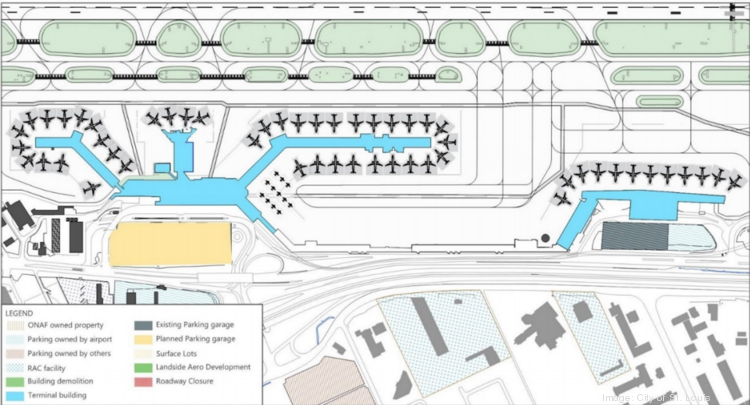
The documents give a glimpse into challenges the airport faces — and possible long-term solutions. A primary issue is that Southwest Airlines, Lambert’s largest carrier, will in coming years reach capacity in Terminal 2, while Terminal 1, home to American Airlines and others, has significant excess space, according to the city's consultant.
The 365-page report from Chicago-based aviation consultant Ricondo, crafted in December for potential Lambert bidders, lays out the options. The report could offer a blueprint for solutions at Lambert, which regional leaders agree must be improved. It’s still unclear how that could be done, as Lambert carries about $560 million in debt used to build a runway that’s underutilized, though business leaders have said they’re more engaged on tackling the issue.
Paul Payne, the city’s budget director and a member of its working group on Lambert privatization, said the Ricondo report represents "what potential options may be."
"This wasn’t 'what we’re going to do.' We never got to that point," Payne said. The city last month ended the exploration of privatization, which could have extinguished Lambert's debt and led to facility improvements.
Payne said had the city issued a request for proposals to potential Lambert operators, it would have also evaluated their ideas. Still, he said Ricondo was "very good."
"It’s a good report on all the financial, operational and planning needs of the airport, so I think it’s something that is worth sharing," Payne said.
An airport spokesman, Jeff Lea, said the airport is reviewing the Ricondo report as it works on a Federal Aviation Administration document called an Airport Layout Plan, part of the federal agency's approval process for airport development. The report has "new information that informs the airport about possibilities," Lea said.
The options presented in the report were:
- Moving Southwest Airlines and international operations to Terminal 1, and "some other carriers would relocate to Terminal 2." Cost: $141 million.
- Moving all carriers to Terminal 1. Terminal 2 would be "taken out of service and either decommissioned or repurposed." Cost: $1.1 billion.
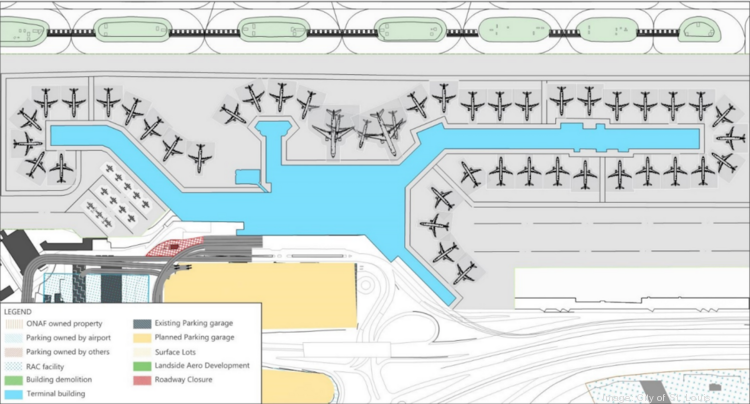
- Constructing a new, central terminal, totaling 1.1 million square feet, between Terminals 1 and 2. Cost: $2 billion.
Option 1: 'Preserve most of the existing structures'
The least expensive option would "preserve most of the existing structures and require minimal construction of new facilities," but also "meet future gate requirements with no major upfront capital investment," the report said.
Terminal 1's security checkpoints would be relocated to the same level as the check-in hall, allowing for greater airline operational flexibility between its three concourses. (Two concourses, called B and D, are not used for air service.)
The report also envisioned adding new retail nodes at the entrances of Concourses A and C, and a new customs facility within Concourse B, replacing the current facility in Terminal 2.
Positives include that "demand would be better balanced across the terminal campus, with capacity available to enable future growth by all carriers. Current pressure on curbside access at Terminal 2 would be relieved," the report said.
Among the downsides are that congestion could be seen at check-in and passenger screening. "The building envelope of Concourse B constrains space for future expansion and limits space for restrooms and offices," it said.
Option 2: Extend Terminal 1, decommission Terminal 2
This option would require reconfiguring and expanding Terminal 1 "to optimize passenger flow and capacity."
It calls for demolishing Concourse D, and decommissioning Concourse E in Terminal 2. Concourses A and C would be widened by 100 feet "to accommodate future up-gauge of aircraft," and Concourse C would be extended to the west. Concourse B would be refurbished with four contact gates. Two international gates would be built between Concourses B and C.
And existing security screening processes would all be moved to the upper level.
The plan also calls for rebuilding the Terminal 1 garage, and building a 4,350-space garage on the site of the existing parking lot A.
Option 3: A new terminal
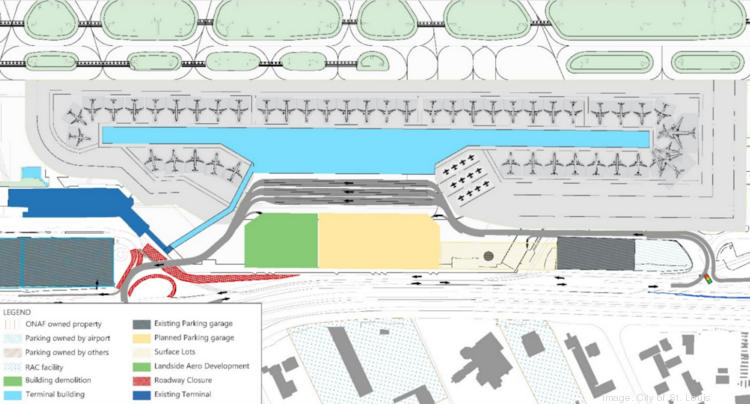
A new-build concept would provide "a modern structure for consolidated operations," the report said, adding that it would have 45 contact gates and two ground loading gates, with the ability to expand to 52 gates. It would encompass two levels, with departure and arrivals on the same level. A new pedestrian walking bridge could be built to connect the new facility with the MetroLink stop.
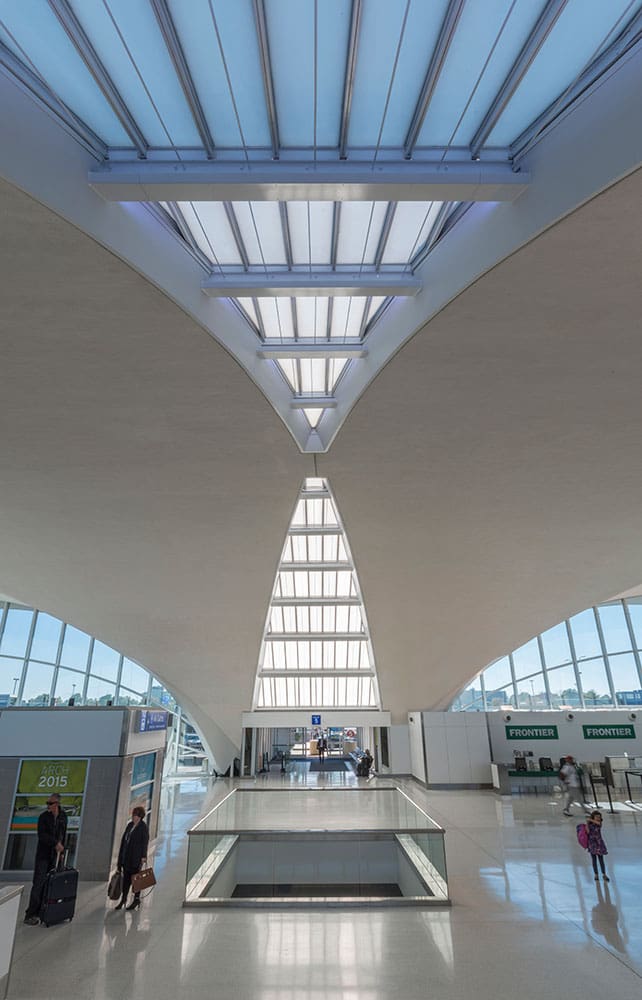
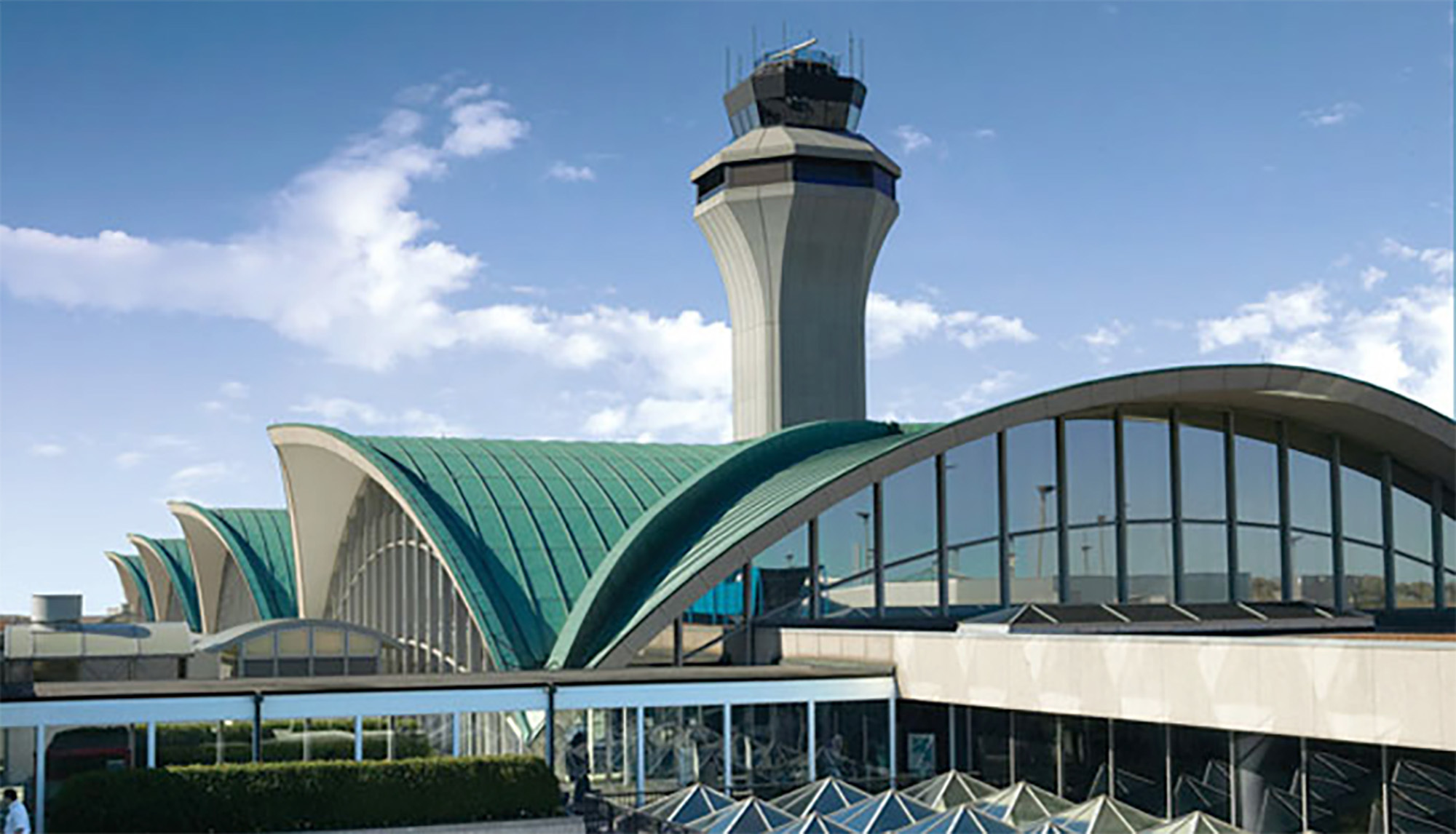
And the current Terminal 1, considered architecturally significant, "could be repurposed as new non-aeronautical development," such as a hotel, the report said.
A new six-level parking facility would be located across from the terminal, accommodating 4,830 spaces. And a new 1,800-space rental car facility would be located in the garage.
It could prove complicated, though. The document says three terminals could be in operation at once during construction, and existing movement on aircraft apron, or the area where planes are parked, would be disrupted.



 (Photo: Jay Calderon/The Desert Sun)

 Buy Photo
 Buy Photo