2,430
Life MemberLife Member
2,430

PostAug 21, 2007#226

^ Well I would rather have the people first, but then without park space we are back to reactive planning.


The key, as always, is to find the right balance between park space and competing land uses and to ensure that those park spaces created are of the highest quality. Clearly, park space in downtown is so lightly used currently, that some degree of programing improvements should help draw people into the existing spaces. As it stands now, those 90,000 downtown employees and 8,000 residents clearly don't use what exists.


That said, it is hard to envision downtown ever being so densely populated day or night that it will ever make use of all the land currently set aside as park space. Downtown, simply put, has way to much park space to use either today or in the future. Even the most cockeyed optimists would be hard pressed to imagine a downtown St. Louis in the next 20 years that demands all the parkland that currently exists.


So the question: Is it good proactive planning to spend money improving and creating downtown parkland when downtown is so swamped with parkland that it will likely never make use of what exists, let alone what is proposed (lid of I-70, OPO Square, BPV Plaza, riverfront park).


Consider the opportunity cost of improving the gateway mall:

The land under the mall could be use for development; the monies could be used for streetscaping, creation of the lid over I-70, new parking management technologies.


I'll argue the space is already there, we might as well make it a draw for people to come and the already resident population rather than wishing for more population before we can ever do anything.


The land, not the space, is already there. To think about proactive planning you have to move beyond what the land use currently is and see what, in the grand scheme, would be the best use of the land.


If your goal Gatechie is to draw people into downtown, which is makes more sense, improving land currently earmarked as parkland that will likely never be used as such or developing some of the parkland to add more people downtown to ensure that the initial outlays to improve the quality of downtown parks were not a waste?

76
New MemberNew Member
76

PostAug 21, 2007#227

Take a look at these statistics


http://www.tpl.org/content_documents/ac ... s_rept.xls


It doesn't seem St Louis is out of line for parkland.


As far as never having enough people downtown to support this space in 20 years, well never say never. I am an optimist, but even a realist can see what has happened in the past five years downtown, imagine what it can become in 20 years.


I don't necessarily think the gateway mall has to have traditional park amenities either. In a much larger scale, it is a wonderful formal move that with the right planning can give shape to a downtown that has been isolated by several interstates. Look at other "city beautiful" cities, look at back bay Boston, Ben Franklin Parkway in Philly, etc.


As far as "land" and "space" being there, you're just playing semantics with me. As an architect, we claim we make space, but I know that is only a misnomer.


Finally, you seem to have taken a either or stance on what can be improved and when rather than both and. It is thinking like that, that has paralyzed the mass transit scene in Atl. One camp thinks it has to be a Beltline, another, the Peachtree Corridor. In the meantime while everyone fights on whose project is supreme, nothing is accomplished and the greater public is unserved

2,430
Life MemberLife Member
2,430

PostAug 21, 2007#228

1. The numbers cited by you are for the City as a whole, not just downtown. My comments about the largess of parkland relate only to downtown. I happen to think the rest of the City is undeserved in terms of parks. Minneapolis, with more than 15% of its land area devoted to parks, it a good model to follow for the city as a whole.


2. As someone who has spent some time in Philly, I think comparing the Gateway Mall and the Ben Franklin Parkway is wrong. The Parkway is a connector between the downtown core and its large urban park/ the art museum/ and of course a way to access I-76 out to the burbs. The Parkway is lined with residential buildings, but they are setback significantly and don't really interact with the parkway (though do provide users for the park). The Parkway does provide great vistas, but it is a poor example of what a park in the center of downtown should be. For similar reasons, I also don't the Back Bay comparison is appropriate. The Gateway Mall cleaves a route through the heart of downtown, something neither of your examples do. A better example would be the parkland and development space created through the Big Dig in Boston.


3. Either or eh? Hardly. As I said before, it is all about balance. Finding the right mix today and in the future of downtown land uses to activate the sidewalks and the parklands. Currently I think that mix is out of balance and that some parkland should be converted to development to restore the balance for today and the future. But without making the remaining parkland top notch (something it currently is not) it does not matter how much you build and develop, the existing parkland will not get used. Improving the quality of parkland in downtown is very much a key part of any downtown revitalization. My point is that the City should better strike a balance in such expenditures, realizing that without either high quality park or enough people downtown will always look like a ghost town.

76
New MemberNew Member
76

PostAug 21, 2007#229

I can see your points on my two examples, however, I think they are quite relevant. As the mall stands right now it "cleaves downtown". You must understand that when backbay Boston was built, it must have seemed like overkill. Too much for the time , it seperated, and may not have flourished for some time. As for BFP, you made my point exactly. It is the lack of planning, one step short in other words of BFP that makes it(the mall) a failure. I was less referring to the setbacks and such but more as a connector that you mentioned. The arch is only one half of the puzzle, what terminates the mall at the other end, it merely fizzles out into nothing. The mall is an organizational piece that is yet to be embraced. I don't think buildings on the mall is the answer either. It could very easily be flipped from the seperator tothe unifier of downtown.

2,430
Life MemberLife Member
2,430

PostAug 21, 2007#230

You can point to the Commonwealth Avenue Mall and the BFP all you like as examples, but the dissimilarities limit their effectiveness in serving as models for the Gateway Mall. Consider that both the BFP and the CAM are just short of 1 mile long while the Gateway mall is more than a mile and a third. Consider that neither the BFP or the CAM cut through the heart of downtown Philly or Boston, while the Gateway Mall cuts through the heart of the downtown business district. BTW, from my understanding, given that the Back Bay area was created through fill in the mid to late 19th Century, the CAM (part of Olmsted's parks plan for the City) and surrounding neighborhood were development at the same time.


Are there things that can be learned from both? Sure. The CAM is sounded by a vibrant dense neighborhood and St. Louis has its equivalents, including Lafayette Square. The BFP links downtown Philly with the beautifully parkland that lines the Skuykill River along with major institutions including the PMA and City Hall and serves as an excellent parallel for the Chouteau's Greenway envisioned to tie downtown with Forest Park. CAM shows the importance of dense thriving neighborhoods surrounding such a long string of parkland while the BFP shows the importance of major anchors at either end along with impressive vistas.


That said, I think downtown can and should seek better comprehensive models for the types of park spaces to be created in the City's core, including the Big Dig Parkways and Rittenhouse Square. A big part of my problem with the Gateway Mall is that the parks in downtown is better spread throughout downtown, creating more spaces like the proposed BPV Park, the OPO Square, and the once discussed Garment Square Park next to the Eli Walker Lofts.


As for the Mall and its need for eastern and western anchors and the desire for impressive vistas, the long standing solution seems like a mall running from the arch grounds out to the Civil Courts building, with the remainder of the mall space redeveloped, with some pocket parks interspersed and some parkland created elsewhere throughout downtown on the existing surface parking lots to replace some (not all) of what was lost.

11K
Life MemberLife Member
11K

PostAug 22, 2007#231

JMedwick wrote:BTW, from my understanding, given that the Back Bay area was created through fill in the mid to late 19th Century, the CAM (part of Olmsted's parks plan for the City) and surrounding neighborhood were development at the same time.


Indeed. Boston's Back Bay was basically a planned community from the water up. It also took the better part of 30 years to be built. IMO - Commonwealth Ave is a terrible example. I think they are vastly dissimilar. There's an amazing amount of foot traffic along Commonwealth - and even more on parallel streets nearby. I'd also venture to guess that CA has as many people living along it as Washington Avenue in Stl (after all the conversions are completed).


The CAM is sounded by a vibrant dense neighborhood and St. Louis has its equivalents, including Lafayette Square.


Nice - Lafayette square (and parts of North St. Louis) is the closest thing to be found in St. L. Boston is simply more dense and had much more wealth when it was built. The typical Back Bay building is five stories and very few are stand-alone homes.


As for the Mall and its need for eastern and western anchors and the desire for impressive vistas, the long standing solution seems like a mall running from the arch grounds out to the Civil Courts building, with the remainder of the mall space redeveloped, with some pocket parks interspersed and some parkland created elsewhere throughout downtown on the existing surface parking lots to replace some (not all) of what was lost.


A western anchor is sorely needed. IMO - Market needs to be narrowed and cross streets need to either eliminate parking (the short sides of the mall blocks) and/or close a couple cross streets. One feels as though they spend more time walking on the road than on a sidewalk when walking the Gateway Mall. People must feel comfortable or the area simply won't be used, no mater what shiny object someone plants on the grass.

76
New MemberNew Member
76

PostAug 22, 2007#232

I digress. My examples my not be exemplar but I think that ya'll understand the direction I'm headed here. I like the discussion that arose and glad to see that both you Grover and JMedwick share the same passion as myself for building the best St Louis possible. :D

11K
Life MemberLife Member
11K

PostAug 22, 2007#233

Unfortunately any example to be used for the Gateway Mall falls flat because there's simply no density, no residents and thus no street activity. It's a big challenge and I haven't read about/seen any similar areas transform successfully.

508
Senior MemberSenior Member
508

PostAug 22, 2007#234

Grover wrote:
As for the Mall and its need for eastern and western anchors and the desire for impressive vistas, the long standing solution seems like a mall running from the arch grounds out to the Civil Courts building, with the remainder of the mall space redeveloped, with some pocket parks interspersed and some parkland created elsewhere throughout downtown on the existing surface parking lots to replace some (not all) of what was lost.


A western anchor is sorely needed. IMO - Market needs to be narrowed and cross streets need to either eliminate parking (the short sides of the mall blocks) and/or close a couple cross streets. One feels as though they spend more time walking on the road than on a sidewalk when walking the Gateway Mall. People must feel comfortable or the area simply won't be used, no mater what shiny object someone plants on the grass.


With the area cut off from the developing Locust BD by the tag team of the 22nd st. interchange and the AGE/Wachovia campus, it's tough to imagine this area getting any kind of western anchor anytime soon.


Here are the design team's ideas for the western "terminus" of the mall (p.39 of the presentation if you're following along at home):


Skateboard/BMX bike park...(possibly)

Beach volleyball...(okay)

play area...(okay)

Dog run...( :smt015 )

Trapeze school...( :shock: )

11K
Life MemberLife Member
11K

PostAug 22, 2007#235

jefferson wrote:Skateboard/BMX bike park...(possibly)

Beach volleyball...(okay)

play area...(okay)

Dog run...( :smt015 )

Trapeze school...( :shock: )


Wow - I hadn't read closely. I would only add:


Beach volleyball... :shock:

play area... :shock:

Dog run... :shock:

Trapeze school... :shock:


NOOOOO! This needs to be substantial - as in a building - not beach volleyball. Seriously who the F came up with that!?!?!?!? It just makes me :smt013

3,311
Life MemberLife Member
3,311

PostAug 22, 2007#236

Boston is simply more dense and had much more wealth when it was built.


NOPE. Look at older pictures of downtown St. Louis. It was EASILY as dense as Boston. Sadly, much of it was destroyed... Yes, much still exists, but look at everything south of Chestnut... leveled... sad.. and take note that this was pre 1945, so NO new towers were added to this dense urban fabric. In St. Louis, things were just leveled outright in the name of "urban renewal". In Boston, they didn't level nearly as much.


PostAug 22, 2007#237

I would EASILY take the skyline picture above over what we have today, as long as everything was completely rehabbed and in good shape. The entire "river front district" is intact and could have been an incredible tourist attraction, our own French Quarter.. Maybe we can rebuild this one day...... smoke.gif

1,026
Expert MemberExpert Member
1,026

PostAug 22, 2007#238

good god thats depressing.

2,386
Life MemberLife Member
2,386

PostAug 22, 2007#239

***** GATEWAY MALL :evil:

2,430
Life MemberLife Member
2,430

PostAug 22, 2007#240

1. I do understand the direction you are taking Gatechie and I think there are great things to be learned from both the CAM and the BFP. The discussion has been great.


2. While the stuff listed by Jefferson are examples for activities along the Mall west of 14th, the terminus proposed is that big mound/ elevated platform for "viewing" the mall. (Page 35 on the presentation Jefferson linked to shows it). How this mound will act as the anchor many want on the western end is not clear to me. Union Station and the Miles Fountain/ new ice rink should help, but then again Union Station has been there to anchor the western end for decades and it hasn't made much of a difference.


3. It is interesting you show that post card JCity. Looking at it, you will clearly see that even with the warehouses and development south of Market, the "core" of downtown was clearly north of Market. Not until most of the warehouses south of Market were demolished in the 60's did the business district begin its creep southward. But then again, this divide (north and south of market) might explain why the northern and southern parts of downtown seem to separated, built at different times largely never connected together as one space. This is where a successful re-envisioning of the Mall between Tucker and the Arch Ground can help. The density in the post card is great, but the Mall if done right can make it even better.


4. Once again, I will suggest people look to the Big Dig and its creation of a Mall/ development parcels in downtown Boston.


Land Use Plan Map


Master Plan Map


Areas shown in green are parklands while those shown in maroon or red are available for development. Looking at the plans you can see that over time, Boston has chosen to open less of the land for development than originally proposed, however park parcels are generally in the middle of the project while those nearer the ends have been opened to development.


One other thing, can one of the mods please go resize JCity's image?

11K
Life MemberLife Member
11K

PostAug 22, 2007#241

JCity wrote:
Boston is simply more dense and had much more wealth when it was built.


NOPE. Look at older pictures of downtown St. Louis. It was EASILY as dense as Boston. Sadly, much of it was destroyed... Yes, much still exists, but look at everything south of Chestnut... leveled... sad.. and take note that this was pre 1945, so NO new towers were added to this dense urban fabric. In St. Louis, things were just leveled outright in the name of "urban renewal". In Boston, they didn't level nearly as much.


The picture is impressive. But Boston IS more dense (meaning today) and the housing is and was more dense than what was built in St. Louis. The wealthy in St. Louis built further and further west in large free-standing mansions - many of which have now been levelled. From what I know of Boston, nearly as much has been levelled - the difference is that things were levelled to built something new, maintaining density.

3,311
Life MemberLife Member
3,311

PostAug 23, 2007#242

Grover, I agree with that above. I just wanted to point out that St. Louis was built very densely. Unfortunately, that has changed in our core, but luckily, it is getting built up again. I hope.


The density in the post card is great, but the Mall if done right can make it even better.


The mall will be better than what's in the postcard? Not really, but I guess what other option do we have.

359
Full MemberFull Member
359

PostAug 23, 2007#243

As "glorious" as that old postcard of old downtown St. Louis looked, the tallest building was the old SBC building. It's not like we lost a Chrysler Building or an Empire State Building. Hell, the Continental Life Building is arguably better than any of the buildings in old downtown St. Louis. I'd honestly rather have today's downtown STL over the one in that postcard. Density is nice but it's not like we lost a whole bunch of 50 story towers to make way for old Busch Stadium and some of the other mid 20th centurty civic projects. I'd argue that the destruction of those 40 square blocks where the Jefferson National Expansion Memorial Park now sits with the Gateway Arch has done more for St. Louis than the dense downtown grid did that was there before it. Let's not be too hard on ourselves now.

11K
Life MemberLife Member
11K

PostAug 23, 2007#244

stlmizzoutiger wrote:As "glorious" as that old postcard of old downtown St. Louis looked, the tallest building was the old SBC building. It's not like we lost a Chrysler Building or an Empire State Building. Hell, the Continental Life Building is arguably better than any of the buildings in old downtown St. Louis. I'd honestly rather have today's downtown STL over the one in that postcard. Density is nice but it's not like we lost a whole bunch of 50 story towers to make way for old Busch Stadium and some of the other mid 20th centurty civic projects. I'd argue that the destruction of those 40 square blocks where the Jefferson National Expansion Memorial Park now sits with the Gateway Arch has done more for St. Louis than the dense downtown grid did that was there before it. Let's not be too hard on ourselves now.


AHHHHHHHHHHHHHHHHHHHHHHHHHHHHHHHHH! Everything I know tells me that this is a bunch of sh!t. But . . . we do need to remember that options are not limitless when city population is declining by 10's of thousands year after year. What's in the postcard simply wasn't sustainable given the flight to the suburbs. There is no playbook for what to do when a city looses 600,000 residents (more than 60%) of it's population in less than 40 years. Empty buildings only last so long. In places like Boston many historic structures have been redeveloped several times, but were generally occupied by some use or another.

801
Super MemberSuper Member
801

PostAug 23, 2007#245

stlmizzoutiger wrote:As "glorious" as that old postcard of old downtown St. Louis looked, the tallest building was the old SBC building. It's not like we lost a Chrysler Building or an Empire State Building. Hell, the Continental Life Building is arguably better than any of the buildings in old downtown St. Louis. I'd honestly rather have today's downtown STL over the one in that postcard. Density is nice but it's not like we lost a whole bunch of 50 story towers to make way for old Busch Stadium and some of the other mid 20th centurty civic projects. I'd argue that the destruction of those 40 square blocks where the Jefferson National Expansion Memorial Park now sits with the Gateway Arch has done more for St. Louis than the dense downtown grid did that was there before it. Let's not be too hard on ourselves now.


I'll have to disagree with that!


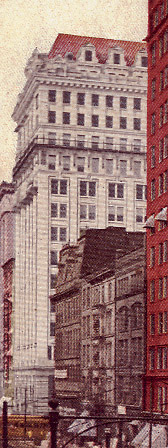
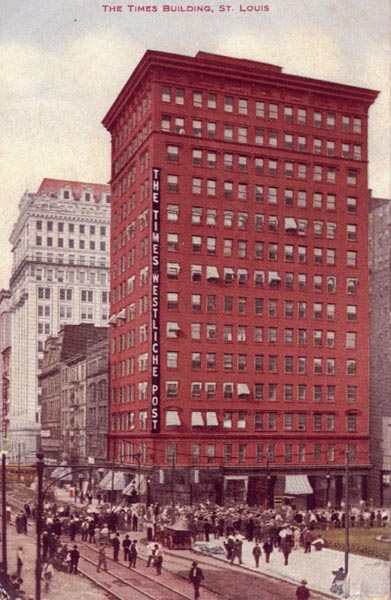
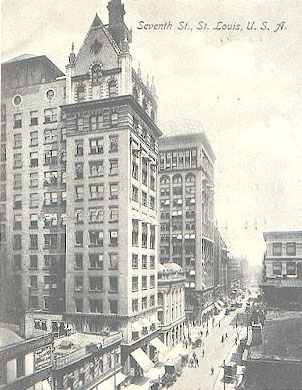
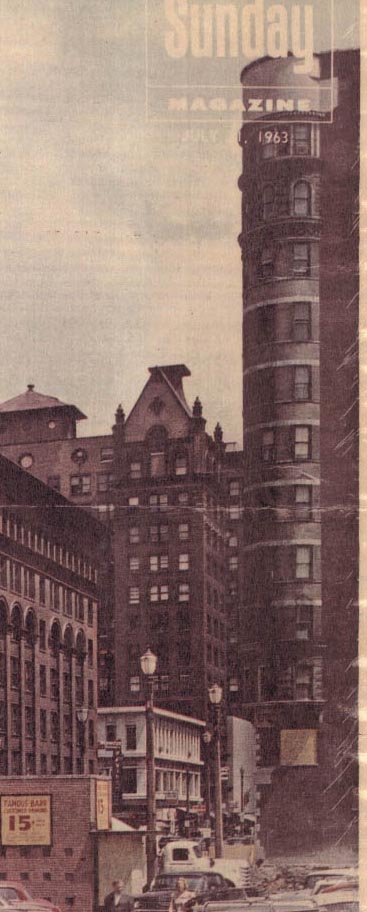
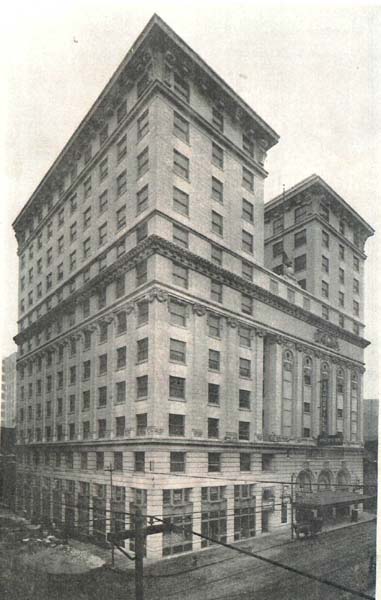
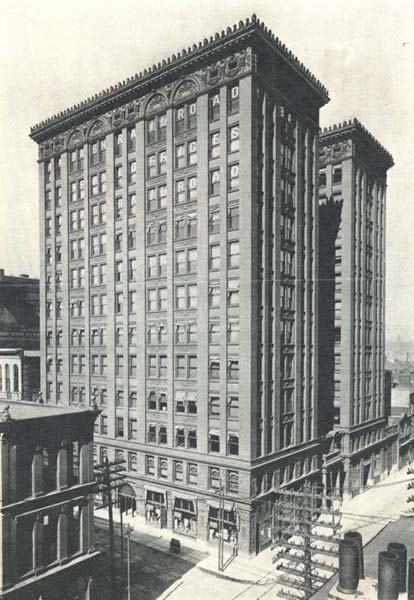
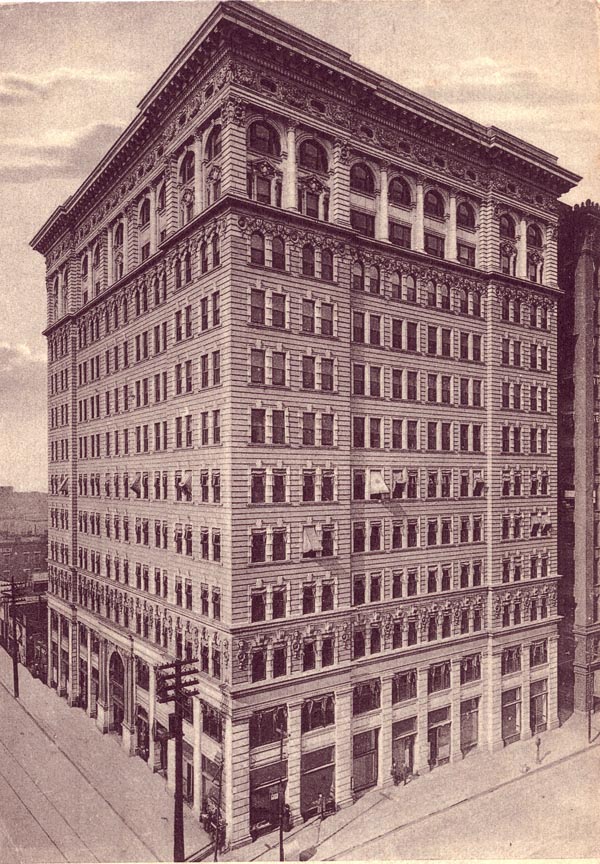
Mercantile Exchange


Times Building


Carleton Building


Holland Building


Fullerton Building (on the right)


American Hotel


Title Guarantee Building


Buder Building


1,400
Veteran MemberVeteran Member
1,400

PostAug 23, 2007#246

Yeah, there's more to buildings than height. I am glad we have the taller buildings we have. I'm glad we have the arch. But we definately destroyed way more than we had to.

5,631
Life MemberLife Member
5,631

PostAug 23, 2007#247

Buildings serve no purpose without people. And if there are no people to utilize them, it is likely there is no money to maintain them. Sure, those were nice pictures. But we live in the real world. If you wanted to save them, maybe the figurative 'you' shouldn't have left the damn city in the first place.


And if you want precious density back, some issues need to be addressed first:


- Job growth is unimpressive / Union stranglehold on St. Louis

- Homeless problem

- Poor schools

- Crime

8,912
Life MemberLife Member
8,912

PostAug 23, 2007#248

innov8ion wrote:Buildings serve no purpose without people. And if there are no people to utilize them, it is likely there is no money to maintain them. Sure, those were nice pictures. But we live in the real world. If you wanted to save them, maybe the figurative 'you' shouldn't have left the damn city in the first place.


And if you want precious density back, some issues need to be addressed first:


- Job growth is unimpressive / Union stranglehold on St. Louis

- Homeless problem

- Poor schools

- Crime


:roll:

2,190
Life MemberLife Member
2,190

PostAug 23, 2007#249

innov8ion wrote:Buildings serve no purpose without people. And if there are no people to utilize them, it is likely there is no money to maintain them. Sure, those were nice pictures. But we live in the real world. If you wanted to save them, maybe the figurative 'you' shouldn't have left the damn city in the first place.


And if you want precious density back, some issues need to be addressed first:


- Job growth is unimpressive / Union stranglehold on St. Louis

- Homeless problem

- Poor schools

- Crime


In the "real world" of the early '80s, the Buder, International and Title Guaranty were, in fact "utilized" by real people. Lots of 'em. Their unneeded destruction was caused by the Great White Fathers' egomaniacal need to have a "new generation" of buildings downtown (great architectural result, too, don't ya think). Couple this with perverse incentives for developers and the City's obsession with "home run" megaprojects, and you get a bunch of murdered classic architecture.


Things sure have changed, haven't they?

11K
Life MemberLife Member
11K

PostAug 23, 2007#250

BTW - I'm currently in Boston and picked up a "Lost Boston" book detailing what's been destroyed here. I can say that there has been more destoryed in Boston than has ever been built in St. Louis! I'm not saying that we should save what we have, but let's keep it in perspective.

Read more posts (299 remaining)