
Fixed it for 'em.We find it frustrating to have to continually remind our neighbors of St. Louis City's critical importance for the survival of the entire region.
- 3,768
- 472

This is fascinating. Developing both our international airports strengthens the core, and the city losing to Scott is not a total loss. It is a very odd argument though to say moving population back towards downtown from St. Charles County could be accomplished by a greater number of jobs equally far in the other direction. It's an odd argument. I'd prefer one based on the balancing of our public transit system perhaps, but arch city is surely right here. Keeping jobs in the city does a lot more for centering the region.arch city wrote:Taking 3,000 jobs from St. Louis City out to Scott Air Force Base is not going to help re-center the region. That assertion is Chicken Soup for the Soul. You're trying to pull the wool - no offense intended. But let's be real. It's helping to create more sprawl in Tornado Alley. The region is sprawled enough, which is why there's a donut effect. Having jobs in St. Louis City or even the immediate East St. Louis area - helps to re-center it. Not jobs at SAFB or in Clayton.shimmy wrote: The reality is that the Metro East, which is currently declining in population with the rest of Illinois, is going to need gains if the city ever hopes to be re-centered in the region.
A valuable perspective we too often lack. The Metro-East has its own thing going on, and saying they should get their own tech jobs and build up East St. Louis is really lame. Obviously they've got to build their own centers and districts, and the military thing at Scott is something they have to double down on. It's an obvious thing for them to shoot for.shimmy wrote:Yes, I'm originally from the Metro East.
I am not from Illinois, but I recognize that it developed by taking in what Missouri did not want: industrial waste, dirty factories, and the working poor. Poverty without assistance is not something easy to climb out of. Belleville has always been a German village onto itself since the 1830s and should not be blamed for the state of East St. Louis. St. Louis should be blamed for the state of East St. Louis and Chicago to a lesser extent. You cannot talk about regionalism only when it favors Missouri and then blame Illinois for Missouri never helping them. St. Louis City did not come up with CORTEX by itself. St. Louis County did not come up with the Danforth cluster by itself. Those regional plans came from the people in the St. Louis region with the resources to produce them. How can you blame a blue collar community for being too inept to develop fancy plans and firework bejeweled renderings the way a white collar community can? East St. Louis is 97% black, but they did not move there from Belleville. The racism in the St. Louis region that holds East St. Louis back is not in Belleville. Your all caps are out of place moderator man.arch city wrote: The Metro East area is staying largely blue collar because the leadership is obviously inept at coming up with solid job growth strategies - just like its Missouri brethren - although Missouri seems to be doing a little better. Where's the Metro East's CORTEX district? Why is East St. Louis still looking like a post-industrial hellhole? Where's an Advanced Manufacturing or Nanotechnology district for the Metro East? Any type of innovation district?! There are none.
Why? INEPT LEADERSHIP! PROVINCIALISM! And RACISM!

I get your argument. Having NGA next to Scott builds on the significance of Scott and strengthens to inter dependency between Scott and NGA. At least that's my takeaway.
I just don't agree. I don't think the 20 miles between the two weakens their relationship. Nor do I think putting them next to each other strengthens their relationship so much that it justifies taking 3000 jobs from the City. I don't think that putting NGA 20 miles closer to Scott "further feeds the intentional strategy of Scott’s development and viability". I think they already do that for each other.
I just don't agree. I don't think the 20 miles between the two weakens their relationship. Nor do I think putting them next to each other strengthens their relationship so much that it justifies taking 3000 jobs from the City. I don't think that putting NGA 20 miles closer to Scott "further feeds the intentional strategy of Scott’s development and viability". I think they already do that for each other.

Fair point of view. We'll just agree to disagree.pat wrote:I get your argument. Having NGA next to Scott builds on the significance of Scott and strengthens to inter dependency between Scott and NGA. At least that's my takeaway.
I just don't agree. I don't think the 20 miles between the two weakens their relationship. Nor do I think putting them next to each other strengthens their relationship so much that it justifies taking 3000 jobs from the City. I don't think that putting NGA 20 miles closer to Scott "further feeds the intentional strategy of Scott’s development and viability". I think they already do that for each other.
And Carex, I appreciated your post. Thank you for the thought you put into it.

Okay.....1.) I had to clarify/clean-up my initial response (previous page) posted after the SuperBowl game.  2.) Get ready for this long response.
With regards to the Metro East, and I’ve seen this with my own eyes, that the Scott Air Force Base/O’Fallon/Shiloh areas are already thriving. New home subdivisions, apartments, retail, hotels, businesses etc. etc. I have shopped in Fairview Heights and have eaten at Lowata Creek (Sidebar: I don’t understand why this place is not a national chain).
Anyway, your argument that the Metro East is “woe”, doesn’t resonate. Yes, there are challenges over there. I have family in E. St. Louis and Cahokia. I also have a nephew who lives in Missouri and is currently furloughed from Granite City Steel. But this dire picture you are portraying is not accurate. Point is, the Metro East is not dead despite its challenges.
Again, SAFB doesn’t need the NGA to keep it safe. And the NGA is currently working with SAFB NOW – although it is in St. Louis City. Keep in mind too that SAFB was going to be CLOSED, but the NGA would have been in St. Louis City still. SAFB has had hundreds of MILLIONS dollars in investments over the last ten years or so. SAFB doesn’t need the NGA campus.
It is a fear and a farce that is being perpetuated by some in the Metro East.
And all of the BS about the NGA needing to be closer to their customer is ridiculous bunk. What are they doing now?
FYI, the proposed north St. Louis site is only 36 minutes from SAFB - the same as it is now.
![]()
![]()
That’s what some of us are conveying. The Metro East could win, but do they even try? No. Furthermore, the new campus is not going to come with new jobs. As stated by Pat, there is no net benefit to the region except in construction jobs, which are temporary. One part of the region gets more investment. Another gets less.
The Metro East (with nearly 700,000 inhabitants) must assert itself HARDER in Springfield. It is THE MOST populated area in the State of Illinois outside of Chicago. The Metro East is literally a METRO within Illinois. Illinois senators have forsaken the ME in favor of Chicagoland. Durbin seems to toss the Metro East bones. Then have Metro East residents thinking he’s doing something by trying stealing the NGA from Missouri.
Get out of the industrial cesspool mindset. We are in a new economy. We likely are seeing the last vestiges of old world industry in the U.S. due to deindustrialization, NAFTA, globalization and competition from other emerging economies across the world. The Metro East -and St. Louis in general - need to catch up with new economy/knowledge-based fields.
On one hand, you suggest the SAFB needs the NGA because it makes sense to have all of the military cobbled in one place to save SAFB. But on the other, you discuss the NGA as an economic engine for the Metro East. So it seems what you are saying is that O’Fallon and the Metro East need more growth from the NGA jobs at stake essentially at the expense of tax revenue losses and job losses in St. Louis City.
It’s clear your “re-center” argument is disingenuous because snatching away 3,000 workers only will continue to bleed jobs from St. Louis City further creating employment, population and economic donuts in the center of the region.
You are not concerned about the “re-centering the region”. You are only concerned about the Metro East and Illinois. Keep it real, bro.
SAFB is in Illinois. The NGA is in Missouri – St. Louis City specifically. Why on earth would St. Louis City be okay with losing 3,000 jobs to any community? You are being silly. How about moving and rebuilding all of SAFB in Franklin or Warren counties in Missouri? See how ridiculous that sounds?
2.) Get ready for this long response. There have been plans in place for the lower northside for a while. Some projects – albeit a few – have been built already. Some of that delay was because of lawsuits, the recession etc. Second, I don’t think the main plan is to get NGA workers to build or buy houses in the area. As I understand it, the NGA West campus could help to stimulate the plan that was long already in place. It's only being modified to accommodate the NGA campus. Have you seen the renderings? Visited the website? The campus would only give the plan bigger momentum.shimmy wrote:How can people argue that the move will benefit North City but not the Metro East? If more goes into the move as you suggest, Arch City, then no one is going to move and revitalize North City - the area with the worst cities and some of the most violent neighborhoods in the region (according to perception) and no different of a commute than they already have.
With regards to the Metro East, and I’ve seen this with my own eyes, that the Scott Air Force Base/O’Fallon/Shiloh areas are already thriving. New home subdivisions, apartments, retail, hotels, businesses etc. etc. I have shopped in Fairview Heights and have eaten at Lowata Creek (Sidebar: I don’t understand why this place is not a national chain).
Anyway, your argument that the Metro East is “woe”, doesn’t resonate. Yes, there are challenges over there. I have family in E. St. Louis and Cahokia. I also have a nephew who lives in Missouri and is currently furloughed from Granite City Steel. But this dire picture you are portraying is not accurate. Point is, the Metro East is not dead despite its challenges.
Again, SAFB doesn’t need the NGA to keep it safe. And the NGA is currently working with SAFB NOW – although it is in St. Louis City. Keep in mind too that SAFB was going to be CLOSED, but the NGA would have been in St. Louis City still. SAFB has had hundreds of MILLIONS dollars in investments over the last ten years or so. SAFB doesn’t need the NGA campus.
It is a fear and a farce that is being perpetuated by some in the Metro East.
I totally disagree. It doesn’t make sense especially in the age of long-range inter-continental ballistic missiles. I don’t think it is wise to have that many national defense assets cobbled together in one place. To me, it's stupid...quite frankly.shimmy wrote:It is on this issue, and really this issue only, that the Metro East actually has an advantage. Either proximity to customers matters or it doesn't. If it does matter, then SAB is a no-brainer for the move and there's a great advantage to have NGA, DISA, TRANSCOM, SDDC all located at a Scott. If it doesn't, then it doesn't matter whether TRANSCOM is located at Scott or Andrews or Langley. If NGA is entrenched in the region, and I'll agree on that point in terms of the workforce being here as opposed to some sense of federal loyalty, then it makes sense for the region to team it with the commands at Scott and make the argument that it's vital that these organizations are co-located.
And all of the BS about the NGA needing to be closer to their customer is ridiculous bunk. What are they doing now?
FYI, the proposed north St. Louis site is only 36 minutes from SAFB - the same as it is now.


No offense – really. But you need to trust your intuition and stop trying to feed us the soup you are sipping. No offense intended. Seriously…how about going after ADM? Oops. They already moved to Chicago. The Metro East didn’t even squeak a bit when ADM announced its relocation intentions. How about attracting companies that want to leave Chicago, Peoria, Indianapolis, Atlanta, New York or Los Angeles or Europe? Trying to attract companies and HQs from the Missouri-side is a zero sum game.shimmy wrote:I acknowledge that it's counter-intuitive to suggest that the city may ultimately gain through this loss. But it's also true in the big picture. If I thought the Metro East had a chance in attracting Centene, Energizer, Rawlings, or Scottrade then I would absolutely be making the argument for that move. But the reality is that it doesn't.
That’s what some of us are conveying. The Metro East could win, but do they even try? No. Furthermore, the new campus is not going to come with new jobs. As stated by Pat, there is no net benefit to the region except in construction jobs, which are temporary. One part of the region gets more investment. Another gets less.
Again…..why does it have to be about poaching jobs from Missouri or CORTEX? Come on, dude. Are you suggesting Metro East can’t walk on its own? St. Louis (Metro West) would praise a new science or technology park in the Metro East. I personally belief Illinois, despite its problems, is more inclined to invest in those types of ventures/efforts.shimmy wrote:I'd also suspect that if Edwardsville was to build a life science park and starting lure Cortex jobs then people here would be complaining about Edwardsville stealing jobs from the city.
The reality is that the Metro East has a lot of inherent disadvantages when trying to compete. 1. As covered, it's in Illinois. 2. It's a downstate Illinois community. 3. Historic emphasis and reliability on industrial/blue collar jobs. 4. Being 1/6 of the population for a metro area that isn't even in the state.
The Metro East (with nearly 700,000 inhabitants) must assert itself HARDER in Springfield. It is THE MOST populated area in the State of Illinois outside of Chicago. The Metro East is literally a METRO within Illinois. Illinois senators have forsaken the ME in favor of Chicagoland. Durbin seems to toss the Metro East bones. Then have Metro East residents thinking he’s doing something by trying stealing the NGA from Missouri.
Get out of the industrial cesspool mindset. We are in a new economy. We likely are seeing the last vestiges of old world industry in the U.S. due to deindustrialization, NAFTA, globalization and competition from other emerging economies across the world. The Metro East -and St. Louis in general - need to catch up with new economy/knowledge-based fields.
You keep trying to make your case, but in reality, it is fake to me.shimmy wrote:It's one of the major economic engines of the region, and it is really the driving force behind O'Fallon being really the only Illinois community that is continuing to see growth.
On one hand, you suggest the SAFB needs the NGA because it makes sense to have all of the military cobbled in one place to save SAFB. But on the other, you discuss the NGA as an economic engine for the Metro East. So it seems what you are saying is that O’Fallon and the Metro East need more growth from the NGA jobs at stake essentially at the expense of tax revenue losses and job losses in St. Louis City.
It’s clear your “re-center” argument is disingenuous because snatching away 3,000 workers only will continue to bleed jobs from St. Louis City further creating employment, population and economic donuts in the center of the region.
You are not concerned about the “re-centering the region”. You are only concerned about the Metro East and Illinois. Keep it real, bro.
The regional argument only should be to keep the NGA West in the St. Louis region. Period. Point-blank. End of story.shimmy wrote:To summarize, here's what I think our argument should be as a region: The NGA needs St. Louis because of the workforce. TRANSCOM needs to be co-located with NGA because its the biggest customer of the NGA's services. Therefore, TRANSCOM needs Scott. Therefore, the Air Force needs Scott.
SAFB is in Illinois. The NGA is in Missouri – St. Louis City specifically. Why on earth would St. Louis City be okay with losing 3,000 jobs to any community? You are being silly. How about moving and rebuilding all of SAFB in Franklin or Warren counties in Missouri? See how ridiculous that sounds?
Perhaps, but SAFB is one already one of the largest Air Force bases domestically. They aren’t going to keep giving it candy – especially when Dick Durbin is gone from Congress. The Metro East needs to find a new way to get its candy instead of ripping it off from your neighbor. It needs to stop flying solo and join in with the Metro West in creating a comprehensive economic and job growth plan for the entire region.shimmy wrote:It also provides the argument for future re-locations of units or organizations from elsewhere because of the cluster of strategic commands and organizations at Scott.
Like you have your reasons, St. Louis City and Missouri has its reasons.shimmy wrote:I think that's a better regional argument than: The NGA needs St. Louis because of the workforce. But co-location with TRANSCOM isn't necessary because it doesn't matter and the city needs the tax revenue and save-of-face.
Losing the NGA to SAFB would be a detriment to city because not only would the city lose earning income taxes, but sales taxes as well. Not a total loss, no, but it will create a significant hole in the budget. Services will be cut somewhere.CarexCurator wrote:This is fascinating. Developing both our international airports strengthens the core, and the city losing to Scott is not a total loss. It is a very odd argument though to say moving population back towards downtown from St. Charles County could be accomplished by a greater number of jobs equally far in the other direction. It's an odd argument. I'd prefer one based on the balancing of our public transit system perhaps, but arch city is surely right here. Keeping jobs in the city does a lot more for centering the region.
Further, I must say that I would love to see Mid-America become a Hobby, Love or Midway, but as it stands now, Mid-America IS NOT an international airport. Airliner produce and bombers runs do not count, in my opinion. When Mid-America starts having commercial/passenger flights to overseas destinations, then we can talk about it being international. It certainly has the potential to be international and I am very excited about the new flights added.
Question is however, is Mid-America pursuing other vacation/charter airlines other than Allegiant to fill the gaps that Lambert doesn't cover? Admittedly, I am not an airliner enthusiast, but it seems to me St. Clair County is sleeping on this. They could make ME a vacation airport hub in the middle of the country - with produce flights dropping in from time-to-time.

Stealing jobs from St. Louis and Missouri - ie. zero sum game - is not the way to build it into an international airport.
The economic states of East St. Louis and St. Louis impact the region as a whole. I believe if they are healthy, it helps the region overall. If they are healthy, the synergy spreads. I don't care how they got in the shape they are. I just want the region to understand that it cannot ignore them. To do so is to the region's own detriment and demise.CarexCurator wrote:I am not from Illinois, but I recognize that it developed by taking in what Missouri did not want: industrial waste, dirty factories, and the working poor. Poverty without assistance is not something easy to climb out of. Belleville has always been a German village onto itself since the 1830s and should not be blamed for the state of East St. Louis.
St. Louis should be blamed for the state of East St. Louis and Chicago to a lesser extent. You cannot talk about regionalism only when it favors Missouri and then blame Illinois for Missouri never helping them.
The Metro West needs to be advocating for the Metro East and vice versa, but not at the expense of the other.
St. Louis County clearly understood this by supporting the city, yet too, St. Louis County has a fairly stagnant population. It could have easily said to the NGA scouters, "We have Fenton and South County, take your pick!"
Nope. However, the City of St. Louis and the Ward reps came up with CORTEX. The BOA voted for it hands down. Yes, the anchor institutions did play a significant role in CORTEX's formation, but they could not have done it without the City. They then hired Wexford. It was a COLLABORATIVE effort. Same with the Danforth Corridor. Danforth and Monsanto gave money, but now Creve Coeur and St. Louis County have joined the collaboration.CarexCurator wrote:St. Louis City did not come up with CORTEX by itself. St. Louis County did not come up with the Danforth cluster by itself. Those regional plans came from the people in the St. Louis region with the resources to produce them.
There's NO REASON why these types of collaborations can't take place in the Metro East. It has SIUE, The Principia, Kaskaskia College and McKendree University. What research park is in the Metro East other than University Park @ SIUE? It could even collaborate with the University of Chicago or Northwestern University to foster a technology park in addition to UP-SIUE.
St. Louis had to get daring, the same should happen in the Metro East. Transportation/Distribution/Logistics are fine, but where are the pursuits for knowledge-based jobs, which are typically higher paying. And yes, I know there are a few. But there is not an effort like you see in the Metro West.
How about setting up and branding an energy corridor in the ME? The Metro East has a shitload of energy-producing assets, jobs etc. Toot your own horn and grow those jobs when the sector gets healthier.
Nobody's blaming blue collar communities. "Catch up" is all I am saying. All of the region needs to continue to catch. St. Louis (Missouri) is not rich. Yes, it has some old money, but it is far from rich. The Metro East has some old money too. Anyway.....people can't keep electing the same old people with the same old ideas and way of doing things. You don't have to have wealth to present ideas to your elected officials.CarexCurator wrote:How can you blame a blue collar community for being too inept to develop fancy plans and firework bejeweled renderings the way a white collar community can? East St. Louis is 97% black, but they did not move there from Belleville. The racism in the St. Louis region that holds East St. Louis back is not in Belleville.
Washington Avenue took off because people had a belief that it could be a cool street. Although development was happening slowly along the street already, downtown had community charrettes to determine how to improve the street's appearance - even though there was no committed money for the plans. Funding was sought, received, then the street really took off.
Point is, people have to WANT change and desire it enough to make it happen. The Metro East is no exception. BUT you don't do by stealing from your neighbors.
I tell people all the time.....as long as I have the CAPS key on my keyboard, it's a done deal. Why waste a good key? I paid for it. People need to chill with their CAPS sensitivities.CarexCurator wrote:Your all caps are out of place moderator man.
 AT THE END OF THE DAY, PEOPLE NEED TO HEAR and SEE ME.
 I'd be genuinely interested to hear how a 100-acre citadel cut-off from everything around it would somehow stabilize or incentivize the development plans for North St. Louis. Apparently the Post-Dispatch's editorial board plans to be presenting this case, and I look forward to hearing this argument.arch city wrote: There have been plans in place for the lower northside for a while. Some projects – albeit a few – have been built already. Some of that delay was because of lawsuits, the recession etc. Second, I don’t think the main plan is to get NGA workers to build or buy houses in the area. As I understand it, the NGA West campus could help to stimulate the plan that was long already in place. It's only being modified to accommodate the NGA campus. Have you seen the renderings? Visited the website? The campus would only give the plan bigger momentum.
The Metro East is far from dead, and the area around Scott is doing better than other parts. That's the point. That momentum needs to continue because it's one of the few parts that is seeing that growth.arch city wrote: With regards to the Metro East, and I’ve seen this with my own eyes, that the Scott Air Force Base/O’Fallon/Shiloh areas are already thriving. New home subdivisions, apartments, retail, hotels, businesses etc. etc.
Anyway, your argument that the Metro East is “woe”, doesn’t resonate. Yes, there are challenges over there. I have family in E. St. Louis and Cahokia. I also have a nephew who lives in Missouri and is currently furloughed from Granite City Steel. But this dire picture you are portraying is not accurate. Point is, the Metro East is not dead despite its challenges.
Previously we were arguing about the long commute that moving it to Scott would add. So, is it close enough to where the move is pointless or is it too far for convenience?arch city wrote: Again, SAFB doesn’t need the NGA to keep it safe. And the NGA is currently working with SAFB NOW – although it is in St. Louis City. Keep in mind too that SAFB was going to be CLOSED, but the NGA would have been in St. Louis City still. SAFB has had hundreds of MILLIONS dollars in investments over the last ten years or so. SAFB doesn’t need the NGA campus.
...
FYI, the proposed north St. Louis site is only 36 minutes from SAFB - the same as it is now.
And the editorial that I previously posted does a better job than me explaining how it's important for the base to be continually evolving and developing to meet its strategic purpose. I'll direct you to that.
If an inter-continental missile hits the middle of the U.S. and takes out our senior logistical command then we have bigger issues than worrying about the loss of a mapping agency. I'd take the risk/reward of command and agency cohesion over doomsday preppers.arch city wrote: I totally disagree. It doesn’t make sense especially in the age of long-range inter-continental ballistic missiles. I don’t think it is wise to have that many national defense assets cobbled together in one place. To me, it's stupid...quite frankly.
Now this is an example of a disingenuous argument. Why didn't the Metro East go after ADM? Why doesn't the Metro East attract businesses from LA and Europe? As soon as you figure out how to accomplish that, please let Mayor Slay know so that St. Louis can start recruiting all of these businesses that are apparently just waiting for a call to come here. After all, if it's just as easy as trying to recruit these businesses, then we should have tried that as a region 40 years ago.arch city wrote: No offense – really. But you need to trust your intuition and stop trying to feed us the soup you are sipping. No offense intended. Seriously…how about going after ADM? Oops. They already moved to Chicago. The Metro East didn’t even squeak a bit when ADM announced its relocation intentions. How about attracting companies that want to leave Chicago, Peoria, Indianapolis, Atlanta, New York or Los Angeles or Europe? Trying to attract companies and HQs from the Missouri-side is a zero sum game.
Plus, what business is going to move from Indianapolis to the Metro East? Indiana is actively recruiting businesses from Illinois because they offer a better business climate: http://www.usatoday.com/story/money/bus ... /11125529/#. The state hasn't had a budget for 8 months and now it's universities are starting to shut down. Please tell me what card you would play to recruit a business to Illinois.
Dude, this was your suggestion, you previously wrote:arch city wrote: Again…..why does it have to be about poaching jobs from Missouri or CORTEX? Come on, dude. Are you suggesting Metro East can’t walk on its own? St. Louis (Metro West) would praise a new science or technology park in the Metro East. I personally belief Illinois, despite its problems, is more inclined to invest in those types of ventures/efforts.
Please tell me what you want the Metro East to pursue and invest in, because apparently the city and Missouri called dibs on everything.arch city wrote:Why can't tech jobs be pursued for the Metro East, plant sciences, financial services, health care. Why can't the Metro East go after other industries and other STEM jobs?
The Metro East area is staying largely blue collar because the leadership is obviously inept at coming up with solid job growth strategies - just like its Missouri brethren - although Missouri seems to be doing a little better. Where's the Metro East's CORTEX district? Why is East St. Louis still looking like a post-industrial hellhole? Where's an Advanced Manufacturing or Nanotechnology district for the Metro East? Any type of innovation district?! There are none
You will get no defense of Durbin from me, or Kirk for that matter. But you fall back on the argument of "Well, the Metro East just needs to try harder". Yes, we're a Metro Area of 700,000 in a state of 12 milllion, 9 million of whom live in Chicagoland. So being second to Chicago is irrelevant when Chicago is over 10x the size of the Metro East and 3/4 of the whole state.arch city wrote:The Metro East (with nearly 700,000 inhabitants) must assert itself HARDER in Springfield. It is THE MOST populated area in the State of Illinois outside of Chicago. The Metro East is literally a METRO within Illinois. Illinois senators have forsaken the ME in favor of Chicagoland. Durbin seems to toss the Metro East bones. Then have Metro East residents thinking he’s doing something by trying stealing the NGA from Missouri.
The re-centering the region is the big picture. Apparently that's gone over people's heads. No, 3,000 jobs moving to the Metro East is not going to re-center the region. But, the fact of the matter is that downtown is going to continue to struggle against the county as long as 700,000 people live to the east of it and 2.3 million live to the west. There needs to be growth in the Metro East to ultimately make downtown reach it's potential. It's just a sad reality that in this specific case that growth comes at the expense of the city. Apparently 40-50% of downtown's workforce, according to the last editorial I posted, commute from the Metro East. I didn't know that, but it shows that while a strong downtown is good for the Metro East the opposite is also true: a strong Metro East is good for downtown.arch city wrote:
You keep trying to make your case, but in reality, it is fake to me.
On one hand, you suggest the SAFB needs the NGA because it makes sense to have all of the military cobbled in one place to save SAFB. But on the other, you discuss the NGA as an economic engine for the Metro East. So it seems what you are saying is that O’Fallon and the Metro East need more growth from the NGA jobs at stake essentially at the expense of tax revenue losses and job losses in St. Louis City.
It’s clear your “re-center” argument is disingenuous because snatching away 3,000 workers only will continue to bleed jobs from St. Louis City further creating employment, population and economic donuts in the center of the region.
You are not concerned about the “re-centering the region”. You are only concerned about the Metro East and Illinois. Keep it real, bro.
Again, I'm interested to hear about the NGA helping Mckee's development or whatever. I'm skeptical, to put it politely. But I'll listen and read. I don't expect the city to be fine with it. I understand the fight that the city is putting up for it. I just think they're wrong and that Scott is the best place for the region, and I think the reason for why has already been presented.arch city wrote: The regional argument only should be to keep the NGA West in the St. Louis region. Period. Point-blank. End of story.
SAFB is in Illinois. The NGA is in Missouri – St. Louis City specifically. Why on earth would St. Louis City be okay with losing 3,000 jobs to any community? You are being silly. How about moving and rebuilding all of SAFB in Franklin or Warren counties in Missouri? See how ridiculous that sounds?
I'll end on a point of agreement.arch city wrote:I have shopped in Fairview Heights and have eaten at Lowata Creek (Sidebar: I don’t understand why this place is not a national chain).

 Jesus... I will read all that later... maybe.
Arch City basically said poorer communities should pick themselves up by their bootstraps and meet the same expectations as affluent communities. While doing so, that poor community should not copy or take anything from its affluent neighbor. "Look at all the assets you have to build off of: SIUE and... and... and these tiny colleges with tiny enrollment and tiny endowments. I mean seminaries are such great economic anchors! Some of my best friends are Metro Easters."
Shimmy then said, "Why should we not double down on the port district and the airport? That's what we've got. How can the Metro West call dibs on everything?"
Is there a thread on economic specializations for the region and which counties should tackle them? Divergent strategies for the east and the west? State lines are actually a great thing. As Franklin and Jefferson County could join Great Rivers Greenway to build out the Meramec Greenway, St. Clair and Madison County must take MEPRD to Monroe and Calhoun Counties. St. Charles, Jefferson, and Franklin Counties should join the DMZ, but personally I think Madison and St. Clair Counties should make their own and base it around Cahokia Mounds, the River Museum, and a general house museum fund since they have so many. As the various counties of the region must follow divergent tax districts why shouldn't each call dibs on a bunch of stuff and then help the other with their opposing strategies?
We all agree Mark Kern should go away, but we should also agree that part of what can help build Mid-America is rent and usage fees from the military.
I've read the aerotropolis literature. It's very simple really. The airport must be a city onto itself that lives in an alternate universe made up of other airports. Businesses there must be the sort that cannot exist without immediate access to the other side of the world. If the business can exist without an airport, then it isn't really the type to aim for anyway. Mapping isn't really an aerotroplis sort of thing the way just-in-time cargo, air defense, and improptu international meetings are.
I still think Mid-America needs a bullet train to Lambert with a stop downtown between. Maglev, hyperloop, whatever, just an express train that gets there directly in under ten minutes so changing planes between the two airports becomes easily possible for people and cargo. Send Amtrak to the airports and connect the airports to the CBD in a flash! No stops other than those three. ... my long standing day dream. Pretty much every major international city has an express train to the airport(s) in addition to strong subway connections (except New York What...). It's just something hard not to notice.
Shimmy then said, "Why should we not double down on the port district and the airport? That's what we've got. How can the Metro West call dibs on everything?"
Is there a thread on economic specializations for the region and which counties should tackle them?
Divergent strategies for the east and the west? State lines are actually a great thing. As Franklin and Jefferson County could join Great Rivers Greenway to build out the Meramec Greenway, St. Clair and Madison County must take MEPRD to Monroe and Calhoun Counties. St. Charles, Jefferson, and Franklin Counties should join the DMZ, but personally I think Madison and St. Clair Counties should make their own and base it around Cahokia Mounds, the River Museum, and a general house museum fund since they have so many. As the various counties of the region must follow divergent tax districts why shouldn't each call dibs on a bunch of stuff and then help the other with their opposing strategies?We all agree Mark Kern should go away, but we should also agree that part of what can help build Mid-America is rent and usage fees from the military.
I've read the aerotropolis literature. It's very simple really. The airport must be a city onto itself that lives in an alternate universe made up of other airports. Businesses there must be the sort that cannot exist without immediate access to the other side of the world. If the business can exist without an airport, then it isn't really the type to aim for anyway. Mapping isn't really an aerotroplis sort of thing the way just-in-time cargo, air defense, and improptu international meetings are.
I still think Mid-America needs a bullet train to Lambert with a stop downtown between. Maglev, hyperloop, whatever, just an express train that gets there directly in under ten minutes so changing planes between the two airports becomes easily possible for people and cargo. Send Amtrak to the airports and connect the airports to the CBD in a flash! No stops other than those three. ... my long standing day dream. Pretty much every major international city has an express train to the airport(s) in addition to strong subway connections (except New York What...). It's just something hard not to notice.
- 3,768
shimmy, i don't think you've made enough of a case to be talking down to people. is every other city the center of mass for its region? of course not. in particular, cities near large bodies of water don't have populations that are equally distributed on all sides. i think the argument that an equally-weighted metro leads to a prosperous downtown is questionable, and so far you haven't presented any evidence or any case studies demonstrating otherwise. i have no idea how you can argue with a straight face that jobs in the suburbs are better for downtown than jobs downtown, or that moving jobs to the far east somehow re-centers downtown. re-centers it for what? for west-county commuters on their way to the metro east? furthermore, the bit about a strong metro east being good for downtown isn't a given. people who live in the metro east—or any other far-flung part of the region—have little reason to go downtown if not to work there. and if you're talking about metro east job growth encouraging synergistic job growth downtown, i'd say you're talking about astronomical timescales. downtown would be dead as a employment center long before that happens.shimmy wrote:The re-centering the region is the big picture. Apparently that's gone over people's heads. No, 3,000 jobs moving to the Metro East is not going to re-center the region. But, the fact of the matter is that downtown is going to continue to struggle against the county as long as 700,000 people live to the east of it and 2.3 million live to the west. There needs to be growth in the Metro East to ultimately make downtown reach it's potential. It's just a sad reality that in this specific case that growth comes at the expense of the city. Apparently 40-50% of downtown's workforce, according to the last editorial I posted, commute from the Metro East. I didn't know that, but it shows that while a strong downtown is good for the Metro East the opposite is also true: a strong Metro East is good for downtown.
- 472
^Isn't St. Louis sprawl unusually linear compared to the pretty much everywhere else? Denver maybe sprawls along a mountain range I guess, but most places are radial even if away from a lakefront.
People keep referring to the Metro East as being "far-flung" and "exurbs". Yes, there's a lot of corn between the Arch and O'Fallon, but O'Fallon is the same distance from downtown as Kirkwood is, and O'Fallon is the closest thing the Metro East has to an "exurban" community. If those cornfields were developed then people would be complaining about out-of-control sprawl. But they're mostly not developed. The Metro East has done a better job of maintaining individual town identities, and because of this it's referred to as being "far-flung" and people act like its towns are the boondocks.
I'm sorry, but this is exactly the kind of attitude that people in the Metro East put up with all the time from our Missouri neighbors. So if you think I'm "talking down" to you then I apologize, but I do find it kind of ironic given the context. The Metro East (the apparently "far-flung, exurban, far east" land of incompetent leaders of a blue-collar, uneducated populous that refuses do anything for itself - as the argument presented by a multitude of posters here goes) is actually speaking up for once, playing its strongest cards, and people on the Missouri side are baffled and offended that it even dares to. All the while, the Metro East provides 40% of downtown's workforce and its companies are providing much of the investment that is happening in a mostly stagnant downtown office market (http://urbanstl.com/forum/viewtopic.php ... st#p263117).
I already presented my argument in lengthy detail and will direct people to the previous two pages of debate and the attached links in those posts. But, I thought Carex summed up the conversation perfectly.
I'm sorry, but this is exactly the kind of attitude that people in the Metro East put up with all the time from our Missouri neighbors. So if you think I'm "talking down" to you then I apologize, but I do find it kind of ironic given the context. The Metro East (the apparently "far-flung, exurban, far east" land of incompetent leaders of a blue-collar, uneducated populous that refuses do anything for itself - as the argument presented by a multitude of posters here goes) is actually speaking up for once, playing its strongest cards, and people on the Missouri side are baffled and offended that it even dares to. All the while, the Metro East provides 40% of downtown's workforce and its companies are providing much of the investment that is happening in a mostly stagnant downtown office market (http://urbanstl.com/forum/viewtopic.php ... st#p263117).
I already presented my argument in lengthy detail and will direct people to the previous two pages of debate and the attached links in those posts. But, I thought Carex summed up the conversation perfectly.
CarexCurator wrote:Arch City basically said poorer communities should pick themselves up by their bootstraps and meet the same expectations as affluent communities. While doing so, that poor community should not copy or take anything from its affluent neighbor. "Look at all the assets you have to build off of: SIUE and... and... and these tiny colleges with tiny enrollment and tiny endowments. I mean seminaries are such great economic anchors! Some of my best friends are Metro Easters."
Shimmy then said, "Why should we not double down on the port district and the airport? That's what we've got. How can the Metro West call dibs on everything?"
- 3,768
um, no. Scott Airforce base is 27 miles away via I-64—about the same distance as St. Charles. Kirkwood is half that distance from NGIA at 14 miles via I-44. yay, Google Maps.shimmy wrote: Yes, there's a lot of corn between the Arch and O'Fallon, but O'Fallon is the same distance from downtown as Kirkwood is, and O'Fallon is the closest thing the Metro East has to an "exurban" community.
so then this is in fact a parochial competition, and has nothing to do with what's best for the region overall. i would love to see the metro east succeed and grow on its own merits, not by robbing St. Louis City of 70+ year-old institutions on which it depends for a significant chunk of it's tax base. i'd also like to point out that a synergy that ALREADY exists between downtown St. Louis and St. Clare County—a synergy which you claim would be improved by growth in the metro east—would be destroyed by this move.shimmy wrote:The Metro East (the apparently "far-flung, exurban, far east" land of incompetent leaders of a blue-collar, uneducated populous that refuses do anything for itself - as the argument presented by a multitude of posters here goes) is actually speaking up for once, playing its strongest cards, and people on the Missouri side are baffled and offended that it even dares to.
i don't think St. Louis sprawl is any more linear than anywhere else. it's pretty radial, albeit with a lower density in the metro east. and flood plains up and down the river kind-of limit sprawl directly north and south. but i'm talking about cities that ARE situated on a lake front, or on a coast, or next to a mountain range—the ones that lie off-center with respect to their population densities. i just don't buy the argument that St. Louis will suddenly thrive if we add more weight to the east side of the donut. other cities do just fine with their lopsided sprawl.CarexCurator wrote:^Isn't St. Louis sprawl unusually linear compared to the pretty much everywhere else? Denver maybe sprawls along a mountain range I guess, but most places are radial even if away from a lakefront.
- 472
^The balanced donut puts a constraint on tolerable work commutes from suburb A to suburb B. Living in Lake St. Louis or Wentzville and working at Scott or Mid-America would be intolerable for most people. If there are multiple people living in a household and one works at Scott while the other works at Mastercard, then they should probably at some point move to St. Louis County at least. Similarly companies that want to draw upon a larger workforce should go central to an urban area, which is Maryland Heights in our current situation.
Office parks in O'Fallon, MO and retail mania in Chesterfield make super sprawl down I-70 possible. Jobs at Scott could similarly aid green field development down I-64. That is true, and the criticism is very valid. Tearing up farmland while depopulating the city is a bad thing.
It just seems anecdotally as if balancing the donut favors the middle in some logistical choices. More than likely if people move for work, they'd move all the way to Collinsville and skip the city altogether.
Office parks in O'Fallon, MO and retail mania in Chesterfield make super sprawl down I-70 possible. Jobs at Scott could similarly aid green field development down I-64. That is true, and the criticism is very valid. Tearing up farmland while depopulating the city is a bad thing.
It just seems anecdotally as if balancing the donut favors the middle in some logistical choices. More than likely if people move for work, they'd move all the way to Collinsville and skip the city altogether.
- 1,864

This thread...
![]()
(Not directed towards anyone in particular... just a lot of strong personal opinions)
The discussion is great, as I'm seeing viewpoints and arguments that I hadn't thought of before. However, who knows what criteria will be used in making the final decision. My personal choice is the Northside St. Louis location, but if Scott AFB is chosen it won't surprise me one bit.

(Not directed towards anyone in particular... just a lot of strong personal opinions)
The discussion is great, as I'm seeing viewpoints and arguments that I hadn't thought of before. However, who knows what criteria will be used in making the final decision. My personal choice is the Northside St. Louis location, but if Scott AFB is chosen it won't surprise me one bit.
- 8,155
^ I agree with that... there are good arguments for and against each site; my personal opinion is that Scott AFB probably would get the nod if it were a new entrant to the region but with it already being entrenched in the city that raises valid considerations and further arguments for it remaining here.
(I do find it kind of weird that people think the Metro East site would be way out in the boonies... about the same from downtown as it is from downtown to 141 on 64/40)
(I do find it kind of weird that people think the Metro East site would be way out in the boonies... about the same from downtown as it is from downtown to 141 on 64/40)
^ me too, my preference is they stay in the city as it is already been established their for decades and continue to fulfill their mission
I just don't understand see how taking the jobs out of the city and putting them next to Scott helps the center the region let alone strengthen the downtown/urban core in the long run. Unfortunately this is a different version of Kansas-Missouri border war. In this case, instead of existing businesses relocating in the metro area based on tax incentives you got a border war by trying to get government jobs to stay or relocate. GSA by first moving VA out of downtown and possibly NGIA could put a significant hurt on the city.
Nor do I see how this administration can have any legitimacy in stating a policy of supporting the urban core if NGIA moves out of the city. Especially if NGIA intends to adds up to 2000 jobs on top of the 3000 or so. I find it even more ironic with Feds settlement Ferguson adds a million dollars plus to their budget when at the same time Feds announce that the possibility of new jobs that could come closer to Ferguson are sent farther away.
Finally I have to agree, Metro East is not in a good position in having the smaller population of the metro area. However, Illinois governance and politicians are not helping the situation at all with down state usually taking second fiddle to Chicago, completely missing out on the fracking opportunity and now a budget crises. But I do think a growth plan based on getting federal jobs to come across the river to make a federal presence in Scott AFB even bigger is a terrible approach & will do little to address East St. Louis problems let alone US Steel/Granite City.
I just don't understand see how taking the jobs out of the city and putting them next to Scott helps the center the region let alone strengthen the downtown/urban core in the long run. Unfortunately this is a different version of Kansas-Missouri border war. In this case, instead of existing businesses relocating in the metro area based on tax incentives you got a border war by trying to get government jobs to stay or relocate. GSA by first moving VA out of downtown and possibly NGIA could put a significant hurt on the city.
Nor do I see how this administration can have any legitimacy in stating a policy of supporting the urban core if NGIA moves out of the city. Especially if NGIA intends to adds up to 2000 jobs on top of the 3000 or so. I find it even more ironic with Feds settlement Ferguson adds a million dollars plus to their budget when at the same time Feds announce that the possibility of new jobs that could come closer to Ferguson are sent farther away.
Finally I have to agree, Metro East is not in a good position in having the smaller population of the metro area. However, Illinois governance and politicians are not helping the situation at all with down state usually taking second fiddle to Chicago, completely missing out on the fracking opportunity and now a budget crises. But I do think a growth plan based on getting federal jobs to come across the river to make a federal presence in Scott AFB even bigger is a terrible approach & will do little to address East St. Louis problems let alone US Steel/Granite City.

- 8,155
Has anyone posted the decent promo video STL side put together? If not, I'll dig it up.
Are you kidding me? Actually, the same question can be posed to you. How can a campus that would be cut off from everything around it boost the Metro East? The campus is a “citadel” now, yet it benefits the city and the surrounding areas.shimmy wrote:I'd be genuinely interested to hear how a 100-acre citadel cut-off from everything around it would somehow stabilize or incentivize the development plans for North St. Louis. Apparently the Post-Dispatch's editorial board plans to be presenting this case, and I look forward to hearing this argument.
I would love to see tremendous growth happen in the Metro East – GENUINELY, however, not at the expense of my hometown – St. Louis City. I’m keeping it real. In fact, I don’t want the alternatives to be any other part of the region EXCEPT St. Louis City for this campus. If they decide on SAFB then “it is what it is”.shimmy wrote:The Metro East is far from dead, and the area around Scott is doing better than other parts. That's the point. That momentum needs to continue because it's one of the few parts that is seeing that growth.
shimmy wrote:Previously we were arguing about the long commute that moving it to Scott would add. So, is it close enough to where the move is pointless or is it too far for convenience?
Look………Go back a page or two and review the maps I posted. Long commutes to SAFB would be problematic for people who live in the outer Missouri suburbs. Commuting into St. Louis City is not that big of commute/problem for most commuters in the region – even those in the Metro East. St. Louis City IS THE CENTER. The point also was that BOTH locations – the existing and proposed locations – are 36 minutes from SAFB. Missouri commuters will add another 36 minutes – at the least – to their commutes if SAFB is chosen.
AND if the NGA is currently working with SAFB on projects nothing would change in terms of their distance from one another - if north St. Louis is chosen. There’s no need to be “closer” when they are already working together at the same distance. Capiche?
It’s a Metro East newspaper. It’s not credible in this discussion.shimmy wrote:And the editorial that I previously posted does a better job than me explaining how it's important for the base to be continually evolving and developing to meet its strategic purpose. I'll direct you to that.
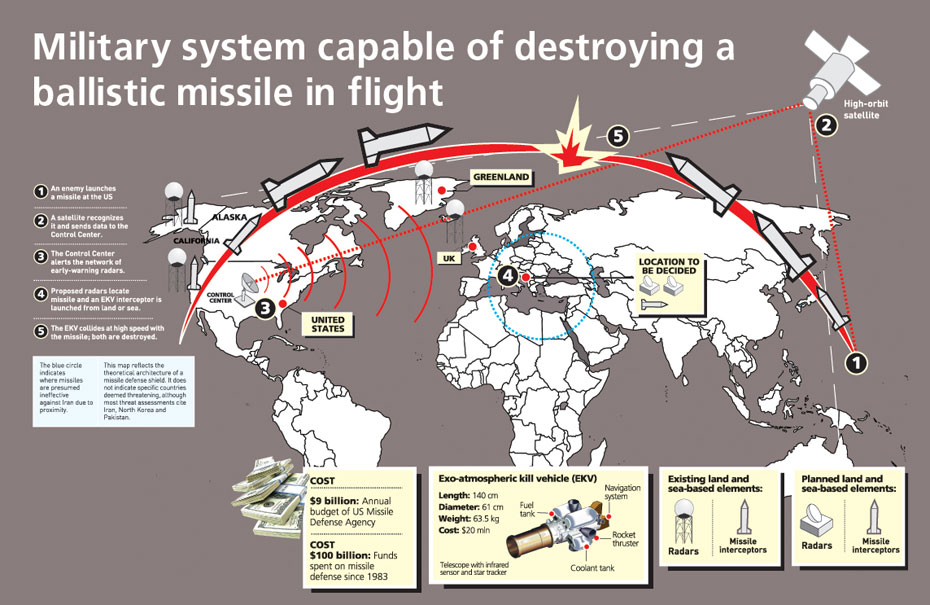
Okay. This does not compute. If losing a mapping agency is not a big worry, why do you want it at SAFB? Leave it in St. Louis City. Face it, shimmy…..you just want the jobs over there. To your second point……No doomsday “prepper” here. It’s just better to be prepared than not. Sort of like what the Metro East is not. Also, why do you think they are discussing the U.S. Missile Defense Shield? Idea: Maybe that can be set up at SAFB since the central U.S. is so fortified.shimmy wrote:If an inter-continental missile hits the middle of the U.S. and takes out our senior logistical command then we have bigger issues than worrying about the loss of a mapping agency. I'd take the risk/reward of command and agency cohesion over doomsday preppers.
shimmy wrote:Now this is an example of a disingenuous argument. Why didn't the Metro East go after ADM? Why doesn't the Metro East attract businesses from LA and Europe? As soon as you figure out how to accomplish that, please let Mayor Slay know so that St. Louis can start recruiting all of these businesses that are apparently just waiting for a call to come here. After all, if it's just as easy as trying to recruit these businesses, then we should have tried that as a region 40 years ago.
Ummm. St. Louis is attracting firms and start-ups from Belgium, Israel, Australia, India, Germany, France, England, Argentina, Peru, Mexico, Canada, Raleigh-Durham, Chicago, New York, Los Angeles, San Francisco, Kansas City etc. etc. etc.
Hello, where have you been for the last 10 years or so?
Just because Indiana is doing what it is, it doesn’t mean the Metro East can’t play the game too. And just because the Illinois statehouse is in shambles doesn’t mean the Metro East surrenders. If you act like and feel as though you are a loser or are losing, you will be a loser.shimmy wrote:Plus, what business is going to move from Indianapolis to the Metro East? Indiana is actively recruiting businesses from Illinois because they offer a better business climate: http://www.usatoday.com/story/money/bus … 11125529/# . The state hasn’t had a budget for 8 months and now it’s universities are starting to shut down. Please tell me what card you would play to recruit a business to Illinois.
St. Louis is making national headlines for CORTEX and the plant sciences because it decided to capitalize off its local assets. Keep in mind, Missouri as a state hasn’t done squat or has given the bare minimum in these efforts. Missouri couldn’t even give money for a MetroLink station at CORTEX, but that didn't keep CORTEX from seeking funding for it.
Like I said on my previous post…..the Metro East has strong (very strong) energy assets - refining, coal, pipelines, oil, natural gas, biogas, ethanol, steel, chemicals etc. One solar company is even talking about building one of the largest solar farms in the Midwest in East St. Louis.
The Metro East is short-changing itself, I think, by not CAPITALIZING off of these assets. The Metro East should brand these assets with a national brand image. Although these are old economy industries, it doesn’t mean the Metro East can’t build an image and jobs off of them.
It would make more sense for the Metro East to brand energy than the Metro West.
See above.shimmy wrote:Please tell me what you want the Metro East to pursue and invest in, because apparently the city and Missouri called dibs on everything.
Loser mentality. Not you. Just the mentality. I suspect your leadership over there thinks the same way. It’s okay with bones. Chicago drubs the rest of the state while the politicos toss the rest of the state bones. The Metro East can never get the same attention Chicago gets, obviously, but it can get louder.shimmy wrote:You will get no defense of Durbin from me, or Kirk for that matter. But you fall back on the argument of “Well, the Metro East just needs to try harder”. Yes, we’re a Metro Area of 700,000 in a state of 12 milllion, 9 million of whom live in Chicagoland. So being second to Chicago is irrelevant when Chicago is over 10x the size of the Metro East and ¾ of the whole state.
I don’t know much about Illinois politics, but the Metro East should form political partnerships with representatives from Peoria, Springfield, Rockford, Quincy, Carbondale, Effingham, Decatur etc. to leverage power against Chicago.
Nope. You do not understand that the center is already St. Louis.shimmy wrote:The re-centering the region is the big picture. Apparently that's gone over people's heads.
shimmy wrote:No, 3,000 jobs moving to the Metro East is not going to re-center the region. But, the fact of the matter is that downtown is going to continue to struggle against the county as long as 700,000 people live to the east of it and 2.3 million live to the west.
Huh? Dude, 320,000 people live in St. Louis City about 50,000 less than St. Charles County.
Downtown St. Louis needs JOBS- not job losses- to reach its potential.shimmy wrote:There needs to be growth in the Metro East to ultimately make downtown reach it's potential.
Not so fast.shimmy wrote:It's just a sad reality that in this specific case that growth comes at the expense of the city.
This rationale does not compute. If 3,000 jobs would move from near downtown to SAFB, it would not be good for downtown. The move would not only hurt downtown St. Louis and the city, the move would actually cause residual job losses too.shimmy wrote:Apparently 40-50% of downtown's workforce, according to the last editorial I posted, commute from the Metro East. I didn't know that, but it shows that while a strong downtown is good for the Metro East the opposite is also true: a strong Metro East is good for downtown.
shimmy wrote:Again, I'm interested to hear about the NGA helping Mckee's development or whatever. I'm skeptical, to put it politely. But I'll listen and read.
While McKee IS NOT the most trustworthy, it’s really about commerce. Again, visit the website. And by the way, skepticism is healthy.
The feelings are mutual. The City of St. Louis, I’m sure, thinks you are wrong.shimmy wrote:I don't expect the city to be fine with it. I understand the fight that the city is putting up for it. I just think they're wrong and that Scott is the best place for the region, and I think the reason for why has already been presented.
Let's be clear since you are fairly new around these parts...... I mean what I say, and say what I mean. I don't need you to interpret. I don't need help at all.CarexCurator wrote:Arch City basically said poorer communities should pick themselves up by their bootstraps and meet the same expectations as affluent communities. While doing so, that poor community should not copy or take anything from its affluent neighbor. "Look at all the assets you have to build off of: SIUE and... and... and these tiny colleges with tiny enrollment and tiny endowments. I mean seminaries are such great economic anchors! Some of my best friends are Metro Easters."

1. Yes, I believe in bootstrapping. Asking for help is great because everybody needs help with something. But I loathe both begging and "woe" mentalities and approaches to problems. For example, I am about to change careers. The new career isn't going to come to me. It's not going to happen unless I do it - so ultimately I have to go back to school. I have to go after the new career. Same with the Metro East, pick yourself up, dust yourself off and compete. Assemble people who are like-minded for change, do a grassroots movement and don't steal from your neighbor.
2. The Metro East as a whole is not poor, however, there is hardcore poverty on both sides of the river; yet, there is considerable wealth in the Metro East. Ever been to newer subdivisions in Shiloh, O'Fallon, Columbia, Fairview Heights etc. etc.? I have explored the Metro East - as disjointed and disconnected as it feels. Lots of wealth and a large middle-class over there. Away from the industrial plants, it's beautiful too. Point is, apparently the leadership is not guiding its constituency to higher heights. The leadership is lethargic. For the record, I've even said the same about Mayor Slay on some issues.
Again, consider the Washington Avenue scenario I provided yesterday. A former street with tumbleweeds rolling down the middle became a national beacon of urban renewal - at least for 15 years - because people believed it could happen.
3. It doesn't matter the size of a university's endowment. St. Louis Community College simply added a biotechnology curriculum to its program offerings. That program is feeding the labs that are popping up around the region. Those smaller Metro East schools could open small business and tech incubators and add programs. They don't have to compete with Wash U. or SLU or have billion dollar endowments to do that. They could even collaborate on a small technology district in East St. Louis. There just has to be the will.
The leadership has to go to the local schools to request and express the possibilities.
4. Seminaries are economic drivers. The St. Louis region has a bunch, and trust me , they aren't being filled with only locals. In 2014 rankings, U.S. News & World Report ranked Principia #139 in the National Liberal Arts Colleges. That's not slacking.
Fair points, arch city. I appreciate the debate and the discussion, but I no longer find arguing point for point as being necessary since I think we have both fully presented our arguments for all to read.
I'm the same as you, as in if the city ends up getting selected then "it is what it is". Part of me will be happy to see the Pruitt-Igoe site developed, as I don't see any other plans for it and I actually am a city booster contrary to what this thread may suggest (hence my presence on this board for the past 9 years). I actually believe in the Scott location for the reasons that I've been arguing and that because in this very specific instance I think the city's loss would be the region's gain.
As for investment opportunities in the Metro East, I think you raise some pretty good ideas, though there are some serious flaws in it (coal is dying, oil is plummeting, for example). Such discussion deserves its own thread. I've been thinking about starting a thread for awhile on the identity of the Metro East, and the last few pages underscore why: We're from Illinois but not Chicago, as most non-Illinoisians first assume. We're from Southern Illinois but not the real Southern Illinois, according to our Saluki brethren. We're from St. Louis but we're not from Missouri. In other words, we're kind of the bastard child of the Midwest.
I'm the same as you, as in if the city ends up getting selected then "it is what it is". Part of me will be happy to see the Pruitt-Igoe site developed, as I don't see any other plans for it and I actually am a city booster contrary to what this thread may suggest (hence my presence on this board for the past 9 years). I actually believe in the Scott location for the reasons that I've been arguing and that because in this very specific instance I think the city's loss would be the region's gain.
As for investment opportunities in the Metro East, I think you raise some pretty good ideas, though there are some serious flaws in it (coal is dying, oil is plummeting, for example). Such discussion deserves its own thread. I've been thinking about starting a thread for awhile on the identity of the Metro East, and the last few pages underscore why: We're from Illinois but not Chicago, as most non-Illinoisians first assume. We're from Southern Illinois but not the real Southern Illinois, according to our Saluki brethren. We're from St. Louis but we're not from Missouri. In other words, we're kind of the bastard child of the Midwest.
- 403
Im in agreement with arch city 60 years of exodus and poaching jobs at the expense of the city needs to end.
Making sense is always logical however i think the future of St.Louis which are the children have suffered enough.
If our East siders want growth look for it from outside of the region and not within this instills and keeps stagnation persistent.
This balancing out the population fu fu just sounds silly and is ridiculous..
Remember 60 years of no growth for the city its time to change that keeping something thats sacred to the city history far outweighs anything and can make a true difference.
North St.Louis matters!!!
Making sense is always logical however i think the future of St.Louis which are the children have suffered enough.
If our East siders want growth look for it from outside of the region and not within this instills and keeps stagnation persistent.
This balancing out the population fu fu just sounds silly and is ridiculous..
Remember 60 years of no growth for the city its time to change that keeping something thats sacred to the city history far outweighs anything and can make a true difference.
North St.Louis matters!!!