
Reading press releases, this is part of an effort to build a second focus city (after Santa Barbara California) and establish a base in Indy. Their network begins with 3 cities - St. Louis, Pittsburgh and Nashville but their goal is more growth. They may be smaller planes but I would not have passed up the opportunity.

Thoughts on these terminal update ideas?
I’m a hard no on B.
A I’m fine with.
C, I would need convincing that more income could be made so airlines fees don’t go way up.
https://www.bizjournals.com/stlouis/new ... yptr=yahoo
I’m a hard no on B.
A I’m fine with.
C, I would need convincing that more income could be made so airlines fees don’t go way up.
https://www.bizjournals.com/stlouis/new ... yptr=yahoo
That link is paywalled so here are the details. Consultants provided three options for improving Lambert. One was a "no build" re-arranging, two was decommissioning the East Terminal and consolidating everything in a fully renovated Main Terminal and the third option was a full new terminal.
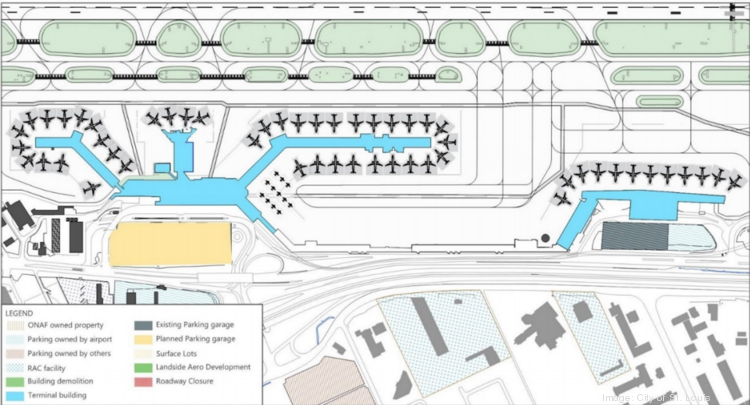
Option One ($141 million). Southwest is consolidated into T1 and "others" are moved to T2.
![]()
![]()
![]()
I also like the idea of a brand new consolidated terminal in Option Three and I like the location they picked out here in terms of connecting to MetroLink and the garages...plus the rental car improvements. But my dream of a new terminal at Lambert has always been for a mid-field terminal closer to 11/29 with access from Lindbergh Blvd. Pros, you can basically isolate the rest of the airport's operations from construction effects, the airport can finally put 11/29 to good use too. Cons, no good MetroLink access, land acquisition, lots of new infrastructure would need to be built etc. Option Two would be my last choice too.
Option One ($141 million). Southwest is consolidated into T1 and "others" are moved to T2.
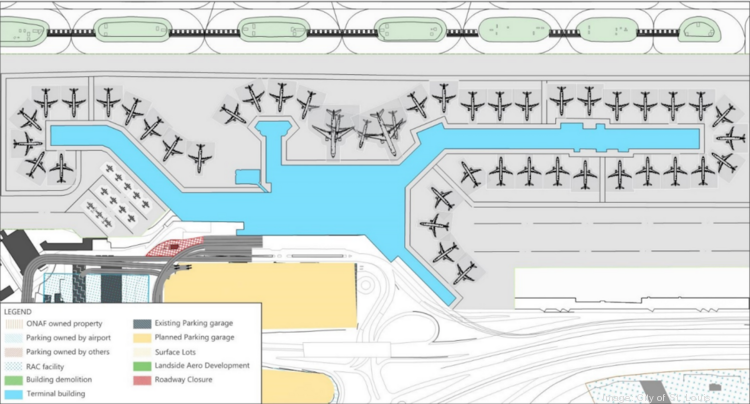
Option Two ($1.1 billion):Terminal 1's security checkpoints would be relocated to the same level as the check-in hall, allowing for greater airline operational flexibility between its three concourses. (Two concourses, called B and D, are not used for air service). The report also envisioned adding new retail nodes at the entrances of Concourses A and C, and a new customs facility within Concourse B, replacing the current facility in Terminal 2. Positives include that "demand would be better balanced across the terminal campus, with capacity available to enable future growth by all carriers. Current pressure on curbside access at Terminal 2 would be relieved," the report said. Among the downsides are that congestion could be seen at check-in and passenger screening. "The building envelope of Concourse B constrains space for future expansion and limits space for restrooms and offices," it said.
Option Three (New Terminal - $2 billion):It calls for demolishing Concourse D, and decommissioning Concourse E in Terminal 2. Concourses A and C would be widened by 100 feet "to accommodate future up-gauge of aircraft," and Concourse C would be extended to the west. Concourse B would be refurbished with four contact gates. Two international gates would be built between Concourses B and C. And existing security screening processes would all be moved to the upper level. The plan also calls for rebuilding the Terminal 1 garage, and building a 4,350-space garage on the site of the existing parking lot A.
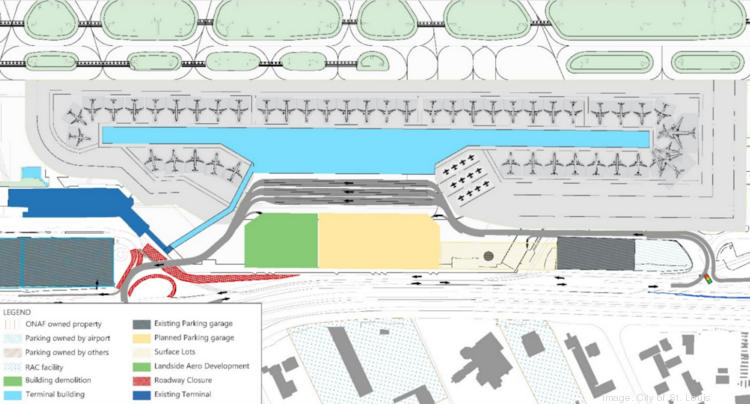
Edit: My two cents...I also would be fine with Option One. I think moving SWA to T1 and a really high quality renovation to bring the terminal up to modern standards would solve a lot of the airport's issues in my opinion. The main hall itself is already a fine centerpiece.A new-build concept would provide "a modern structure for consolidated operations," the report said, adding that it would have 45 contact gates and two ground loading gates, with the ability to expand to 52 gates. It would encompass two levels, with departure and arrivals on the same level. A new pedestrian walking bridge could be built to connect the new facility with the MetroLink stop. And the current Terminal 1, considered architecturally significant, "could be repurposed as new non-aeronautical development," such as a hotel, the report said. A new six-level parking facility would be located across from the terminal, accommodating 4,830 spaces. And a new 1,800-space rental car facility would be located in the garage. It could prove complicated, though. The document says three terminals could be in operation at once during construction, and existing movement on aircraft apron, or the area where planes are parked, would be disrupted.
I also like the idea of a brand new consolidated terminal in Option Three and I like the location they picked out here in terms of connecting to MetroLink and the garages...plus the rental car improvements. But my dream of a new terminal at Lambert has always been for a mid-field terminal closer to 11/29 with access from Lindbergh Blvd. Pros, you can basically isolate the rest of the airport's operations from construction effects, the airport can finally put 11/29 to good use too. Cons, no good MetroLink access, land acquisition, lots of new infrastructure would need to be built etc. Option Two would be my last choice too.
- 221

Here's the entire article if anyone wants to read it.
Consultant offered 3 options for reorganizing Lambert airport. The cost? $141M to $2B.
By Jacob Kirn – Economic Development Editor, St. Louis Business Journal
Feb 5, 2020, 5:22pm CST
A consultant for the city of St. Louis offered three options to fundamentally reorganize St. Louis Lambert International Airport, newly available documents show, part of the now-defunct effort to privatize the facility’s operations.
The documents give a glimpse into challenges the airport faces — and possible long-term solutions. A primary issue is that Southwest Airlines, Lambert’s largest carrier, will in coming years reach capacity in Terminal 2, while Terminal 1, home to American Airlines and others, has significant excess space, according to the city's consultant.
The 365-page report from Chicago-based aviation consultant Ricondo, crafted in December for potential Lambert bidders, lays out the options. The report could offer a blueprint for solutions at Lambert, which regional leaders agree must be improved. It’s still unclear how that could be done, as Lambert carries about $560 million in debt used to build a runway that’s underutilized, though business leaders have said they’re more engaged on tackling the issue.
Paul Payne, the city’s budget director and a member of its working group on Lambert privatization, said the Ricondo report represents "what potential options may be."
"This wasn’t 'what we’re going to do.' We never got to that point," Payne said. The city last month ended the exploration of privatization, which could have extinguished Lambert's debt and led to facility improvements.
Payne said had the city issued a request for proposals to potential Lambert operators, it would have also evaluated their ideas. Still, he said Ricondo was "very good."
"It’s a good report on all the financial, operational and planning needs of the airport, so I think it’s something that is worth sharing," Payne said.
An airport spokesman, Jeff Lea, said the airport is reviewing the Ricondo report as it works on a Federal Aviation Administration document called an Airport Layout Plan, part of the federal agency's approval process for airport development. The report has "new information that informs the airport about possibilities," Lea said.
The options presented in the report were:
The least expensive option would "preserve most of the existing structures and require minimal construction of new facilities," but also "meet future gate requirements with no major upfront capital investment," the report said.
Terminal 1's security checkpoints would be relocated to the same level as the check-in hall, allowing for greater airline operational flexibility between its three concourses. (Two concourses, called B and D, are not used for air service.)
The report also envisioned adding new retail nodes at the entrances of Concourses A and C, and a new customs facility within Concourse B, replacing the current facility in Terminal 2.
Positives include that "demand would be better balanced across the terminal campus, with capacity available to enable future growth by all carriers. Current pressure on curbside access at Terminal 2 would be relieved," the report said.
Among the downsides are that congestion could be seen at check-in and passenger screening. "The building envelope of Concourse B constrains space for future expansion and limits space for restrooms and offices," it said.
Option 2: Extend Terminal 1, decommission Terminal 2
This option would require reconfiguring and expanding Terminal 1 "to optimize passenger flow and capacity."
It calls for demolishing Concourse D, and decommissioning Concourse E in Terminal 2. Concourses A and C would be widened by 100 feet "to accommodate future up-gauge of aircraft," and Concourse C would be extended to the west. Concourse B would be refurbished with four contact gates. Two international gates would be built between Concourses B and C.
And existing security screening processes would all be moved to the upper level.
The plan also calls for rebuilding the Terminal 1 garage, and building a 4,350-space garage on the site of the existing parking lot A.
Option 3: A new terminal
A new-build concept would provide "a modern structure for consolidated operations," the report said, adding that it would have 45 contact gates and two ground loading gates, with the ability to expand to 52 gates. It would encompass two levels, with departure and arrivals on the same level. A new pedestrian walking bridge could be built to connect the new facility with the MetroLink stop.
And the current Terminal 1, considered architecturally significant, "could be repurposed as new non-aeronautical development," such as a hotel, the report said.
A new six-level parking facility would be located across from the terminal, accommodating 4,830 spaces. And a new 1,800-space rental car facility would be located in the garage.
It could prove complicated, though. The document says three terminals could be in operation at once during construction, and existing movement on aircraft apron, or the area where planes are parked, would be disrupted.
Consultant offered 3 options for reorganizing Lambert airport. The cost? $141M to $2B.
By Jacob Kirn – Economic Development Editor, St. Louis Business Journal
Feb 5, 2020, 5:22pm CST
A consultant for the city of St. Louis offered three options to fundamentally reorganize St. Louis Lambert International Airport, newly available documents show, part of the now-defunct effort to privatize the facility’s operations.
The documents give a glimpse into challenges the airport faces — and possible long-term solutions. A primary issue is that Southwest Airlines, Lambert’s largest carrier, will in coming years reach capacity in Terminal 2, while Terminal 1, home to American Airlines and others, has significant excess space, according to the city's consultant.
The 365-page report from Chicago-based aviation consultant Ricondo, crafted in December for potential Lambert bidders, lays out the options. The report could offer a blueprint for solutions at Lambert, which regional leaders agree must be improved. It’s still unclear how that could be done, as Lambert carries about $560 million in debt used to build a runway that’s underutilized, though business leaders have said they’re more engaged on tackling the issue.
Paul Payne, the city’s budget director and a member of its working group on Lambert privatization, said the Ricondo report represents "what potential options may be."
"This wasn’t 'what we’re going to do.' We never got to that point," Payne said. The city last month ended the exploration of privatization, which could have extinguished Lambert's debt and led to facility improvements.
Payne said had the city issued a request for proposals to potential Lambert operators, it would have also evaluated their ideas. Still, he said Ricondo was "very good."
"It’s a good report on all the financial, operational and planning needs of the airport, so I think it’s something that is worth sharing," Payne said.
An airport spokesman, Jeff Lea, said the airport is reviewing the Ricondo report as it works on a Federal Aviation Administration document called an Airport Layout Plan, part of the federal agency's approval process for airport development. The report has "new information that informs the airport about possibilities," Lea said.
The options presented in the report were:
- Moving Southwest Airlines and international operations to Terminal 1, and "some other carriers would relocate to Terminal 2." Cost: $141 million.
- Moving all carriers to Terminal 1. Terminal 2 would be "taken out of service and either decommissioned or repurposed." Cost: $1.1 billion.
- Constructing a new, central terminal, totaling 1.1 million square feet, between Terminals 1 and 2. Cost: $2 billion.
The least expensive option would "preserve most of the existing structures and require minimal construction of new facilities," but also "meet future gate requirements with no major upfront capital investment," the report said.
Terminal 1's security checkpoints would be relocated to the same level as the check-in hall, allowing for greater airline operational flexibility between its three concourses. (Two concourses, called B and D, are not used for air service.)
The report also envisioned adding new retail nodes at the entrances of Concourses A and C, and a new customs facility within Concourse B, replacing the current facility in Terminal 2.
Positives include that "demand would be better balanced across the terminal campus, with capacity available to enable future growth by all carriers. Current pressure on curbside access at Terminal 2 would be relieved," the report said.
Among the downsides are that congestion could be seen at check-in and passenger screening. "The building envelope of Concourse B constrains space for future expansion and limits space for restrooms and offices," it said.
Option 2: Extend Terminal 1, decommission Terminal 2
This option would require reconfiguring and expanding Terminal 1 "to optimize passenger flow and capacity."
It calls for demolishing Concourse D, and decommissioning Concourse E in Terminal 2. Concourses A and C would be widened by 100 feet "to accommodate future up-gauge of aircraft," and Concourse C would be extended to the west. Concourse B would be refurbished with four contact gates. Two international gates would be built between Concourses B and C.
And existing security screening processes would all be moved to the upper level.
The plan also calls for rebuilding the Terminal 1 garage, and building a 4,350-space garage on the site of the existing parking lot A.
Option 3: A new terminal
A new-build concept would provide "a modern structure for consolidated operations," the report said, adding that it would have 45 contact gates and two ground loading gates, with the ability to expand to 52 gates. It would encompass two levels, with departure and arrivals on the same level. A new pedestrian walking bridge could be built to connect the new facility with the MetroLink stop.
And the current Terminal 1, considered architecturally significant, "could be repurposed as new non-aeronautical development," such as a hotel, the report said.
A new six-level parking facility would be located across from the terminal, accommodating 4,830 spaces. And a new 1,800-space rental car facility would be located in the garage.
It could prove complicated, though. The document says three terminals could be in operation at once during construction, and existing movement on aircraft apron, or the area where planes are parked, would be disrupted.
Per the Indy Star -- Indiana is subsidizing this.STLCityMike wrote: ↑Feb 05, 2020Reading press releases, this is part of an effort to build a second focus city (after Santa Barbara California) and establish a base in Indy. Their network begins with 3 cities - St. Louis, Pittsburgh and Nashville but their goal is more growth. They may be smaller planes but I would not have passed up the opportunity.
From the article,
"The Indiana Economic Development Corporation is offering Corporate Flight Management Inc., which does business as Contour Airlines, a minimum revenue guarantee of up to $1.5 million that the company would earn if it does not meet its minimum revenue targets for the routes.
The state has also offered up to $550,000 in performance-based tax credits based on the company's job creation plans. Contour will only be able to claim the incentives once Indiana workers are hired."
Full paywall article below.

New airline coming to Indianapolis International Airport to offer flights to nearby cities
Alexandria Burris, Indianapolis StarPublished 11:28 a.m. ET Feb. 5, 2020 | Updated 5:46 p.m. ET Feb. 5, 2020
Areas with millions of people have no direct air routes from Indianapolis. Indianapolis Star
A new carrier is coming to Indianapolis International Airport, airport and state officials said at a news conference Wednesday morning.
Contour Airlines, based out of Smyrna, Tennessee, will offer non-stop daily service to Nashville, St. Louis and Pittsburgh beginning June 10, officials announced at the Routes Americas 2020 aviation conference at the JW Marriott Indianapolis.
Currently there are no non-stop flights from Indianapolis to those cities. Adding those markets brings the total non-stop destinations available from IND to 53.
 (Photo: Jay Calderon/The Desert Sun)
"We look for major markets that don't have any nonstop service so we don't compete against any other carrier in any of the markets we serve," Matt Chaifetz, Contour's chief executive officer, said. "When we looked at Indy, we looked at all the markets we thought would be a good fit. The greatest number of them started and ended in Indianapolis so it kind of made sense to plant our flag here."
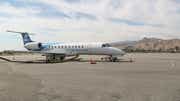
Contour Airlines flies Embraer regional jets on several local routes. The airline offers low-fare flights with limited-time introductory fares of $99 each way. Flights can be purchased now. The introductory fare sale ends on Wednesday, Feb. 19.
After the sale, all markets will have regular fares beginning at $119 each way.
Contour advertises its planes, many of which seat 30, as featuring leather seating with expanded legroom in every row. The airline also provides complimentary in-flight snack and drink service.
St. Louis, Nashville and Pittsburgh are considered "drive markets," or cities so close to Indianapolis that travelers can drive to them within a few hours. Airport officials previously told IndyStar that they recognized St. Louis and Pittsburgh as key markets for airline connectivity.

Jim Schellinger, Secretary of Commerce for the State of Indiana, at an announcement by Contour Aviation to beef up direct flights with service to out-of-state cities Nashville, St. Louis, and Pittsburgh, Indianapolis, Wednesday, Feb. 5, 2020. (Photo: Robert Scheer/IndyStar)
Mario Rodriguez, the Indianapolis Airport Authority's executive director, said drive markets are typically the most difficult routes to land because of the lack of available data to substantiate demand for them. But, he said business traffic to these three cities is "solid."
 Buy Photo
Contour Airlines' three new routes will bring the total number of nonstop destinations from Indianapolis International Airport to 53. (Photo: Stephen J. Beard/IndyStar)
"The principle reason for having the routes right here is having all of these people understand what the market is," Rodriguez said.
To support its growth in Indiana, Contour plans to create up to 55 jobs in Central Indiana by the end of 2023. The company is purchasing additional ERJ-135/145 aircraft and plans to invest in a base of operations in Indianapolis. The company plans to immediately begin hiring pilots, flight attendants, customer service agents, ground personnel and mechanics.
 Buy Photo
Steven Small (left), Joe Hogsett, Matt Chaifetz, and Jim Schellinger at an announcement by Contour Aviation to beef up direct flights with service to out-of-state cities Nashville, St. Louis, and Pittsburgh, Indianapolis, Wednesday, Feb. 5, 2020. (Photo: Robert Scheer/IndyStar)
Indianapolis will be the airline's second "focus city," a destination where it operates multiple nonstop flights. Contour's first focus city was Santa Barbara, California.
The Indiana Economic Development Corporation is offering Corporate Flight Management Inc., which does business as Contour Airlines, a minimum revenue guarantee of up to $1.5 million that the company would earn if it does not meet its minimum revenue targets for the routes.
The state has also offered up to $550,000 in performance-based tax credits based on the company's job creation plans. Contour will only be able to claim the incentives once Indiana workers are hired.
The best option, in this case, is the cheapest (A). I can't see WN packing up shop and moving into The C Concourse, however, especially when they're spending millions for a new baggage carousel.jshank83 wrote: ↑Feb 06, 2020Thoughts on these terminal update ideas?
I’m a hard no on B.
A I’m fine with.
C, I would need convincing that more income could be made so airlines fees don’t go way up.
https://www.bizjournals.com/stlouis/new ... yptr=yahoo

Is this axed due to the ending of the privatization process? It sounds like this is what the airport wants done either wayfrequentflyer wrote:Here's the entire article if anyone want to read it.
Consultant offered 3 options for reorganizing Lambert airport. The cost? $141M to $2B.
By Jacob Kirn – Economic Development Editor, St. Louis Business Journal
Feb 5, 2020, 5:22pm CST
A consultant for the city of St. Louis offered three options to fundamentally reorganize St. Louis Lambert International Airport, newly available documents show, part of the now-defunct effort to privatize the facility’s operations.
The documents give a glimpse into challenges the airport faces — and possible long-term solutions. A primary issue is that Southwest Airlines, Lambert’s largest carrier, will in coming years reach capacity in Terminal 2, while Terminal 1, home to American Airlines and others, has significant excess space, according to the city's consultant.
The 365-page report from Chicago-based aviation consultant Ricondo, crafted in December for potential Lambert bidders, lays out the options. The report could offer a blueprint for solutions at Lambert, which regional leaders agree must be improved. It’s still unclear how that could be done, as Lambert carries about $560 million in debt used to build a runway that’s underutilized, though business leaders have said they’re more engaged on tackling the issue.
Paul Payne, the city’s budget director and a member of its working group on Lambert privatization, said the Ricondo report represents "what potential options may be."
"This wasn’t 'what we’re going to do.' We never got to that point," Payne said. The city last month ended the exploration of privatization, which could have extinguished Lambert's debt and led to facility improvements.
Payne said had the city issued a request for proposals to potential Lambert operators, it would have also evaluated their ideas. Still, he said Ricondo was "very good."
"It’s a good report on all the financial, operational and planning needs of the airport, so I think it’s something that is worth sharing," Payne said.
An airport spokesman, Jeff Lea, said the airport is reviewing the Ricondo report as it works on a Federal Aviation Administration document called an Airport Layout Plan, part of the federal agency's approval process for airport development. The report has "new information that informs the airport about possibilities," Lea said.
The options presented in the report were:Option 1: 'Preserve most of the existing structures'
- Moving Southwest Airlines and international operations to Terminal 1, and "some other carriers would relocate to Terminal 2." Cost: $141 million.
- Moving all carriers to Terminal 1. Terminal 2 would be "taken out of service and either decommissioned or repurposed." Cost: $1.1 billion.
- Constructing a new, central terminal, totaling 1.1 million square feet, between Terminals 1 and 2. Cost: $2 billion.
The least expensive option would "preserve most of the existing structures and require minimal construction of new facilities," but also "meet future gate requirements with no major upfront capital investment," the report said.
Terminal 1's security checkpoints would be relocated to the same level as the check-in hall, allowing for greater airline operational flexibility between its three concourses. (Two concourses, called B and D, are not used for air service.)
The report also envisioned adding new retail nodes at the entrances of Concourses A and C, and a new customs facility within Concourse B, replacing the current facility in Terminal 2.
Positives include that "demand would be better balanced across the terminal campus, with capacity available to enable future growth by all carriers. Current pressure on curbside access at Terminal 2 would be relieved," the report said.
Among the downsides are that congestion could be seen at check-in and passenger screening. "The building envelope of Concourse B constrains space for future expansion and limits space for restrooms and offices," it said.
Option 2: Extend Terminal 1, decommission Terminal 2
This option would require reconfiguring and expanding Terminal 1 "to optimize passenger flow and capacity."
It calls for demolishing Concourse D, and decommissioning Concourse E in Terminal 2. Concourses A and C would be widened by 100 feet "to accommodate future up-gauge of aircraft," and Concourse C would be extended to the west. Concourse B would be refurbished with four contact gates. Two international gates would be built between Concourses B and C.
And existing security screening processes would all be moved to the upper level.
The plan also calls for rebuilding the Terminal 1 garage, and building a 4,350-space garage on the site of the existing parking lot A.
Option 3: A new terminal
A new-build concept would provide "a modern structure for consolidated operations," the report said, adding that it would have 45 contact gates and two ground loading gates, with the ability to expand to 52 gates. It would encompass two levels, with departure and arrivals on the same level. A new pedestrian walking bridge could be built to connect the new facility with the MetroLink stop.
And the current Terminal 1, considered architecturally significant, "could be repurposed as new non-aeronautical development," such as a hotel, the report said.
A new six-level parking facility would be located across from the terminal, accommodating 4,830 spaces. And a new 1,800-space rental car facility would be located in the garage.
It could prove complicated, though. The document says three terminals could be in operation at once during construction, and existing movement on aircraft apron, or the area where planes are parked, would be disrupted.
Sent from my iPhone using Tapatalk


^^ No, none of this was ever formally introduced. It is very likely one of these options will be pursued in the near future though, Southwest keeps growing and there really isn't anymore capacity in T2. The silver lining in this airport privatization failure is the trove of information and data that the airport and city now have at their disposal to move forward. All paid for by an outside party too. The business community seems to have woken up as well, and recent reporting suggests they've been meeting with Southwest executives (apparently one meeting just days before they pushed Krewson to kill privatization).
I think something along the lines of option one is coming regardless. From what I understand the only reason it hasn't happened yet is because Southwest up to this point has refused to share a terminal. T2 was originally built for Southwest and they apparently don't want to leave it.
I think something along the lines of option one is coming regardless. From what I understand the only reason it hasn't happened yet is because Southwest up to this point has refused to share a terminal. T2 was originally built for Southwest and they apparently don't want to leave it.
Pretty sure that baggage expansion has been put on hold...at least I think I saw that here. My guess is Southwest could be persuaded to move provided a deal could be worked out. Even with the ability to add gates in D and a potential new carousel, they can't do anything about easing the pickup/drop-off traffic or about space in the check-in area. Either they would have to spend even more money to fix all of those issues, or they could just move where all that extra capacity already exists.frequentflyer wrote:The best option, in this case, is the cheapest (A). I can't see WN packing up shop and moving into The C Concourse, however, especially when they're spending millions for a new baggage carousel.
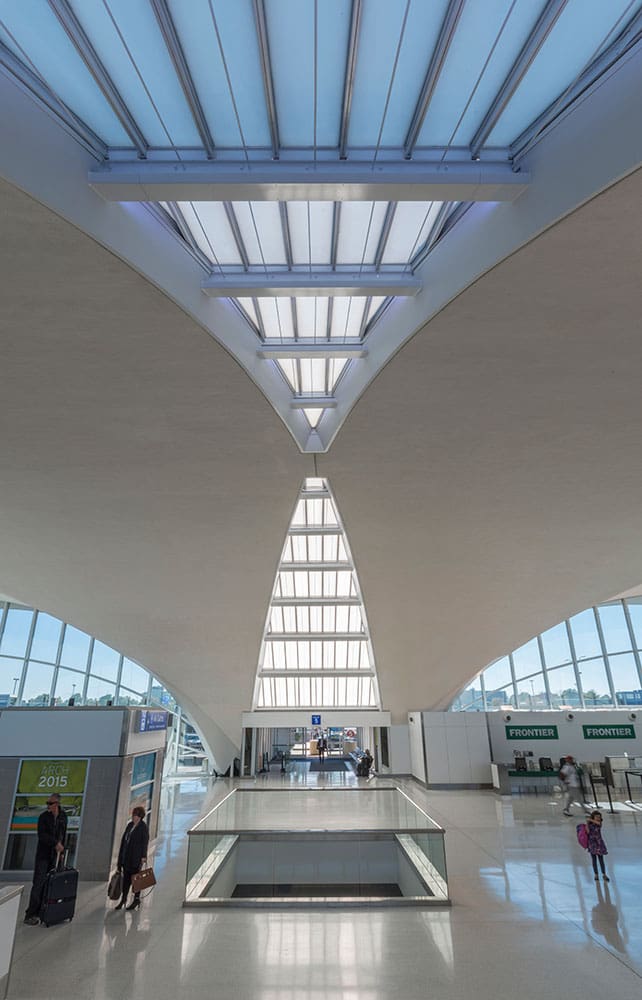
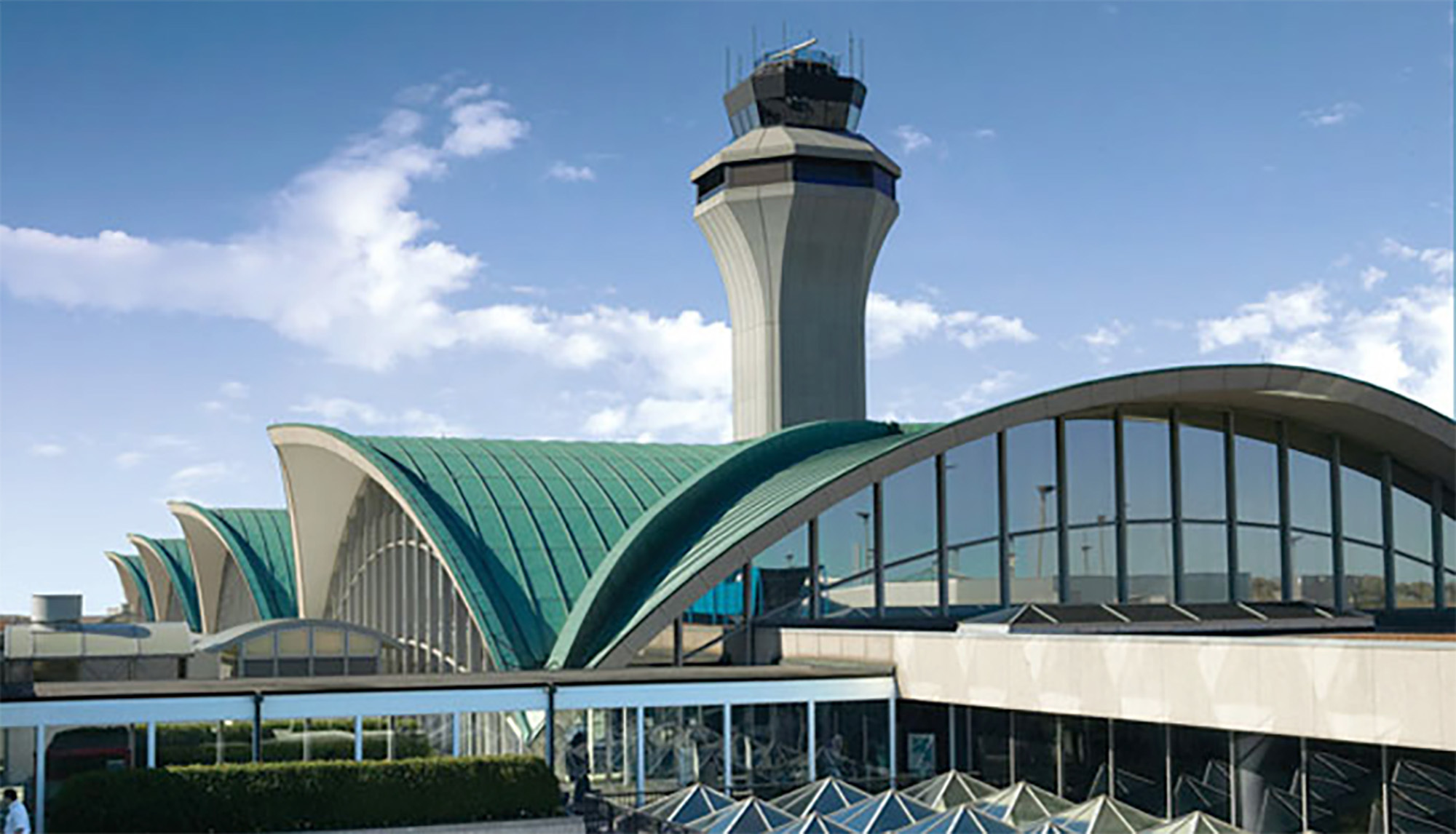
That beauty ain't going anywhere. I personally really like the idea of turning it into a hotel of some kind provided a new terminal had been selected as the way forward. Kind of like the old TWA Terminal at JFK. But I honestly think she'll end up centering a newly consolidated terminal structure before anything else.framer wrote:Hands Off!!!!!
In my opinion, Option 1 is the way to go. The main terminal building is a landmark, make that the home of our busiest airline in and out of St. Louis. The recent renovations made it better but a few more dollars could make it better if they really wanted to.
Option 3 is iffy in my opinion. The layout and logistics of moving planes around just wouldn't make sense. Also, imagine getting off of a plane on the East End and having to connect to some other flight on the West End. That would be a hike to take. For people who would take Metro, this isn't a good configuration. It would be a giant mess for operations, passenger flow, and other things. On the bright side, at least it saves the main terminal.
Option 2 is the worst of the plans. It would alter the main terminal way too much to where it probably wouldn't even resemble how it does today. It's just a wacky plan all around.
I know these are all concepts but we have to be real here, Option 1 is really the only option that's really worth anything at this point in time. If they so badly want a new terminal, go visit some of the new airports built or being built throughout the country and learn a thing or two because the concept site plan they came up with isn't good at all.
On another note, I would love to see us pick up some bigger airline names and get expanded services for other airlines at Lambert. The smaller airlines can go to MidAmerica after the MetroLink expansion is completed. It will actually give that airport a usage
Option 3 is iffy in my opinion. The layout and logistics of moving planes around just wouldn't make sense. Also, imagine getting off of a plane on the East End and having to connect to some other flight on the West End. That would be a hike to take. For people who would take Metro, this isn't a good configuration. It would be a giant mess for operations, passenger flow, and other things. On the bright side, at least it saves the main terminal.
Option 2 is the worst of the plans. It would alter the main terminal way too much to where it probably wouldn't even resemble how it does today. It's just a wacky plan all around.
I know these are all concepts but we have to be real here, Option 1 is really the only option that's really worth anything at this point in time. If they so badly want a new terminal, go visit some of the new airports built or being built throughout the country and learn a thing or two because the concept site plan they came up with isn't good at all.
On another note, I would love to see us pick up some bigger airline names and get expanded services for other airlines at Lambert. The smaller airlines can go to MidAmerica after the MetroLink expansion is completed. It will actually give that airport a usage
- 221
Hi Chris, it's great to see you post again!chriss752 wrote: ↑Feb 06, 2020In my opinion, Option 1 is the way to go. The main terminal building is a landmark, make that the home of our busiest airline in and out of St. Louis. The recent renovations made it better but a few more dollars could make it better if they really wanted to.
Option 3 is iffy in my opinion. The layout and logistics of moving planes around just wouldn't make sense. Also, imagine getting off of a plane on the East End and having to connect to some other flight on the West End. That would be a hike to take. For people who would take Metro, this isn't a good configuration. It would be a giant mess for operations, passenger flow, and other things. On the bright side, at least it saves the main terminal.
Option 2 is the worst of the plans. It would alter the main terminal way too much to where it probably wouldn't even resemble how it does today. It's just a wacky plan all around.
I know these are all concepts but we have to be real here, Option 1 is really the only option that's really worth anything at this point in time. If they so badly want a new terminal, go visit some of the new airports built or being built throughout the country and learn a thing or two because the concept site plan they came up with isn't good at all.
On another note, I would love to see us pick up some bigger airline names and get expanded services for other airlines at Lambert. The smaller airlines can go to MidAmerica after the MetroLink expansion is completed. It will actually give that airport a usage
I agree, Option 1 is the only reasonable way to go at this time. After making such a great effort to reduce fees, and get them closer in line with peer airports, why would STL blow $2 billion on a new terminal? It just doesn't make financial sense.
A revitalized Lambert for around $150 million (maybe $200 million when it's all said and done) seems like a pretty wise investment. I was in LIT about 2 months ago, and they're investing $100 million there. The renderings show a vast improvement in amenities and capacity for a relatively small amount of money ($100 mil vs $1 billion). MCI and BNA have to build new terminals because they were never as big as STL. The great thing about our excess capacity is the major infrastructure is already there.
I don’t think that option 1 works well in the medium-long run. STL’s duel terminal set up without room for Southwest to expand in its terminal but open gates in the other is the exact issue that MCI has had with Delta and Southwest in B vs open gates in C. I also struggle to see how all of those security lines are going to get moved to the main floor. Where would they go? The head house is already pretty small.frequentflyer wrote:Hi Chris, it's great to see you post again!chriss752 wrote: ↑Feb 06, 2020In my opinion, Option 1 is the way to go. The main terminal building is a landmark, make that the home of our busiest airline in and out of St. Louis. The recent renovations made it better but a few more dollars could make it better if they really wanted to.
Option 3 is iffy in my opinion. The layout and logistics of moving planes around just wouldn't make sense. Also, imagine getting off of a plane on the East End and having to connect to some other flight on the West End. That would be a hike to take. For people who would take Metro, this isn't a good configuration. It would be a giant mess for operations, passenger flow, and other things. On the bright side, at least it saves the main terminal.
Option 2 is the worst of the plans. It would alter the main terminal way too much to where it probably wouldn't even resemble how it does today. It's just a wacky plan all around.
I know these are all concepts but we have to be real here, Option 1 is really the only option that's really worth anything at this point in time. If they so badly want a new terminal, go visit some of the new airports built or being built throughout the country and learn a thing or two because the concept site plan they came up with isn't good at all.
On another note, I would love to see us pick up some bigger airline names and get expanded services for other airlines at Lambert. The smaller airlines can go to MidAmerica after the MetroLink expansion is completed. It will actually give that airport a usage
I agree, Option 1 is the only reasonable way to go at this time. After making such a great effort to reduce fees, and get them closer in line with peer airports, why would STL blow $2 billion on a new terminal? It just doesn't make financial sense.
A revitalized Lambert for around $150 million (maybe $200 million when it's all said and done) seems like a pretty wise investment. I was in LIT about 2 months ago, and they're investing $100 million there. The renderings show a vast improvement in amenities and capacity for a relatively small amount of money ($100 mil vs $1 billion). MCI and BNA have to build new terminals because they were never as big as STL. The great thing about our excess capacity is the major infrastructure is already there.
Turning concourse B into a FIS facility makes little sense as it’s apron looks too “short” to hold a widebody or maybe even 757/A321 nor the hold rooms big enough for one. My earth measurements confirm this.
Option 1 is a short term solution but a new terminal will be needed in 10-15 years.
Option 2: It looks like there a few positions that are not feasible due to airside geometries. Removing B would fix a lot of this and you’d only loose maybe 1-2 positions. $1.1 billion+ for this plan that doesn’t really fix anything would be a mistake.
Option 3: I have strong doubts that a multi-phase project like this would come in for the proposed budget. Regardless, there are a lot of downsides dealing with longevity and airside geometries.
Summary: None of the options are good options for the long term. I am seeing the new build options propose a lot of things that will reduce the flexibility and this longevity of the terminal. The best solution for St. Louis is really going to be new construction away from T1: either parking lots and hangars to the west of T1; T2, Air Cargo, and abandoned regional jet area; north of new runway.
You make some good points here. Option 1 may be a short-term solution, but it's one that should be looking at now. When the time comes for a new terminal, I would highly encourage the authority, who would be making the decision, to preserve the main, landmark terminal. I'm not opposed to a new terminal, just the option the consultant came up with is a mess of a design. We need to do what we have to do now to make STL competitive and on par with other peer airports while looking ahead to the future. Looking ahead, we will need a new terminal but it shouldn't be a priority right now. We can play around with the idea, but save the seriousness and enthusiasm for a few more years.ldai_phs wrote: ↑Feb 06, 2020I don’t think that option 1 works well in the medium-long run. STL’s duel terminal set up without room for Southwest to expand in its terminal but open gates in the other is the exact issue that MCI has had with Delta and Southwest in B vs open gates in C. I also struggle to see how all of those security lines are going to get moved to the main floor. Where would they go? The head house is already pretty small.
Turning concourse B into a FIS facility makes little sense as it’s apron looks too “short” to hold a widebody or maybe even 757/A321. Option 1 is a short term solution but a new terminal will be needed in 10-15 years.
In many ways, we must be careful with what we do. the Kansas City airport is far different than St. Louis's in the way it was built in circles and probably didn't have the capacity like Lambert did. We were once a major hub for TWA. Our airport is large enough to grow within it's current boundaries without facing many issues. As larger planes start making their way into the fleet of airline companies, then we will have a problem.
As far as the security comment, I haven't flown out of STL so I don't know the situation there. I mean I kind of do from other things I've done but surely not enough to make a decision on if it should move upstairs. In my opinion, leave it where it is. It will save a few bucks.
My return is temporary but thanks for the welcome back.frequentflyer:
Hi Chris, it's great to see you post again!
I agree, Option 1 is the only reasonable way to go at this time. After making such a great effort to reduce fees, and get them closer in line with peer airports, why would STL blow $2 billion on a new terminal? It just doesn't make financial sense.
A revitalized Lambert for around $150 million (maybe $200 million when it's all said and done) seems like a pretty wise investment. I was in LIT about 2 months ago, and they're investing $100 million there. The renderings show a vast improvement in amenities and capacity for a relatively small amount of money ($100 mil vs $1 billion). MCI and BNA have to build new terminals because they were never as big as STL. The great thing about our excess capacity is the major infrastructure is already there.
That's what I'm thinking. Why blow $2 Billion now? Maybe it's wise to or maybe it isn't. I just don't know. Down the line, we will need to spend a good amount of money on a new terminal but it doesn't have to be right away.
- 1,292

For now, Option A seems the most reasonable - solves an issue for a few decades for fairly cheap (in comparison) and gives the airport time to come up with a more permanent solution while keeping costs low.
I'm still partial to the original W-1W mid-field terminal concept as an end-goal, though:
![]()
I'm still partial to the original W-1W mid-field terminal concept as an end-goal, though:

Option A isn’t going to buy you decades I don’t think.Trololzilla wrote:For now, Option A seems the most reasonable - solves an issue for a few decades for fairly cheap (in comparison) and gives the airport time to come up with a more permanent solution while keeping costs low.
I'm still partial to the original W-1W mid-field terminal concept as an end-goal, though:
Do you have a high res version of the drawing?
Sent from my iPhone using Tapatalk
- 1,292
Maybe 10-20 years at best, but it's something, at least, if the business community doesn't want to chip in much at the moment.
No, unfortunately, I don't. It's from page 20 of this presentation about the Lambert runway expansion (which serves as a lot of my reference material for it), but it's not much (if any) better. The listed source also basically doesn't exist - I've tried looking it up but have found nothing except that presentation. Honestly, contacting the person who made the presentation might be someone's best bet at finding out if they have a higher res version of that image or if they could point you towards their source for it.
The accompanying info:
No, unfortunately, I don't. It's from page 20 of this presentation about the Lambert runway expansion (which serves as a lot of my reference material for it), but it's not much (if any) better. The listed source also basically doesn't exist - I've tried looking it up but have found nothing except that presentation. Honestly, contacting the person who made the presentation might be someone's best bet at finding out if they have a higher res version of that image or if they could point you towards their source for it.
The accompanying info:
Obviously any such proposal wouldn't be built to quite the same scale today (though hopefully retaining the option of expandability). I think I have a supplementary source from the same person laying about somewhere that states the midfield terminal option is technically still available to exercise (though that was as of 2007, so who knows).Terminal Expansion Mid-field satellite terminal concept Demand driven development Mid-field satellite terminal concept Demand driven development Source: Lambert-St. Louis International Airport, Status Briefing for Society of Military Engineers, Nov 8 2004 Currently: 89 aircraft gate positions; ~1.5 million square feet Projected future need: ~110 total gates (2015) Site between runways can accommodate a satellite terminal with 150 additional gates positions Currently: 89 aircraft gate positions; ~1.5 million square feet Projected future need: ~110 total gates (2015) Site between runways can accommodate a satellite terminal with 150 additional gates positions

Privatization is dead but what about the proposal for a regional airport authority including the surrounding counties and how might that affect design and or funding? I know, that's a broad question and impossible to answer right now but this next step to improve Lambert should be, IMO, a regional effort.
The last master plan was to expand west with a new terminal and/or concourse and I still think that is the best long-term option, as others have mentioned that will allow airlines to utilize 11/29 without a long taxi and will better fit the available space. Re-purposing the original terminal into something else (don't touch it!) would be okay, then build a new terminal about where concourse A sits now.
I hope you stick around Chris, I appreciate the information that you contribute.
The last master plan was to expand west with a new terminal and/or concourse and I still think that is the best long-term option, as others have mentioned that will allow airlines to utilize 11/29 without a long taxi and will better fit the available space. Re-purposing the original terminal into something else (don't touch it!) would be okay, then build a new terminal about where concourse A sits now.
I hope you stick around Chris, I appreciate the information that you contribute.
Lots of good comments here. I pretty much agree with the consensus that Option One is the way forward for the near future. But Idai_phs makes some excellent points in regards to that being a short term solution. I think getting 10 years out of that configuration is doable, but that would be stretching it. In my opinion eventually a new, modern, consolidated terminal will be needed, and like Trololzilla and pdm, I think the mid-field option near 11/29 is the way to go.
I think it's a bit too early to speculate on the sales tax proposal because I don't think that's likely to happen. I do think the airport will end up under a regional structure in the future at some point, but I'm not really sure how it would look. EWG is the best to explore it, so we'll see what they come up with. Provided a regional plan could pay off the debt and put some of the surrounding empty land into active revenue generating use, financing a new terminal becomes a lot easier.
I think it's a bit too early to speculate on the sales tax proposal because I don't think that's likely to happen. I do think the airport will end up under a regional structure in the future at some point, but I'm not really sure how it would look. EWG is the best to explore it, so we'll see what they come up with. Provided a regional plan could pay off the debt and put some of the surrounding empty land into active revenue generating use, financing a new terminal becomes a lot easier.
I would love to see Southwest move to T1.
I would love to a regional board for the airport as well. But if the out lying counties will want a piece of the profit
I doubt that it will happen.
I would love to a regional board for the airport as well. But if the out lying counties will want a piece of the profit
I doubt that it will happen.

I'd hate to see T2 abandoned - it is the newer, more modern terminal and is in the least need of work. It's just too small for SWA these days.
T1 has the gates but even the most recently renovated parts aren't as nice as what T2 offers - and I get the impression that SWA feels the same way. While the recent modernization efforts helped a bunch, I've honestly felt that the concourses have always felt cramped - not in a 'there's too many people in here' way, but the ceilings are low and the central walkways narrow compared to other airports, even other mid-tier cities.
Money no object, rebuilding the T1 concourses- as is represented in option 2 and 3 - would present an opportunity to make them taller and more open, not to mention opportunities to add more retail. But obviously that's quite an expensive thing to do, and closing T2 to do it seems wasteful.
What about demolishing a portion of concourse D and building a properly-integrated eastward T2 expansion in its place? That would keep Southwest happy and perhaps create an opening for international flights to be based there too.
-RBB
T1 has the gates but even the most recently renovated parts aren't as nice as what T2 offers - and I get the impression that SWA feels the same way. While the recent modernization efforts helped a bunch, I've honestly felt that the concourses have always felt cramped - not in a 'there's too many people in here' way, but the ceilings are low and the central walkways narrow compared to other airports, even other mid-tier cities.
Money no object, rebuilding the T1 concourses- as is represented in option 2 and 3 - would present an opportunity to make them taller and more open, not to mention opportunities to add more retail. But obviously that's quite an expensive thing to do, and closing T2 to do it seems wasteful.
What about demolishing a portion of concourse D and building a properly-integrated eastward T2 expansion in its place? That would keep Southwest happy and perhaps create an opening for international flights to be based there too.
-RBB
- 1,792
Option 1 is the only real option. Incremental investment has been working for the last decade to pull us out a deb mire on the new run way. Why would we put ourselves back in that hole.
Why would you do anything other than Option A if it is not obvious that there will be extremely solid growth in the medium run?
Option A is a lot of money to spend on a bandaid fix for 10 years. Option A also reduces SWA's independence/flexibility(very important to them) and forces them into a cramped and old facility from their relatively modern and spacious current digs. AKA you would be asking Southwest to pay more to reduce the quality of their operations and customer experience.kipfilet wrote: ↑Feb 06, 2020Why would you do anything other than Option A if it is not obvious that there will be extremely solid growth in the medium run?
The widths of Southwest's current passenger level facilities are single-loaded and about: Terminal 2 90'-60' wide, 110' where it connects to D gates, and a paltry 55' in the D gates. Concourse C, on the other hand, is double-loaded yet only ~75' wide. So even the narrow D gates are giving you more room per gated side then Concourse C. I think the consultants are way overestimating how many positions you can fit into Concourse C if you take into account modern load factors, airplane sizes, and the fact that SWA will have big banks.
The Southwest section of the new KCI terminal looks to be about 110,000 sqft for 15 gates. My Google Earth calculations show about 95,000 sqft for Southwest's 22 gate section of Concourse C at STL. $141 million or $200 million won't be enough to significantly change the footprint of the Concourse C structure, upgrade the existing structures, and move security.
IMHO. Southwest may as well build up KC or Nashville instead of selecting Option A. $200 million would buy you at minimum 5 additional gates at KCI - more when you consider huge pieces of that project's price tag are demolition and parking garage.
Only Solution in the near-mid-long term is going to be some type of new construction. I would say that the $200 million short term solution would be better suited on expanding SWA's current T2 concourse east and head house to the west. Phase 2 in the mid-run would demo the D gates and extend that main T2 concourse to the west where the apron is now.

^ I think the idea is that SWA would move to T1 with significant renovations and upgrades to that structure. We’re getting a little deep in the weeds here for what are very early concepts and not any formal proposal for the airport. I don’t think anyone, consultants included, were suggesting that SWA and another airline simply switch terminals and call it a day.
I understand that. Given the limited budget and constraints from Concourse C being active, I don't think they would be changing the physical footprint of the terminal. The changes sounded more along the lines of updated interiors, changing the security locations, some upgrades to BOH spaces and systems, etc. Even with a bigger budget, there isn't much if any room to expand towards the north. There doesn't look to be any on the south unless you wanted to give up the duel-taxi lanes (SWA wouldn't agree to it) or recognize that D will never be used again and restrip the apron.sc4mayor wrote: ↑Feb 07, 2020^ I think the idea is that SWA would move to T1 with significant renovations and upgrades to that structure. We’re getting a little deep in the weeds here for what are very early concepts and not any formal proposal for the airport. I don’t think anyone, consultants included, were suggesting that SWA and another airline simply switch terminals and call it a day.
STL is where KC was in 1990's when they made the (poor) choice of renovating the 3 leaf clover at KCI. STL needs to really be serious about what they actually have now and how it aligns with where they want to go. If you really sit down and think about it, I don't think it aligns.