941
Super MemberSuper Member
941

PostAug 21, 2008#76

jlblues wrote:Here is a radical thought: I think everyone, other than perhaps the residents, recognize that, once I-64 reconstruction is complete, this will be a very valuable piece of property. So, before this city's old boy machinery produces public incentives for another pile-o-crap, maybe we could declare this a redevelopment area, and actually request proposals?!? :shock: I'm sure that there is more than one hotel and/or mixed-use residential developer that might be interested in this site. And then, maybe we could use that competition to extract more concessions from the developer? :shock: What a novel concept!


This isn't how Drury plans to acquire the property? This isn't how the city/MODOT plans to solicit developers for this site? That is the true crux of the issue here.


A developer should HAVE to submit an RFP for this proposal. The residents, through town hall meetings etc, should work the city and the alderman to approve the best proposal. Why would it not work this way?

1,517
Totally AddictedTotally Addicted
1,517

PostAug 21, 2008#77

This development should not tear down a single house. It should not even be on the table for discussion. This is an irreplaceable historic district, and this hotel will threaten that context. There is a large vacant lot to the east (Taylor and Chouteau) that I'm sure is looking for a major tenant, and Drury could easily anchor that residential and retail development planned there.


In a city that viewed itself as a city and a worthwhile place, this site would be carefully planned to protect the historic district and produce a hotel that is sensitive to its surroundings.


It would conform to a pedestrian scale and would adopt an ounce of design standards, at least.


It would contain all underground parking.


It would, again, NOT take ANY homes.


Of course, when your leadership has no vision, and when your citizens hate the city they live in, it's much easier to conform to some corporation's vision. They will give us direction. And tax dollars.


That's the wrong direction for St. Louis. Drury seems to be willing to adjust their plans. That's good. Residents of the 17th Ward and the alderman should work to present a different site to Drury (including the above-mentioned) if the proposed one cannot be adjusted to meet resident concerns (and to NOT demolish a single property).


St. Louis's urban context is rapidly diminishing--Laclede's Landing has been sacked by an overwrought casino; the near North Side has been subjugated to a monied developer (and years of neglect and disinvestment that brought him up there in the first place); McRee Town has been felled for an inferior development sure to witness accelerated decline; most of Bohemian Hill has been cleared away from a shopping center now up in the air; modernist structures in the CWE (most of which demolished historic properties for their own construction) are now being wantonly targeted; commercial buildings in North City are becoming a dying breed thanks to the half of the preservation board who will gladly let St. Louis’s chief asset and its most reliable tool for economic development—its historic architecture—see the wrecking ball for the latest church that wants a parking lot or slum landlord who has deferred maintenance to justify demolition.


St. Louis is slipping away, and its last hope is to radically localize. To quit subsidizing huge chains, and start inviting creativity and innovation in the city; to support local businesses that exist, and draw outsiders to craft new ones; to save as much historic architecture as is structurally possible, and to promote only the best urban design for infill and new construction as is economically feasible.


Drury says it's flexible anyway.


Why NOT look at the proposed plans with a lot of scrutiny?

2,821
Life MemberLife Member
2,821

PostAug 21, 2008#78

ttricamo wrote:This isn't how Drury plans to acquire the property? This isn't how the city/MODOT plans to solicit developers for this site? That is the true crux of the issue here.


A developer should HAVE to submit an RFP for this proposal. The residents, through town hall meetings etc, should work the city and the alderman to approve the best proposal. Why would it not work this way?
Good question. That's the way it works in other cities, and even in some local suburbs, but generally not in this city.


The system is maintained in part because too many in power have too much invested in it. It is a legal and easy way for elected officials to reward their biggest contributors (hence a great way to extract contributions from real estate developers and contractors :wink:). Another part is inertia. No individual has the incentive or the wherewithal to risk their career to change the system. Joe Bonwich can tell you all about these. :wink:


The last part is an uninformed and generally pessimistic citizenry. You need look no further than this forum. How many people have expressed concern that we might, paraphrasing, "scare away the developer" if we ask too many questions or make too many demands. And how many times have we heard the refrain that, paraphrasing again, "Nobody else is gonna come along to develop something like this in the city, so we need to take whatever we can get!"


All of these things contribute to maintaining the status quo. But the short answer to your question is: St. Louis this way, because this St. Louis!

941
Super MemberSuper Member
941

PostAug 21, 2008#79

^^


lets see, i think we're starting to get above the issue of the Drury Inn and more into the systemic issue of this city.


jlblues - couldn't agree more that our biggest issue is "the system" and the leadership that perpetuates it. Question: what is the "legal and easy way for elected officials to reward their biggest contributors?" Is it simply granting design/build rights to anyone they choose? I would like to better understand what you were hinting at with this statement.


drops the H - i think you have the city's best interest in mind, and i really respect that, but I happen to believe that big business is part of what will save this city. Quite frankly, it's not economically advantageous to designate every part of the city a historic site. Think about how many iterations of one city block have occurred in Chicago, NYC, or Boston.


Strong economic growth is a part of any cities geo-political roadmap. "Saving as much historic architecture as is possible" must be an ancillary goal to bringing in more business - ergo more revenues for the city and more infrastructure.


Look, you can have half of the Grove, you can take five blocks of the Hill and level all of Fountain Park if that means we live in a safe, bustling metropolis with a viable mass transit system, a school system that works, and an infrastructure in place that allows me to NOT leave the city boundary in order to buy clothes, electronics, sporting goods, or anything else offered in Richmond Heights or West County Mall. Historically significant architecture will remain. Small business will not be choked out. I promise you.


Please save me the shpeel about shopping at mom and pop stores and artsy blah blah blah because that is not the answer to luring back the sheer number or residents needed to make this city great again.


Change is needed for StL, especially in the leadership. And I love the city, but if our "chief asset and most reliable tool for economic development is our historic architecture" we're up sh*t creek.


That area of the Grove, like all parts of the city, is starving for some sort of development or rehabilitation. However, before they green light construction, the city, the alderman and the residents to make sure everything is tip-top.

1,517
Totally AddictedTotally Addicted
1,517

PostAug 21, 2008#80

ttricamo wrote:^^


drops the H - i think you have the city's best interest in mind, and i really respect that, but I happen to believe that big business is part of what will save this city. Quite frankly, it's not economically advantageous to designate every part of the city a historic site. Think about how many iterations of one city block have occurred in Chicago, NYC, or Boston.


Strong economic growth is a part of any cities geo-political roadmap. "Saving as much historic architecture as is possible" must be an ancillary goal to bringing in more business - ergo more revenues for the city and more infrastructure.


I'm not at all anti-big business. I am extremely pro-small/independent business.


Why?


Small/local/independent businesses are threatened by an unfair bias against them at the hands of local government and traditional economic development theory. Massive subsidies go to these large corporations--and those dollars are never truly returned to the city. Further, large corporations with no ties to the locality in which they're located can simply up and leave when it suits them. They therefore have less invested in the local economy and return less to it.


There have been many studies that show that independents are the major generators of the local and national economy. They're simply not the big tickets, that recognizable brand that can be marketed and trumpeted to a wide audience. Name recognition does not make these large companies superior.


There are further studies that show that independents generate at least three times as much activity for the local economy than do national retailers. That's because they tend to use local services--in essence, after all, their "corporate hq" is local!


Small-scale urbanism is what distinguishes any city from its suburbs. The most successful of cities (ones that will survive the age of cheap oil) are ones that have learned and relearned this message. Local businesses/independents are on such a smaller scale.


Look, you can have half of the Grove, you can take five blocks of the Hill and level all of Fountain Park if that means we live in a safe, bustling metropolis with a viable mass transit system, a school system that works, and an infrastructure in place that allows me to NOT leave the city boundary in order to buy clothes, electronics, sporting goods, or anything else offered in Richmond Heights or West County Mall. Historically significant architecture will remain. Small business will not be choked out. I promise you.


But you can't promise me that. And wiping out our sense of place has precisely caused the lack of a "safe, bustling metropolis." St. Louis remains a city where the most prominent intersections of its wealthiest neighborhoods will lie fallow or will sit underutilized (Kingshighway and Lindell; many spots downtown). St. Louis remains a city where corporations threaten to leave without subsidies. It remains a city where people fear to walk, both because of crime and unfriendly, anti-urban design. It remains marred by interstates and urban renewal. It's a disjointed city that is eminently unwalkable. It has very few retail options anyway--in part because it tries to compete with the suburbs and not with other cities its size.


The promotion of small scale urbanism will both boost the economy and preserve historic buildings--because that is the required infrastructure. The quality of life in this city will never improve when our major streets are practically interstates and barriers to development; where neighborhoods with sunken economies continue to lose the architecture that brands (or will one day brand) them as places worth investing.


I wouldn't surrender any of those neighborhoods for large-scale economic development. It doesn't work in an urban context. It's the flavor of the week. Small businesses create more jobs than large corporations do anyway. We shouldn't take a snapshot of right now and assume that huge corporations are winning the competition for business. They are massively subsidized and supported by an apathetic populace.


Please save me the shpeel about shopping at mom and pop stores and artsy blah blah blah because that is not the answer to luring back the sheer number or residents needed to make this city great again.


But of course they will! People don't choose to remain in or move to Boston and Chicago for the Home Depot. They remain and move because there's a special culture to the place. A lot of that culture is encased in the DNA of the buildings and public spaces. (Of course, the economy is a huge factor, but places that offer small scale urbanism have a higher quality of life--in other words, they attract both jobs and residents to work them).


Change is needed for StL, especially in the leadership. And I love the city, but if our "chief asset and most reliable tool for economic development is our historic architecture" we're up sh*t creek.


Let's think about that. When did the city start to see its renaissance? Could it have been due to the 1999 State historic tax credit act? That seems to me when the rehab boom began and when all of the excitement over the city started to snowball.


It's because St. Louis's architecture and history is its most unique asset in the metropolitan region. We won't attract people to move to St. Louis with a bigger Best Buy or a Bottle District or a Ballpark Village with an ESPN Zone. We will attract people to the city because it will be some place that's like no other place. Right now, it's that, but in a negative sense. Economic development theories need retooling. The way for a mid-sized city that's already so far behind other redeveloping cities to improve is to innovate, not ape what other people have already done, and done unsuccessfully. In St. Louis's case, that's emulate suburbs to draw suburbanites back in the city.


St. Louis should be trying to draw residents from across farther borders--both state and international borders, that is. What sense is there in trying to attract those back who clearly don't want a vibrant, urban city?


That area of the Grove, like all parts of the city, is starving for some sort of development or rehabilitation. However, before they green light construction, the city, the alderman and the residents to make sure everything is tip-top.


We agree on this. And I respect that you want to improve the city as well. I just think it's the lazy response. Our city needs to innovate to survive at this point.

2,821
Life MemberLife Member
2,821

PostAug 21, 2008#81

Will there even be redevelopment rights granted? Will the project go through any formal review process? Will the city agree to use eminent domain if necessary? Will there be any challenges to rezoning the residential portions of the site? There are many, many ways to grease the wheels and give one developer an advantage over another, or it can be as simple as not standing in the way, i.e. protecting the community's interests. Then, I won't even get into the numerous ways that one developer might be given incentives, where another would not.


jamdam wrote:They stated that 90% of parking will be underground in a three story parking structure. The center part will be surface parking and a walking campus. The north tower will be first, sitting between Chouteau and Gibson in line with that alley. The second South Tower, where the church is located and close to the Lambskin. That is their concept. We shall see when they refine their design and site plan.


Ask yourself: Why does Drury need all that space? They stated that 90% of the parking requirements will be met with 3-stories of below-grade parking. So why not make it 100%? Or why not at least put the other 10% in the hotel structure. With 3 below-grade stories, only a portion of the site would have below-grade parking, so for what do they need the rest of that space? A "walking campus"? Green space? Puhleeze. This isn't Chesterfield. I guarantee that if they are allowed to purchase all of that space indicated in the rendering, that they will then try to lease an outparcel or two. And as JMedwick pointed out, what happens if the south tower doesn't get built? Then what goes there? :wink:


As far as the design of the project goes, whoever ends up developing this site:


A) I really don't care about the height of these buildings one way or the other. And, if they have to take out a couple of houses (not the church), so be it, but minimize the space requirements. Make it all 10 stories or less, as JMedwick suggested, but put it on a smaller site. Or, put the towers on a two or three-story podium, respect/restore the streetgrid, and fill out the podium with retail, the rest of the parking, and meeting space (which is where BTW? - I have a hard time believing Drury would want to build 700+ hotel rooms and not add a significant amount of meeting space).


B) Why not consider some residential? This would be one of the best sites in the city for it. I'm sure we will be in an entirely different trend in the economic cycle by the time they get around to building this, definitely by the time they are ready to build the "south tower", so why not consider it?


C) Last, but certainly not least, bring in a design team that knows how to design urban buildings on urban sites. And if they really need some, they need look no further than the Central West End for inspiration.

479
Full MemberFull Member
479

PostAug 21, 2008#82

ttricamo wrote:And I love the city, but if our "chief asset and most reliable tool for economic development is our historic architecture" we're up sh*t creek.


I'd say we are well-armed.


Matt Drops the H is actually not being hyperbolic when he says that our most reliable tool for economic development os our historic architecture. Big talk of new development comes and goes, and rarely leads to major investment in the city. Meanwhile, historic rehab has led to billions of dollars of investment and turned around the real estate market in the city. Historic rehab "walks the walk." So far, new construction hasn't made an impact even comparable to historic rehab. I hope that changes, but hope and $1.75 gets you on the MetroBus...

11K
Life MemberLife Member
11K

PostAug 21, 2008#83

ecoabsence wrote:
ttricamo wrote:And I love the city, but if our "chief asset and most reliable tool for economic development is our historic architecture" we're up sh*t creek.


I'd say we are well-armed.


Matt Drops the H is actually not being hyperbolic when he says that our most reliable tool for economic development os our historic architecture. Big talk of new development comes and goes, and rarely leads to major investment in the city. Meanwhile, historic rehab has led to billions of dollars of investment and turned around the real estate market in the city. Historic rehab "walks the walk." So far, new construction hasn't made an impact even comparable to historic rehab. I hope that changes, but hope and $1.75 gets you on the MetroBus...


That's kind of funny because there is no historic rehab without new construction. I would pose the opposite and say that historic rehab has not had the same impact on the St. Louis built environment as new construction. It all depends on the length of your view.

PostAug 22, 2008#84

I walked around the proposed site today and took a few pics. If anyone has other requests just let me know. I'll try to keep the bias to a minimum in my comments - it's a tough task though.


Looking west on the 4500 block of Gibson towards the site. I think the 2-3-4 houses immediately next to this development will have a big view of the towers - though being situated inline with the block they wouldn't be quite as noticable as otherwise. IMO - those home further east won't really see the towers - except when there aren't any leaves on the trees! For a pic of the view that will be interupted by the towers keep reading.


This is looking south from Gibson down the alley behind the church and Lambskin Temple. This is what would be widened per the rendering. IMO - there's no reason these towers couldn't be really squeezed, even curved to fit further west so that this alley wouldn't be widened to the east (and hopefully only 2-3 homes maxiumum would be needed.


This is the "view" of Forest Park from the end of Gibson Avenue. Presumably this view would be at least partially obstructed by the hotel.


This building is to the south of the Lambskin Temple and could be targeted for demo.


One of the several City U buildings lining Kingshighway that have been vacant for several years. IMO - this isn't a great residential stretch as Kingshighway has been widened and seen increasing traffic over the years. See the next photo.


This is the view turning 180 from the picture above.


The excellent Lambskin Temple. They could get rid of/replace the awnings and let's be honest, the name "Lambskin Temple" (although historically significant) is just a step from "Latex Lofts" and could use better name for marketing - maybe just "Temple Lofts". Anyway, back to the pics . . .


The alleyway leading to the footbridge. It will be great to have this reworked. It's a seperate project from the hotel - though we could assume that to be best used it would have to connect well with Chouteau Ave and the hotel.


View from the footbridge shows how much land is no longer needed for the interchange.


Here's the road that connects the end of Gibson with Chouteau. Clearly it's much wider than what is needed. IMO - half of this can be eliminated and there would still be a nice connection for residents.


So there you go - comments? My adjusted proposal:


IF there are going to be towers let's push them to the west. Of course the problem is that the towers "need" to be as far east as possible because the land to the west was once Forest Park. No matter that it's a sliver that now hugs Kingshighway and 40/64. Maybe the choice here could (again, assuming something similar to what we've seen is to be built and this is obviously uncertain to say the least) be whether the buildings would sit on former Forest Park land or on land cleared from home demolition. My feeling is that the buildings highlighted in red are being targeted for possible commercial development (not by the Drury's). The blue is the access road/entrance and the black is some parking. I don't see why (again, IF they are allowed to build up to Kingshighway/40) the Temple, Church and more than maybe 2 homes would be needed . . .

1,517
Totally AddictedTotally Addicted
1,517

PostAug 22, 2008#85

No reasonable person would call anything a century old "new construction."


St. Louis has accrued massive economic benefits for the inimitable housing it has allowed to remain for a century or more.


"New" construction, especially post-1950, in the city of St. Louis has contributed comparatively little.


For mid-sized cities, historic architecture becomes an especially important part of the economic equation.

11K
Life MemberLife Member
11K

PostAug 22, 2008#86

Matt Drops The H wrote:No reasonable person would call anything a century old "new construction."


St. Louis has accrued massive economic benefits for the inimitable housing it has allowed to remain for a century or more.


"New" construction, especially post-1950, in the city of St. Louis has contributed comparatively little.


For mid-sized cities, historic architecture becomes an especially important part of the economic equation.


^ Any reasonable example (San Francisco? Boston? What else?) includes significant and contributing "new" construction. Are there cities I'm missing where historic architecture has been especially important to economic development that are also absent significant new construction? And I'm not sure that St. Louis has accrued "massive" economic benefits of any kind for any reason. I love this city, but it has decayed for the past 50 years.

2,821
Life MemberLife Member
2,821

PostAug 22, 2008#87

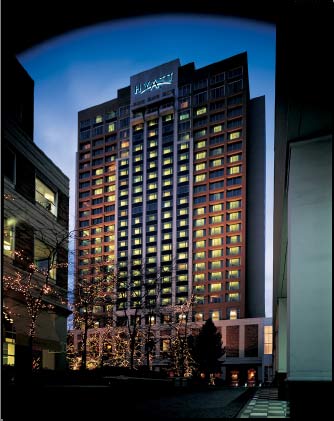
Since someone asked, I thought I'd share a selection of new hotel and mixed-use residential/hotel/retail development across the country. These are all under 300' tall, have all been either constructed or proposed since 2000, and they are in a wide variety of locations, from large-city downtowns, to suburbs, to small cities. Almost every single one of these could be made to work on the site in question. Note the one thing that almost all have in common (besides the fact that I suspect most of us would kill to have any of them built here): They all come up to the street and the sidewalk - sidewalks someone might actually use :shock: - and all have retail in the base of the building. No "walking campuses"! :P


Embassy Suites/Homewood Suites – Denver (nice, except for the surface parking lot across the street, which I doubt will be there much longer :wink:):


Conrad Hotel & Residences - Indianapolis:


Elliott Grand Hyatt – Seattle:


JW Marriott – Grand Rapids, MI:


226 Causeway St. – Boston:


248 South Main Street – Winston-Salem, NC


Cathedral Place – Milwaukee:


Seneca Place on the Commons – Ithaca, NY


Atlantic Terminal Building - Brooklyn (This has a Target and Guitar Center on the first couple of floors):


Hyatt Regency – Bellvue, WA:


The Ellington – Asheville, NC:


W Hoboken Hotel & Residences – Hoboken, NJ:


Le Meridien Hotel – Minneapolis:


Ruvin Development – Milwaukee:


Cooper Tower – Colorado Springs. CO:


Diamond Rock Plaza – Tucson:


Madison Place – Covington, KY:


First Security Center – Little Rock:


Two Waterview Place – Arlington, VA:


Marriott Hotel – San Jose:


Dana Hotel & Spa – Chicago:


Some interesting projects on this site as well:

http://www.jdavisarchitects.com/

11K
Life MemberLife Member
11K

PostAug 22, 2008#88

^ Cool. Thanks. It's too bad that Kingshighway is not a pedestrian-friendly street (maybe it could be?). I understand the desire to not have the hotel turn its back on the neighborhood, but none of us want more than a function (and hopefully nice-looking) walking connect to the residential streets . . . and I can't imagine side-walk dining along Kingshighway/40, but we can't simply throw down an office park tower - a challenging site. I think that the Atlantic Terminal Building shows that tall can go with small and work.

1,517
Totally AddictedTotally Addicted
1,517

PostAug 22, 2008#89

Grover wrote:


^ Any reasonable example (San Francisco? Boston? What else?) includes significant and contributing "new" construction. Are there cities I'm missing where historic architecture has been especially important to economic development that are also absent significant new construction? And I'm not sure that St. Louis has accrued "massive" economic benefits of any kind for any reason. I love this city, but it has decayed for the past 50 years.


Well, the major example of a preservation-friendly city that has little new construction is New Orleans. Historic architecture is probably the crux of its very economy.


My point, though, was that all of the rehabbed housing in the city (since the 1999 historic rehab tax credit via the state) has contributed to the city's economy in more ways than any other economic development project.


By the way, those 50 years of decline have not been marked by stability for the built environment. Scores of neighborhoods have been erased--Mill Creek Valley, Kosciusko, southern portion of Old North St. Louis, DeSoto-Carr, significant portions of St. Louis Place and Jeff Vanderlou, McRee Town, Gaslight Square, large portions of LaSalle Park, everything in the path of I-55, 64, 70, and 44, much of Downtown, and others.


Those decades of decline are due in part to the squandering of urbanism for suburbanism.

12K
Life MemberLife Member
12K

PostAug 22, 2008#90

I couldn't find it online, but the print edition of the Post today had a good article explaining the issue of who would control whatever land may or may not have once been part of Forest Park.

432
Full MemberFull Member
432

PostAug 22, 2008#91

jlblues wrote:
Embassy Suites/Homewood Suites – Denver (nice, except for the surface parking lot across the street, which I doubt will be there much longer :wink:):


I would love to see a "two-tower" design like that, as it's right in line with what we already have just north on Kingshighway

2,821
Life MemberLife Member
2,821

PostAug 22, 2008#92

Grover wrote:^ Cool. Thanks. It's too bad that Kingshighway is not a pedestrian-friendly street (maybe it could be?).
:-s Of course it could be. It just takes capital and a little imagination. I'm sure I don't have to tell you that there are far busier streets than Kingshighway around the country and world that are actually quite pedestrian-friendly. Unless you believe there is something unique about St. Louis that makes that impossible?


Grover wrote:. . . and I can't imagine side-walk dining along Kingshighway/40
Really? That's unfortunate. I can.


Grover wrote:- a challenging site.
Nah, not at all. The only potential development sites in the city of St. Louis that I would even begin to consider "challenging" would be those directly along the riverfront, or some of the old railroad yards or industrial sites that haven't been touched in well over 50 years. Relative to most other cities it's size or larger, property acquisition, rezoning, the project approval process, site risk, obtaining a clean title, site prep, and construction, are all a piece of cake in St. Louis. Again, if you can get the capital, all it takes is a little imagination. These are the only things in short supply in this city.


Grover wrote:I think that the Atlantic Terminal Building shows that tall can go with small and work.
Yeah, it may not be obvious from the pictures, but quite a few of those projects are in mixed-use, mixed-density neighborhoods.

320
Full MemberFull Member
320

PostAug 22, 2008#93

Along the east boundary of Forest Park, on the east side of Kingshighway, between the Chase and FPSE, would it also be important to require that new towers are constructed "on-line" to mimick the Central Park or Copacabana Beach discipline, (presuming that some of the much-coveted vacant lots are ever built upon).

2,821
Life MemberLife Member
2,821

PostAug 22, 2008#94

Chris_on_Kingsbury wrote:Along the east boundary of Forest Park, on the east side of Kingshighway, between the Chase and FPSE, would it also be important to require that new towers are constructed "on-line" to mimick the Central Park or Copacabana Beach discipline, (presuming that some of the much-coveted vacant lots are ever built upon).
"Setback" is the word. The new BJC construction along Kingshighway has, for the most part, adhered to a similar setback - whether they were required to or not, I don't know. I would hope the city will enforce a similar Kingshighway setback when something is built on the vacant lots north and south of the BJC complex.


I would also like to see a similar setback requirement established south of Hwy. 64. The sidewalk in front of the Lambskin Temple would be a good benchmark. All future construction to the north or south of the Lambskin should have a similar setback, no more, no less, but the access road requirement for this development may maje that impossible. And if anything is ever built on the NW corner of Kingshighway/Oakland it should follow the setback of the buildings on the west side of the street.

479
Full MemberFull Member
479

PostAug 22, 2008#95

Grover wrote:That's kind of funny because there is no historic rehab without new construction. I would pose the opposite and say that historic rehab has not had the same impact on the St. Louis built environment as new construction. It all depends on the length of your view.


If you take 1764 as a bencmark, new construction has made this city what it is. If you take 2000 or even 1980 as your benchmark, it's hard to say new construction has even kept a significant pace with rehab. Rehabilitation is a form of construction, yes, but not the same as from-the-ground-up construction. We have not seen enough truly new construction for us to think it's a reliable way to redevelop the city. Again, we need new construction, but we can't say anything about its staying power here until it shows some staying power.

2,430
Life MemberLife Member
2,430

PostAug 22, 2008#96

Matt Drops The H wrote:"New" construction, especially post-1950, in the city of St. Louis has contributed comparatively little.


I love generalities. Note though, that without post-1950 construction downtown St. Louis really would be a ghost town today.


As for the proposals, given the clear importance of a strong linkage between the hotel site and BJC combined with the somewhat unfriendly nature of Kingshighway and the desire to have a design that interacts with a street, maybe the idea is one not yet discussed: extending Euclid/ Old Kingshighway across Highway 40.


By bridging the highway, primary access to the site could be funneled through the existing Hospital Plaza/ Kingshighway intersection rather than through a new secondary road cutting through the residential neighborhood. Moreover, such a roadway would clearly confine development on those parcels east of what is the historic boundary of Forest Park, ideally on a rectangular area between Gibson and Chouteau and on a triangular area between Chouteau and the highway (plenty of space to locate two different hotels fronting on Euclid on each property plus underground parking). The new Euclid provides a clear pedestrian and auto connection between the hospital and the hotels and could be designed to be far more pedestrian friendly than Kingshighway. Increasing the number of connection between the CWE, the hospital complex and FPSE can only benefit the neighborhood. As for surface parking, make Euclid wide enough to accommodate on-street parking on each side to serve the hotels.

11K
Life MemberLife Member
11K

PostAug 22, 2008#97

ecoabsence wrote:
Grover wrote:That's kind of funny because there is no historic rehab without new construction. I would pose the opposite and say that historic rehab has not had the same impact on the St. Louis built environment as new construction. It all depends on the length of your view.


If you take 1764 as a bencmark, new construction has made this city what it is. If you take 2000 or even 1980 as your benchmark, it's hard to say new construction has even kept a significant pace with rehab. Rehabilitation is a form of construction, yes, but not the same as from-the-ground-up construction. We have not seen enough truly new construction for us to think it's a reliable way to redevelop the city. Again, we need new construction, but we can't say anything about its staying power here until it shows some staying power.


That's fair - I was just being a punk. I think it is fair to say that we need new construction and it's my opinion that only significant new construction will create enough competition for desireable building sites to produce excellent buildings/infrastructure. I often forget how many terrible buildings there are in Boston's Back Bay or downtown SF or Chicago or New Orleans.


Anyway re: Kingshighway as a ped street:


I don't think this makes sense - why not concentrate on Manchester, Sarah, Euclid, Delmar, DeBaliviere? They're more natural for this type of use. The proposed site does not have significant views of Forest Park and you have 8 lanes of 40+mph traffic whizzing by.


Does anyone else have an idea of how this site might work for a hotel? Or anything else? Residential could be interesting - especially if the land was built up as a continuation of Gibson/Chouteau etc. Then the buildings may have enough height to not feel as though they're sunk next to the highway.


Why not something like this? All residential. The difficulty with the site is 1) access if it's a commercial development and 2) Forest Park land if anything is to be built west of a line continuing from Kingshighway to Euclid.


PostAug 22, 2008#98

JMedwick wrote:
Matt Drops The H wrote:"New" construction, especially post-1950, in the city of St. Louis has contributed comparatively little.


I love generalities. Note though, that without post-1950 construction downtown St. Louis really would be a ghost town today.


As for the proposals, given the clear importance of a strong linkage between the hotel site and BJC combined with the somewhat unfriendly nature of Kingshighway and the desire to have a design that interacts with a street, maybe the idea is one not yet discussed: extending Euclid/ Old Kingshighway across Highway 40.


By bridging the highway, primary access to the site could be funneled through the existing Hospital Plaza/ Kingshighway intersection rather than through a new secondary road cutting through the residential neighborhood. Moreover, such a roadway would clearly confine development on those parcels east of what is the historic boundary of Forest Park, ideally on a rectangular area between Gibson and Chouteau and on a triangular area between Chouteau and the highway (plenty of space to locate two different hotels fronting on Euclid on each property plus underground parking). The new Euclid provides a clear pedestrian and auto connection between the hospital and the hotels and could be designed to be far more pedestrian friendly than Kingshighway. Increasing the number of connection between the CWE, the hospital complex and FPSE can only benefit the neighborhood. As for surface parking, make Euclid wide enough to accommodate on-street parking on each side to serve the hotels.


^ I like it. The only problem would be that anything built west of the new Euclid would be on former Forest Park land (again, this seems to be the major stumbling block and why the Drury's would require existing homes to build what has been presented). Also, it's too bad that WU Med has closed Euclid as a through street to the north. I'm guessing they have zero interest in seeing Euclid extend South.


By the way, I'm also fascinated by the possibility of extending Taylor Avenue south to McRee. IMO this would really help that dead-end corner of FPSE and make it attractive to new housing.

1,517
Totally AddictedTotally Addicted
1,517

PostAug 23, 2008#99

JMedwick wrote:
Matt Drops The H wrote:"New" construction, especially post-1950, in the city of St. Louis has contributed comparatively little.


I love generalities. Note though, that without post-1950 construction downtown St. Louis really would be a ghost town today.


Hah! Without 1950s-1990s demolition, downtown St. Louis might actually have the makeup to be a functional downtown. Who knows--maybe it never would have spiraled into such decline.

12K
Life MemberLife Member
12K

PostAug 23, 2008#100

Grover wrote:Also, it's too bad that WU Med has closed Euclid as a through street to the north. I'm guessing they have zero interest in seeing Euclid extend South.


Yeah, I never understood why they closed Euclid. Seems to me that easy, efficient access would be highly desirable for a large medical complex. FPSE, on the other hand, would probably hate to have all of that extra traffic going through their neighborhood.

Read more posts (214 remaining)