AT&T Utility Buildings

3,803
Life MemberLife Member

Post1:37 PM - Sep 12#1

So, I've been hanging out in The Hague for the past week and inevitably comparing it to St. Louis and lamenting. The Hague is half the physical size of St. Louis with a population of ~550K and a very modest height of about 3 stories on average. It's bustling and a joy to walk and bike around. I know, I know... it's the national capital and the Netherlands is tiny and one of the densest nearly-contiguous urban landscapes on Earth etc etc. But wealth aside, and while things are closer together, the scale is not so different from STL.

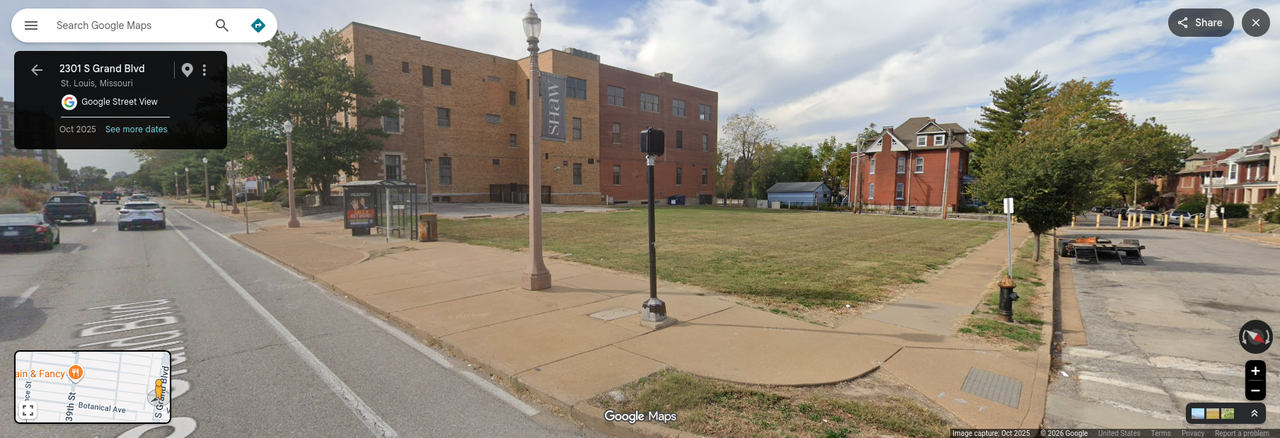
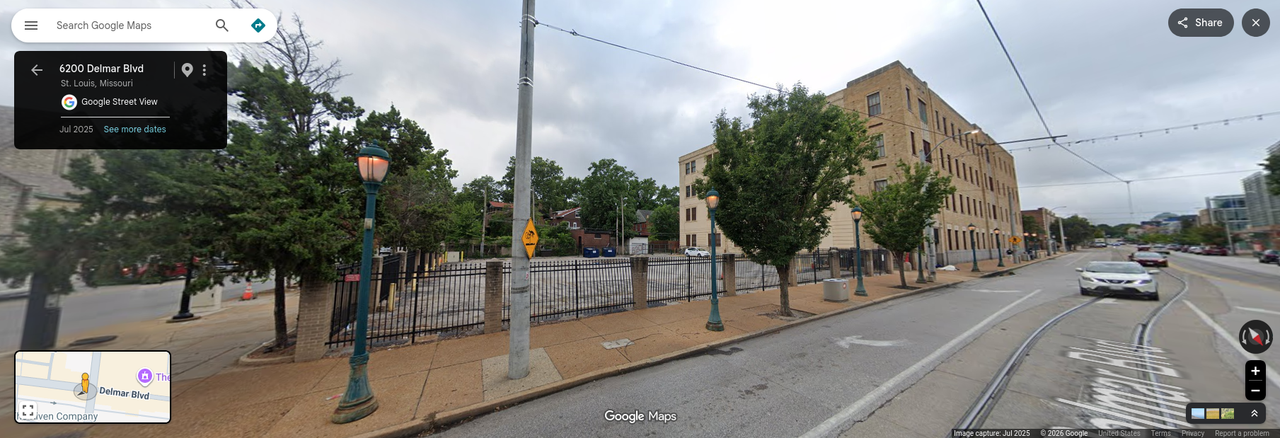
Anyway, the general comparison isn't the point of this post. I got to comparing Google Maps of the 2 cities and was reminded of AT&T's 2 utility buildings at Grand & Shenandoah and at Delmar & Skinker. (Are there more that I'm forgetting?) Why is AT&T allowed to maintain moats around these buildings? It is absolutely egregious. Supposedly they claim "access and security reasons" but what is the actual security threat? A quick search suggests they only house equipment for localized landline and network services—I would guess such demand is greatly reduced these days. Access-wise, I've never seen a single vehicle parked at the Grand location, and there are only ever one or two vehicles parked in the fenced-off lots at the Delmar location. These things have been destroying the streetscape for decades (https://nextstl.com/2018/03/the-loss-of-an-urban-intersection-at-skinker-and-delmar-a-look-at-st-louis-in-the-1970s/). How do we get rid of them? If this is what data centers in the City are going to look like (see also the TierPoint data center in DT West) then the City is even more f*cked.
2,086
Life MemberLife Member

Post8:57 PM - Sep 12#2

I did a visit to the Delmar location for some radio telecommunications stuff a few years ago. The place used to be humming and clicking with multiple floors of telephone switches. Of course the mechanical switches don't exist much anymore, and neither do many landlines. In the building, there's literally a small rack in the first floor with some network equipment, and on the top floor there's a room with some radio equipment that powers a couple cellular arrays on the roof. It's 90% empty. The (very) few workers there I believe aren't even AT&T workers anymore, as they contract out their radio engineering to another company. 

1,065
Expert MemberExpert Member

Post10:27 PM - Sep 12#3

This is already what most data center buildings look like.

Sent from my SM-S936U using Tapatalk


13K
Life MemberLife Member

Post11:34 PM - Sep 12#4

They also don't clear the snow from the sidewalk.
One of the brick columns got knocked in half over ten years ago. The top half is still sitting on the ground. It took them too long, after complaining, for them to move it from the sidewalk.

620
Senior MemberSenior Member

Post1:15 AM - Sep 13#5

urban_dilettante wrote: ↑
1:37 PM - Sep 12
So, I've been hanging out in The Hague for the past week and inevitably comparing it to St. Louis and lamenting. The Hague is half the physical size of St. Louis with a population of ~550K and a very modest height of about 3 stories on average. It's bustling and a joy to walk and bike around. I know, I know... it's the national capital and the Netherlands is tiny and one of the densest nearly-contiguous urban landscapes on Earth etc etc. But wealth aside, and while things are closer together, the scale is not so different from STL.

Anyway, the general comparison isn't the point of this post. I got to comparing Google Maps of the 2 cities and was reminded of AT&T's 2 utility buildings at Grand & Shenandoah and at Delmar & Skinker. (Are there more that I'm forgetting?) Why is AT&T allowed to maintain moats around these buildings? It is absolutely egregious. Supposedly they claim "access and security reasons" but what is the actual security threat? A quick search suggests they only house equipment for localized landline and network services—I would guess such demand is greatly reduced these days. Access-wise, I've never seen a single vehicle parked at the Grand location, and there are only ever one or two vehicles parked in the fenced-off lots at the Delmar location. These things have been destroying the streetscape for decades (https://nextstl.com/2018/03/the-loss-of-an-urban-intersection-at-skinker-and-delmar-a-look-at-st-louis-in-the-1970s/). How do we get rid of them? If this is what data centers in the City are going to look like (see also the TierPoint data center in DT West) then the City is even more f*cked.

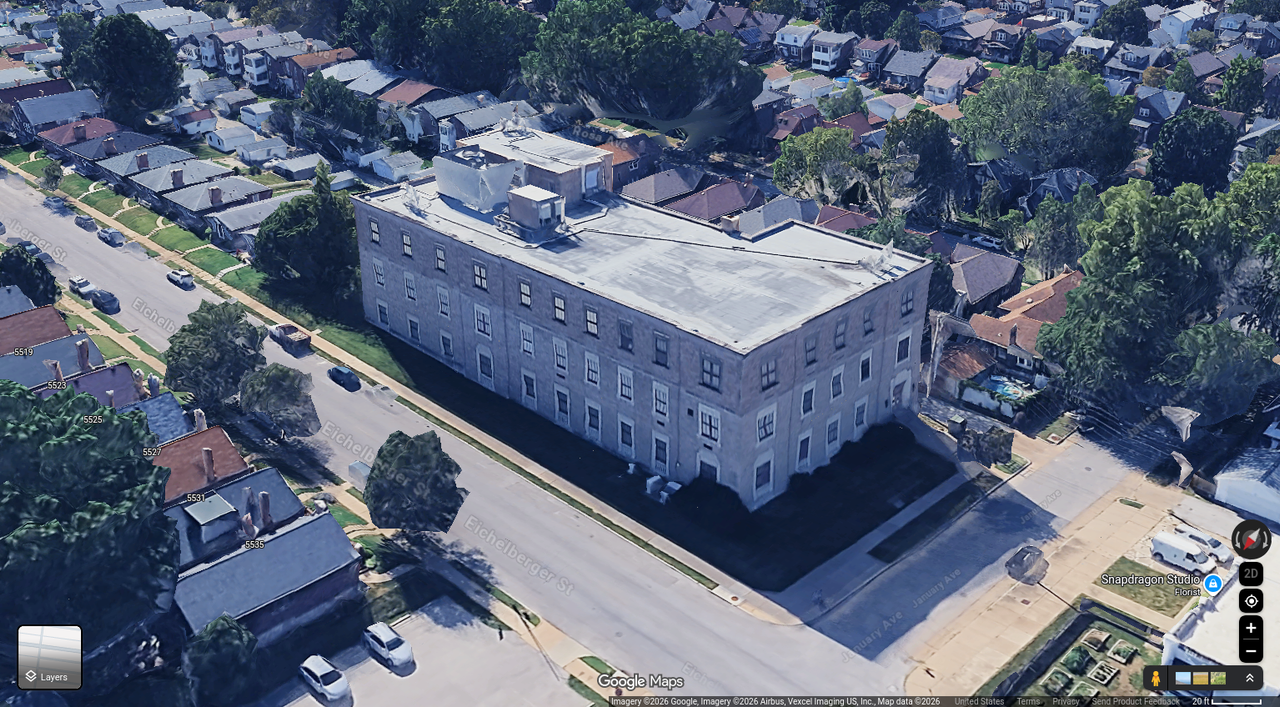
There is one near the border of the South Hampton and Princeton Heights neighborhoods.  I believe on Eichelberger.  Ive always thought they would be great apartment conversions.  

1,065
Expert MemberExpert Member

Post2:13 AM - Sep 13#6

That one still has a decent number of employees. The real kicker is that they have two surface parking lots for employees, but only one actually gets used.

Sent from my SM-S936U using Tapatalk


6,231
Life MemberLife Member

Post3:57 PM - Sep 13#7

I really think a land tax that makes surface parking prohibitively expensive as a form of landbanking is at least a part of the solution. Too many places hold onto surface lots they don't need with the idea that they can eventually sell them at a profit. And put the revenue generated directly into transit. Stick a meter on every city street at every parking space, and tax private parking. Fund public transit and make the city more walkable at the same time. Win-win.

2,739
Life MemberLife Member

Post4:04 PM - Sep 13#8

For a company has heavily indebted as AT&T you would think they would consider selling off some of these buffer lots or at least allowing them to be developed in some way. Especially the more valuable parcels like on Delmar. It's really an atrocity of urbanism and IMO holds the whole west loop down. The intersection is now far better than it was thanks to the Link building but it still really keeps east and west feeling disconnected.

Supposedly they did this because decades ago a fire spread to the adjacent switch building and caused a ton of problems. IMO they could easily develop this lot and dictate that it be built in such a way to not pose a danger.

U-City/The Loop/ the City should start a campaign of fining them for things like unshoveled snow or broken brick columns. It will either get them to be better stewards of the land or annoy them into selling some or all of the complex

620
Senior MemberSenior Member

Post12:47 AM - Sep 14#9

GoHarvOrGoHome wrote: ↑
4:04 PM - Sep 13
For a company has heavily indebted as AT&T you would think they would consider selling off some of these buffer lots or at least allowing them to be developed in some way. Especially the more valuable parcels like on Delmar. It's really an atrocity of urbanism and IMO holds the whole west loop down. The intersection is now far better than it was thanks to the Link building but it still really keeps east and west feeling disconnected.

Supposedly they did this because decades ago a fire spread to the adjacent switch building and caused a ton of problems. IMO they could easily develop this lot and dictate that it be built in such a way to not pose a danger.

U-City/The Loop/ the City should start a campaign of fining them for things like unshoveled snow or broken brick columns. It will either get them to be better stewards of the land or annoy them into selling some or all of the complex
Several loop related groups have been trying to but the lot from AT&T for 20 plus years with no luck.  They are definitely poor stewards of the aforementioned neighborhoods.  I'm pretty certain that they own the land adjacent to the large building on Grand.  

1,343
Veteran MemberVeteran Member

Post5:46 AM - Sep 14#10

That's where eminent domain would come in handy.

1,065
Expert MemberExpert Member

Post6:25 AM - Sep 14#11

God forbid the government seize land from slum lords for it to be used for something good. Not in Bob Clark's St. Louis.

Sent from my SM-S936U using Tapatalk


1,544
Totally AddictedTotally Addicted

Post3:09 AM - Sep 15#12

GoHarvOrGoHome wrote: ↑
4:04 PM - Sep 13
For a company has heavily indebted as AT&T you would think they would consider selling off some of these buffer lots or at least allowing them to be developed in some way. Especially the more valuable parcels like on Delmar. It's really an atrocity of urbanism and IMO holds the whole west loop down. The intersection is now far better than it was thanks to the Link building but it still really keeps east and west feeling disconnected.

Supposedly they did this because decades ago a fire spread to the adjacent switch building and caused a ton of problems. IMO they could easily develop this lot and dictate that it be built in such a way to not pose a danger.

U-City/The Loop/ the City should start a campaign of fining them for things like unshoveled snow or broken brick columns. It will either get them to be better stewards of the land or annoy them into selling some or all of the complex
Decades ago there was a fire next to one of the exchanges somewhere in the city that destroyed one of their buildings - So Bell bought the buildings around all of theirs and then demoed them which is why the old exchanges have vacant lots surrounding them. Not sure if it is engineering, operations or real estate that does not want them sold but somewhere inside AT&T there is a dinosaur that thinks they will need them in the future 

3,803
Life MemberLife Member

Post12:05 PM - Sep 15#13

symphonicpoet wrote: ↑
3:57 PM - Sep 13
I really think a land tax that makes surface parking prohibitively expensive as a form of landbanking is at least a part of the solution. Too many places hold onto surface lots they don't need with the idea that they can eventually sell them at a profit. And put the revenue generated directly into transit. Stick a meter on every city street at every parking space, and tax private parking. Fund public transit and make the city more walkable at the same time. Win-win.
yep, i like all of this.

Post12:18 PM - Sep 15#14

STLAPTS wrote: ↑
1:15 AM - Sep 13
There is one near the border of the South Hampton and Princeton Heights neighborhoods.  I believe on Eichelberger.  Ive always thought they would be great apartment conversions.  
Maybe this place at Eichelberger and January? Not nearly as egregious as the other examples but, yeah, it could be put to much better use as apartments.


Post12:29 PM - Sep 15#15

In addition to establishing a land tax, the City needs to be much more assertive with eminent domain, especially concerning long-held, undeveloped or underdeveloped properties. Realistically, there's just no other way to get rid of this type of blight in a lower-demand market like STL.

Post12:32 PM - Sep 15#16

bprop wrote: ↑
8:57 PM - Sep 12
I did a visit to the Delmar location for some radio telecommunications stuff a few years ago. The place used to be humming and clicking with multiple floors of telephone switches. Of course the mechanical switches don't exist much anymore, and neither do many landlines. In the building, there's literally a small rack in the first floor with some network equipment, and on the top floor there's a room with some radio equipment that powers a couple cellular arrays on the roof. It's 90% empty. The (very) few workers there I believe aren't even AT&T workers anymore, as they contract out their radio engineering to another company. 
Thanks for that info. It's even worse than I expected. There's absolutely no reason the remaining equipment couldn't be moved to a more suitable location.

620
Senior MemberSenior Member

Post1:30 PM - Sep 15#17

Yup.  That is the one that I was referring to.  You could build very desirable homes on the adjacent parking lots that STL Alex referenced.

1,065
Expert MemberExpert Member

Post3:21 PM - Sep 15#18

This neighborhood has houses going for $400k+ these days and I have heard of people passing over it because it's too expensive for them, but we have surface parking lots on one end and Ameren trying to demolish houses on the other side.