Are you serious? The officers had an AK-47 pointed at them. When on Earth are people going to start focusing some energy on the fact that STL has a contingent of lawless, gun-toting, drug-trading, no-value-for-life miscreants that kill wantonly...
But go ahead, focus energies elsewhere....ridiculous
I believe you're conflating two separate situations here, my friends. I'm not defending the criminals or excusing their behavior or saying the police did anything wrong in this case. I'm simply saying there are A LOT of officer involved shootings going on and the oversight investigating them might be questionable. This should be a concern for all.
IMHO, there are two separate issues in the city of St. Louis with respect to crime, well more than two, but I'll just focus on two here for the sake of defending my position here:
Issue 1) A sh*tload of violent crime that I believe we all need to see decline ASAP
Issue 2) Possible questionable police oversight exhibit A
I am skeptical to believe that issue #1 can be effectively resolved without first resolving issue #2.
Additionally, I'm wanting to see public servants held to the civil standards they've committed to. Please feel free to let me know where that is in the wrong. I'll wait while you try and figure that one out. K? Thx.
Exhibit A for why population loss from North City is going to be horrific in the next census. The City of St. Louis will likely end up being plurality white by 2020 if it is not already.
South of I-55/44 had a population of 157,000, which was down 9% from 2000. If there's 138,000 there now, that's a murder rate of 16.7 per 100,000.
Central corridor had 61,000 in 2010, up 9% from 2000. If there's 65,000 there now, murder rate in central corridor is 21.5 per 100,000.
Right about 100,000 people lived north of Delmar in 2010, which was down 16% from 2000. If there's about 88,000 there now, that's a murder rate in north St. Louis of 175 per 100,000.
[For reference, East St Louis has a murder rate of about 85 per 100,000 over the last five years. It fluctuates between 65 and 100 or so.]
[2nd for reference: the US KIA rate in Iraq was about 500 per 100,000 from 2004 to 2007, about 165 per 100,000 in 2008, and about 80 in 2009.]
As stlhistory mentioned North City likely has under 100,000 people now. Brooklyn more than 2.5M.
Homicides in those boroughs are also extremely concentrated in a couple neighborhoods (Brownsville, East NY for Brooklyn, Ozone Park for Queens, South Bronx for the Bronx). Since NYC boroughs are larger than most cities in the US, I wonder how the borough neighborhood comparison scales against the STL South/Centre/North breakdown.
The city is looking for question submissions for a townhall-style event for the six final candidates for police chief. You can submit your questions here: http://bit.ly/CAC_Townhall.
I submitted four myself. The townhall takes place on Thursday, the 14th from 6-8PM at SLU Law School.
The only way I see this really changing is through steady population growth. North City is a wasteland because there are no longer eyes on the street. Entire blocks with zero residents watching from their living room windows. It's a vicious cycle and unfortunately we have demolished a majority of the housing stock leaving little room for the few people who DO want to live there.
We need population growth and metro lines to connect the area to the city. Without population growth, the N/S metrolink will likely not have a huge affect on the area, but with growth the area around the route can become a boomtown of sorts filled with new residents looking for a bargain on rent. The growth will come, we need N/S to be ready for it.
I'm not so sure that population growth drives down crime or that population loss accelerates crime. East St Louis has a lower crime rate than north St. Louis at this point, so that's one piece of evidence to suggest that eventually even the criminals will move out once things get too bad.
Lots of theories about crime exist, but generally they center on poor educational outcomes and lack of economic opportunity. These two factors are inherently linked, but solving the crime crisis in north St. Louis is a problem of solving the education and economic crisis in north St. Louis. If we merely continue to try to solve the symptom (200 homicides), that might ameliorate some of the issue, but until the region tackles the cause, we will continue to see this outcome.
Lots of theories about crime exist, but generally they center on poor educational outcomes and lack of economic opportunity. These two factors are inherently linked, but solving the crime crisis in north St. Louis is a problem of solving the education and economic crisis in north St. Louis.
Yep. Totally agree. I would suspect most of these crimes are drug related. Its the easiest way for a lot of people in that area to make money.
A sizeable share of the crime I see in St Louis seems to be very obviously drug related. But there's also a lot of random crime that does not seem to be directly related to drugs (such as random beatings in the street, etc.), and more often than not the descriptions of the suspects and how they act seem to suggest some sort of very strong learning disability/mental illness. I wonder if this is related: https://www.brookings.edu/blog/up-front ... ses-crime/
South of I-55/44 had a population of 157,000, which was down 9% from 2000. If there's 138,000 there now, that's a murder rate of 16.7 per 100,000.
Central corridor had 61,000 in 2010, up 9% from 2000. If there's 65,000 there now, murder rate in central corridor is 21.5 per 100,000.
Right about 100,000 people lived north of Delmar in 2010, which was down 16% from 2000. If there's about 88,000 there now, that's a murder rate in north St. Louis of 175 per 100,000.
[For reference, East St Louis has a murder rate of about 85 per 100,000 over the last five years. It fluctuates between 65 and 100 or so.]
[2nd for reference: the US KIA rate in Iraq was about 500 per 100,000 from 2004 to 2007, about 165 per 100,000 in 2008, and about 80 in 2009.]
This is unreal. Thanks for sharing. It's really shocking. Any idea on how the rate in Central Corridor or South City compares to other cities in St. Louis's peer group? (I do realize that's a bit of cherry picking the data but am curious nontheless)
It's pretty straightforward to slice up cities and find the most violent areas, but I felt like it wasn't a stretch to break out the north, south, central corridor since the city of St. Louis already does that. That being said, 16.7 per 100,000 is a little higher than what all of Metro Nashville is this year. As a former Nashvillian who moved to St. Louis, I can say that south city (even the parts east of Grand) feels pretty much like most of the urban parts of Nashville do in terms of safety. There isn't really anything quite like north St. Louis in Nashville, although some neighborhoods like East Nashville are similar, it's way smaller in area and population (1/3 the size). The Metro also helps in that Nashville literally extends into the hills and hollers way out in the country.
Another fact to consider as we rightfully note that homicides are up in St. Louis: since about 2014, homicides are up dramatically in Memphis, Nashville, Louisville, Chattanooga, Birmingham, Jackson MS, Milwaukee, Chicago... you name it. It might be easier to find a city that hasn't seen a serious uptick in violent crime in the last three years than those that have. Nashvillians are themselves perplexed by the increase.
One final thing since a lot of people were taken by the war zone comparison: the peak years of fighting in Iraq (2004-2007) had death rates of closer to 500 killed per 100,000, and even with the low level of forces in Iraq now of about 7,500 soldiers, the rate is about 200 per 100,000.
^Popular among politicians who want to look like they're doing *something* but they don't work. Just a waste of resources. Here's a "simple" plan to address crime that would take 5-10 years to pay off but would show real results.
1) Partner with WUSTL and SLU medical schools to offer Finnish-style "Baby Boxes" and in-home visits for pregnant mothers in north corridor. Focus on improving life expectancy for babies and new mothers, and ensure vulnerable families have access to the best medical and educational opportunities. Hand off these families to #2.
2) Partner with charter schools, SLPS, and county schools to identify and assist every single vulnerable child as they enter the education system. Reach out to Google to build a community program that will help with this. Coordinate home visits by social workers and teachers, offer after school and before school care with trained education professionals, and intervene early with reading, math instruction to ensure kids are at or approaching grade level as they enter middle school (5th grade).
3) Partner with SLCC, HSSU, WUSTL, Webster, UMSL, SLU, Lindenwood, Maryville to ensure students are "college ready". Home visits and school visits by admissions counselors with college counselors in every middle and high school. Continue the home visits by teachers and social workers. Connect work-ready students with job opportunities *everywhere* -- retail, restaurants, custodial, etc., so that kids start earning a paycheck when they're 16. Give out transit passes to get them to work. Have social workers continue to work with these families to ensure the money is going to help the kid develop a steady plan for moving out on their own. Oh, and put some damn basketball hoops in the parks while you're at it.
4) Community-based policing strategies work. Get the police out of the three hubs and open "pop up help shops" in vacant buildings throughout north St. Louis. Hire more and better police (and yes, you will have to pay them more). Pair these changes with an empowered review board.
Stop wasting money on stupid stuff like gun buybacks. Get real, St. Louis.
^^Thank you. I like the way you think. Might I also add hiring a police chief who has more social work cred and less "night owning" cred than those in recent history. Please and thank you.
Some good notes about the new police chief in the Royale Political Wire podcast.
- 8 prospects of all colors/gender/etc are all coming into town over the next 2 weeks and interview. Should have a hire by January. A lot of other good tidbits on Tax Financing, Workhouse issues, etc. on there also.
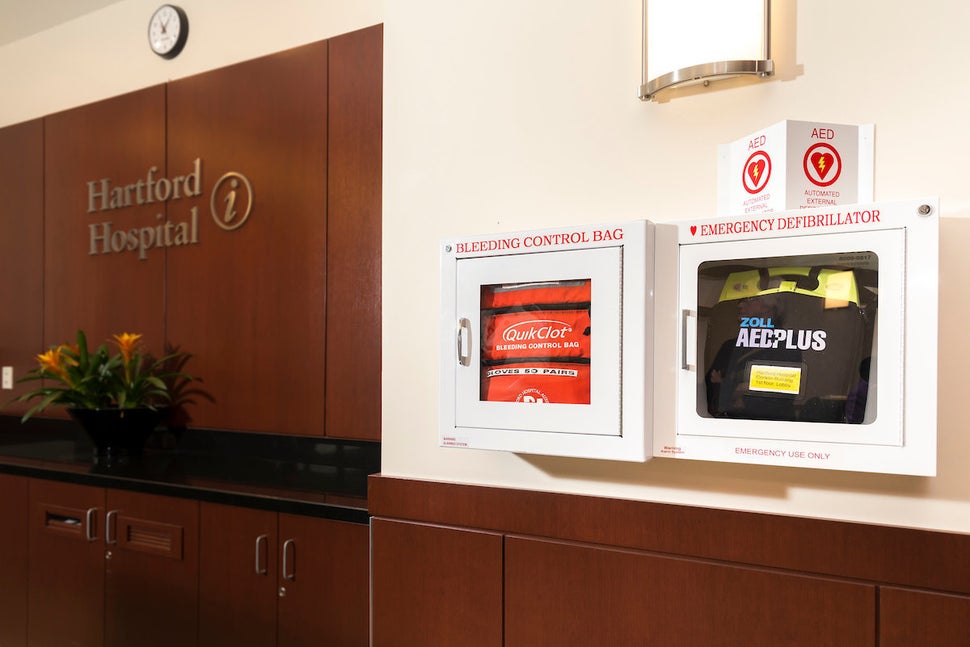
Here is another interesting piece about how to save lives in mass shootings reviving the use of tourniquets to stop heaving bleeding as fast as possible. It shows how one guy's life was saved in the Las Vegas mass shooting with his own belt by a guy who used it stop massive bleeding.
If We’re Not Going To Stop Mass Shootings, These Doctors Want To Teach Civilians How To Save Lives
This quote line jumped out at me:
"Bleeding control kits are being installed next to automated external defibrillators in places like airports and sports arenas, schools and ski resorts."
Here is another interesting piece about how to save lives in mass shootings reviving the use of tourniquets to stop heaving bleeding as fast as possible. It shows how one guy's life was saved in the Las Vegas mass shooting with his own belt by a guy who used it stop massive bleeding.
If We’re Not Going To Stop Mass Shootings, These Doctors Want To Teach Civilians How To Save Lives
This quote line jumped out at me:
"Bleeding control kits are being installed next to automated external defibrillators in places like airports and sports arenas, schools and ski resorts."
Probably should just put a gun in a glass case, right? Only logical way to stop a bad guy with a gun.
Sadly the city has eclipse over 200 souls lost this year a 21 year high and the first for the 2000's .
I simply don't think the gun buy back program will solve anything and will the next police chief tackle crime particularly the outrageous homicide rate here? Will he or she be aggressive with criminals? be aggressive about getting drugs and guns off the streets and out of homes?
This will definitely be a black eye on the city for sometime I'm hoping this doesn't repeat for next year or become the new norm.
Will St.Louis City ever become a safe city?
Three women were shot and killed last night in North St. Louis. I'd be interested to see the statistics on women victims, as there seems to be many more this year than usual.
^ Seems about on par with last couple years... 24 women were homicide victims at the end of November, so at least 27 now. For all of 2016 there 31 female victims and 29 in 2016, So maybe a slightly lower percentage considering the higher number of homicides this year.