1,585
Totally AddictedTotally Addicted
1,585

PostFeb 11, 2016#176

America's energy policy should be an "All of the Above" approach as we naturally transition to renewables. People need to weigh global warming with the impact that the coal industry has on communities. Areas like Southern Illinois depend on the coal industry. Many people (particularly in those communities) see the benefits of those jobs as outweighing whatever impact carbon emissions have on the environment. As renewable energy gets more advanced and cheaper to produce, I think the market will eventually transition from fossil fuels by itself.

There is still a huge export market for coal. That was the push-back during the climate summit in Paris from developing nations. Countries like India pushed back against the West's demands to limit carbon emissions because they saw the West's demands as being hypocritical since the West was able to industrialize using fossil fuels. Now that those developing countries are doing the same, the West shouldn't sweep in and limit their resources for industrialization (as the argument goes).

The trouble then for St. Louis becomes competing with the West Virginia coal fields (of course, this competition is nothing new). My current city of Newport News initially developed because it was a convenient location to ship the West Virginian coal to for export overseas. Today I can drive down to the Newport News Terminal of the Port of Virginia and there are massive, 6-story high mountains of coal waiting to be loaded onto a ship. (I also remember something about West Virginia coal being cleaner than Illinois coal, but I'm fuzzy on the specifics).

1,190
Expert MemberExpert Member
1,190

PostFeb 11, 2016#177

The trouble then for St. Louis becomes competing with the West Virginia coal fields (of course, this competition is nothing new). My current city of Newport News initially developed because it was a convenient location to ship the West Virginian coal to for export overseas. Today I can drive down to the Newport News Terminal of the Port of Virginia and there are massive, 6-story high mountains of coal waiting to be loaded onto a ship. (I also remember something about West Virginia coal being cleaner than Illinois coal, but I'm fuzzy on the specifics).
What competition? The majority of Peabody's mines are located out west and are generally low sulfur coal used in power plants. All of Ameren's plants run on Powder River Basin coal from Wyoming. There's a reason why Peabody and Foresight are still in business and Patriot and Arch coal went out of business. Patriot was a spin off of Peabody's eastern mines. Arch coal had a number of eastern mines as well. Peabody and Foresight are likely in business because they aren't in the West Virginian mines.

1,585
Totally AddictedTotally Addicted
1,585

PostFeb 11, 2016#178

^Good info. My mistake in assuming that Peabody was primarily invested in the Illinois Basin mines, when the correct statement would be that the Illinois Basin mines are primarily owned by Peabody.

So that raises a question to me of how entrenched is Peabody in St. Louis? Before if the company was split between their eastern mines and their western mines then St. Louis was a natural location for a headquarters. However, with an increased focus and dependence on their western mines and with them selling off their eastern mines, is their any danger of them moving out west? Looking at the other top coal produces, Cloud Peak operates only western mines and is headquartered in Wyoming. Alpha Natural Energy locates Appalachian mines and Wyoming mines (with Appalachian production slightly outpacing western production) and is headquartered in Appalachian Virginia. Edit: Arch operates more eastern than western (though larger mines in the west), and as we know, went bankrupt.

Obviously, proximity isn't a must since Peabody owns mines all over the world, but it's a question at first glance since their top competitors are located in the general region of their primary operations (obviously, I'm more familiar with the coal mining heritage in southern Illinois than I am with its corporate workings). This from Peabody's website was encouraging, though:
The company operates multiple underground and surface mines throughout the Illinois Basin, the fastest-growing coal-producing region in the United States.

Opened in 2010, Peabody’s Bear Run Mine in Sullivan County, Ind., is the largest surface mine in the eastern United States, with an 8 million-ton annual production capacity.

Also in Indiana is Wild Boar Mine, the underground Francisco Mine and the Somerville Mine Complex located in Gibson County. The Somerville Mine Complex consists of three surface mines: Somerville North, Somerville South and Somerville Central.

In Illinois, Peabody operates the underground Gateway Mine and Wildcat Hills Mine, as well as the surface Cottage Grove Mine.

1,190
Expert MemberExpert Member
1,190

PostFeb 11, 2016#179

They are pretty heavily invested in Illinois and Indiana. I believe Peabody signed a 10 year lease not too long ago for the building they are in. I believe they got some sort of tax abatement out of the deal.

I don't know what Peabody pays tax-wise in the city, but the headquarters only has a few hundred people working there I believe. So if they moved, I don't see it as a huge loss. But I don't know enough about them financially.

3,235
Life MemberLife Member
3,235

PostFeb 11, 2016#180

I am not sure if they are moving or not but they sure seem to be going bankrupt.

1,585
Totally AddictedTotally Addicted
1,585

PostFeb 11, 2016#181

I'm doing some google research on the coal industry, and yeah, going bankrupt seems to be the new standard in the industry.

Apparently, along with tighter regulations, the big problem is that there's a huge glut of coal: http://www.dailynewsx.com/news/science- ... 12019.html
Alpha Natural Resources Inc., Walter Energy Inc., Patriot Coal Corp., James River and Arch Coal Inc. have sought bankruptcy protection since April 2014.

472
Full MemberFull Member
472

PostFeb 11, 2016#182

shimmy wrote:The trouble then for St. Louis becomes competing with the West Virginia coal fields.
We shouldn't kill the industries we have, but we shouldn't baby them either. We can't sit here and compete with West Virginia for an industry with a weak future. Algae might have a future. Maybe.

SunEdison is about the only thing forward looking we have. Mircogrid too I guess.

3,235
Life MemberLife Member
3,235

PostFeb 12, 2016#183

SunEdison is getting bought out or going bankrupt.

5,704
Life MemberLife Member
5,704

PostFeb 12, 2016#184

Solar might be forward looking but not sure if SunEdison business model is forward looking. I'm still trying to understand exactly how they were going to make money buying into solar without producing their own panels or not having a rooftop business like from what I can understand. I might be off base, but to me SunEdison is more like a traditional independent power supplier but instead of buying utility size coal or gas fired power plants to sell wholesale power they were trying to buy into utility size solar farms. like Downtown2007 notes, they have been taking a hit and believe selling off assets to stay afloat.

12K
Life MemberLife Member
12K

PostFeb 12, 2016#185

Right now it seems that we have a global glut of coal, oil, and natural gas. Who'da thunk?

472
Full MemberFull Member
472

PostFeb 12, 2016#186

It is strange how little skin St. Louis has in the green jobs game. We do a little scrap dealing, but we're not great recyclers. The only slightly green energy that interests us is biofuels and only the not ready for market kind which the Danforth center thinks will be great in tropical locations and deserts (not here).

At least we have the Pure Power program which Ameren uses to buy from elsewhere rather than to build locally.

4,489
Super ModeratorSuper Moderator
4,489

PostFeb 13, 2016#187

Imagine this company in an automation park or "SMART" park somewhere in Metro St. Louis (and in addition to CORTEX) producing these "smart" meters alongside other advanced manufacturers of a vast array of smart devices - televisions, toys, phones, computers etc.

Hazelwood-based Aclara wins big NY smart meter contract
4 hours ago • By Jacob Barker
St. Louis Business Journal
02/12/16


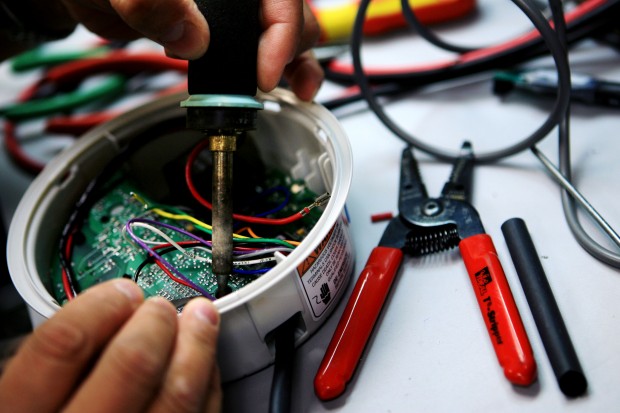
FILE PHOTO JUNE 9, 2008 -- HAZELWOOD Engineering Technician Leon Tran uses solder to attach a wire to a board as he and other engineers at Aclara work in the engineering and testing center at their Hazelwood location. Erik M. Lunsford | Post-Dispatch

Hazelwood-based utility equipment maker Aclara scored a big win with a contract to provide smart electric meters that will connect some 3.9 million New York utility customers to a new advanced metering system.

Aclara announced this week that Consolidated Edison Inc.'s electric utilities had awarded it the project, subject to approval by the New York Public Service Commission.

The new meters are designed to help reduce manual meter reading and detect and locate outages.

“We are proud that Aclara Meters has been selected by one of the largest and leading utilities in the United States to provide advanced metering technology to one of the largest systems in the country," said Ed Myszka, Senior Vice President at Aclara.

Aclara declined to disclose the value of the contract.

Two months ago it purchased General Electric's electric meter business to bolster its own.

Read More

PostFeb 13, 2016#188

Looks like it is a wrap for SunEdison. They grew to fast it seems, in my opinion.

Shares of SunEdison plummet after court order
6 hours ago • By Jim Gallagher
St. Louis Post-Dispatch
02/12/16

Shares in SunEdison fell 31 percent Friday after a judge in New York issued a temporary injunction limiting the sale of company assets.

The injunction was sought by Latin America Power Holding B.V. against SunEdison in a dispute over SunEdison’s canceled buyout of Latin America Power.

The Wall Street Journal reported that the temporary restraining order bars SunEdison, its holding company and its Terraform Power Inc. affiliate from “concealing, transferring or removing their assets, accounts or other property that may be subjected to attachment,” except for fair value and in the ordinary course of business.

The order, issued by New York Supreme Court Justice Charles E. Ramos, would stay in place until a Feb. 25 court hearing.

Shares of SunEdison closed Friday at $1.41, down 63 cents. The shares have lost 95 percent since July.

SunEdison, based in Maryland Heights, is a developer of solar and wind power.

Read More

PostFeb 13, 2016#189

If they are dissolved, I wish SunEdison would sell some of its assets to a local firm. It is very possible.

SunEdison Semiconductor, which still exists, was spun-off parent company SunEdison, which was once MEMC.
SunEdison Semiconductor (Nasdaq: SEMI) reported $840.1 million in 2014 revenue. It’s stock was trading at $18.55 early Thursday morning, down from its 52-week high of $27.93 in March.

Source

1,982
Never Logs OffNever Logs Off
1,982

PostFeb 22, 2016#190

Any reason to believe in a positive future with SunEdison?

I bought a handful of shares of SunEdison when I first delved into the stock market last year. I went with a couple of local companies (in addition to others), and I had heard they were trending upward. Obviously not.

Anyways, I could lose everything I invested in SunEdison and be fine because I'm literally talking about just a handful of shares. I'm playing a very low stakes stock game.

Just curious if I should get out on them now or hold any hope of things improving? Thoughts?

4,553
Life MemberLife Member
4,553

PostFeb 22, 2016#191

I'd get out. Emerson, Olin, and Mallinckrodt all seem like better bets (and are less likely to go to zero) in terms of local companies that have been hammered recently, could weather the strong dollar/global economic slowdown, and ultimately show gains from the current levels. For Emerson and Olin you'll also get paid pretty nicely to wait for any share price recovery (4% and 5.5% respectively).

Laclede has been on a tear recently and looks a little pricey, but is extremely solid and has been accelerating their dividend growth the last few years.

SunEdison is a much riskier bet than any of those, and has been up to some really creative accounting tricks that are starting to unravel. It's really just more of a straight gamble (which might be okay if you're ready to lose all of it) than an investment.

12K
Life MemberLife Member
12K

PostFeb 23, 2016#192

I bought a bunch of Aurora Foods stock a few years ago, wanting to invest in local companies. I figured with all of their name-brand products, I couldn't go wrong. Well, they promptly tanked, and I lost everything.

I learned to leave individual stock picks to the pros.

472
Full MemberFull Member
472

PostMar 04, 2016#193

I think I should post these for Shimmy. Yet again an oil spill in the Mississippi. It happens every six months or so that I notice, and I'm not exactly looking for it. Not the kind of river city I personally want to live in.

http://www.stltoday.com/news/local/metr ... a512f.html

190
Junior MemberJunior Member
190

PostMar 04, 2016#194

Doesn't look like much to be alarmed about. Just a part of being a busy port.

1,585
Totally AddictedTotally Addicted
1,585

PostMar 04, 2016#195

CarexCurator wrote:I think I should post these for Shimmy. Yet again an oil spill in the Mississippi. It happens every six months or so that I notice, and I'm not exactly looking for it. Not the kind of river city I personally want to live in.

http://www.stltoday.com/news/local/metr ... a512f.html
I don't get the argument. Should we stop industry on the river because we want a nice place to have picnics? And this isn't just directed towards you, Carex. For the better part of a decade I've seen the same argument on this board. Of course the city can do more to improve the riverfront and connect the city to the river, but I think the Mississippi is what it is. St. Louis isn't situated on a scenic, recreational portion of the river. It grew because of industry tied to the river. And when you have thousands of boats passing through, sometimes stuff like this is going to happen just like it does with cars, planes, and trains.

The river tied to our energy sector, to get this back on track, should be strengthened as a major asset, not a liability.

5,704
Life MemberLife Member
5,704

PostMar 04, 2016#196

Couple points to follow up on Shimmy's comments that have to agree with as someone whose works on projects that benefit maritime industry directly.

- Most oil spills visually show a much greater impact then the actual volume that goes into the water body
- The maritime industry as whole in conjunction with the Coat Guard is doing much more to prevent spills, reports the ones that do happen and actively part of a program to clean up appropriately as well being insured & paying into cleanup funds. This is on top of the large amount of used oil, lubes, oil rags and the like that are removed and properly disposed of which by law has to be documented and available to the Coast Guard onboard the vessel. Much different from the old days or even when I started working.
- Yes, something every six months but my experience on the water tells me that a lot less incidents are happening and the ones that do happen are being reported and dealt with. The regulation, fines and consequences of not reporting and cleaning up is much higher.

St. Louis is on a working river and some of its recent industrial development has been tied directly to its ideal location of having a direct lock free mostly ice free river to the Gulf. I believe port traffic on both sides of the river has actually grown in the last couple of years. Plus having river cruises once again making St. Louis a port of call a nice plus.

472
Full MemberFull Member
472

PostMar 04, 2016#197

I direct my comments more to the dependence on industries that poison us rather than shipping in general. St. Louis has far too much dioxin, radioactive waste, lead paint, and other problems for us to be building our economy around an industry doomed to decline. Dropping 20,000 gallons of oil in the river should not be casually dismissed as normal.

PostMar 04, 2016#198

shimmy wrote:Should we stop industry on the river because we want a nice place to have picnics? ... I think the Mississippi is what it is. St. Louis isn't situated on a scenic, recreational portion of the river.
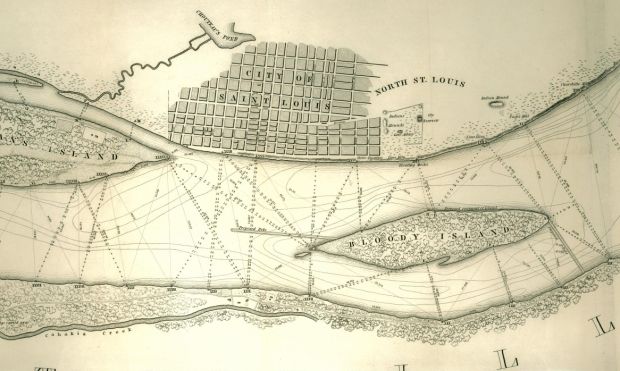
No we should not stop industry. We should put it in balance with other needs. The Mississippi is not scenic today because of that industry. We chose to make it not scenic. We "trained" the whole stretch of it. Consider where St. Louis used to be situated before the river was configured to accommodate industry.


The trade off is not a nice place to have a picnic. It is a nice place to live with clean air and water, biodiversity, seasonal water level shifts without without economic damage from floods, a higher quality of life, and crazy high real estate investment along the waterfront.

13K
Life MemberLife Member
13K

PostMar 16, 2016#199

USA Today - Peabody coal company may file for bankruptcy

http://www.usatoday.com/story/money/201 ... /81852054/

This soundbite might hurt Hilary here


1,092
Expert MemberExpert Member
1,092

PostMar 16, 2016#200

Demonstrates the flawed logic of this thread in general we should embrace being a fossil fuel energy hub. Though such a plan should never have even been considered let alone supported due to climate change and coal related health impacts, at least the economic collapse of the industry will illustrate what a poor choice it was to shower Peabody with tax breaks.

Read more posts (179 remaining)