

Whatever the population had been in the past, downtown is on the rise and population is increasing. I think when it comes down to it, what really matters are the qualitative improvements we see now and in the future.bonwich wrote:Now, for some reason, John Fox Arnold and some of the other big shots were quoting a downtown population of just 3400 in 1997. If anyone would like to believe that downtown population suddently went up by more than double between 1997 and 1998, I have some excellent subprime mortgage funds for sale.
Meanwhile, I smell some misinformation floating around.
innov8ion wrote:Whatever the population had been in the past, downtown is on the rise and population is increasing. I think when it comes down to it, what really matters are the qualitative improvements we see now and in the future.
Then say that. But don't say "downtown population has quadrupled," because that's just more clearly disprovable hype, and it makes the whole thing look like a shell game.
^ That's what I said about Metro numbers and I got my head bit off! I'm now on board with numbers than accurately depict the trend even if flawed.

Does anyone know where one can view the original arch ground plans on the internet? I walk by the old courthouse daily during the week but I've only been in there once during the past 10 years!

This is probably no help, but...
The Landmarks Letter (January/February 1996, volume 31, number 1), published by Landmarks Association of St. Louis, contains a lengthy article about the Old Rock House. This was a building (circa 1818) that stood at Chestnut and Wharf streets until it was moved to make way for the Arch. Originally, Saarinen planned to re-build the Old Rock House and use it as the main entrance to The Arch.
The article contains the same site map posted here by RBB. I have no idea if the article has ever been scanned and posted anywhere on the internet, but you could check with Landmarks Association.
The Landmarks Letter (January/February 1996, volume 31, number 1), published by Landmarks Association of St. Louis, contains a lengthy article about the Old Rock House. This was a building (circa 1818) that stood at Chestnut and Wharf streets until it was moved to make way for the Arch. Originally, Saarinen planned to re-build the Old Rock House and use it as the main entrance to The Arch.
The article contains the same site map posted here by RBB. I have no idea if the article has ever been scanned and posted anywhere on the internet, but you could check with Landmarks Association.
was there any protest in the 1930's about the demolition of the ENTIRE riverfront??? Landmarks??
^If you mean Landmarks Association of St. Louis, they were a couple of decades too late. They weren't founded until 1959.

I've got an honest question.
If the plan has not been fulfilled, why not propose that Congress fund the completion? (why would the city want to take it on?)
If the plan has not been fulfilled, why not propose that Congress fund the completion? (why would the city want to take it on?)
Matt wrote:I've got an honest question.
If the plan has not been fulfilled, why not propose that Congress fund the completion? (why would the city want to take it on?)
I believe the plan has been fulfilled. My understanding is that all the extra stuff - restaurants, frontier village, etc - were not in the final, approved plan.
They keep citing milleneum park as the kind of thing they would like to do on the Arch grounds. But according to Google Maps Distance Calculator, Millenum Park is no closer to the center of Grant Park (Buckingham Fountain) than Laclede's Landing or Chouteau Landing are from the center of the Arch. So why not build St. Louis's Milleneum park on either end of the Arch Grounds?
Thanks but I'm still not understanding the thinking in the Mayor's office.
If improvements to a national monument and parkland are required, then why wouldn't the federal government pay for them?
If improvements are needed for I-70 in downtown (a tunnel), then why wouldn't DOT pay for them?
Maybe what is needed is to push back quite a lot on D.C.
If improvements to a national monument and parkland are required, then why wouldn't the federal government pay for them?
If improvements are needed for I-70 in downtown (a tunnel), then why wouldn't DOT pay for them?
Maybe what is needed is to push back quite a lot on D.C.
Gary Kreie wrote:They keep citing milleneum park as the kind of thing they would like to do on the Arch grounds. But according to Google Maps Distance Calculator, Millenum Park is no closer to the center of Grant Park (Buckingham Fountain) than Laclede's Landing or Chouteau Landing are from the center of the Arch. So why not build St. Louis's Milleneum park on either end of the Arch Grounds?
Indeed - there's the old power plant north (and lots of space north of that) and Chouteau's Landing and the Ice House? district to the south - why in the world doesn't the city concentrate on these areas!?!?! So what if there's a restaurant for tourists at the arch if the grounds are still surrounding by vacant and abandoned buildings?
This was forwarded to me by those AIA people:
Eero Saarinen’s Writing….
Given the on going dialogues about the Arch grounds, we reprint a writing from Eero Saarinen giving his perspective on the arch grounds experience. We do not know the date this was written. We thank Harry Richman, AIA for providing us this fascinating Saarinen perspective. It’s rather lengthy, but well worth the read.
Arch Perspective from Eero Saarinen
Perhaps the best way to explain the various things on the model is by taking an imaginary tour through the model. Let us imagine that the time is a few years hence and that the whole Memorial is built, and that you are taking the day off to show the Memorial to some very good friends who have come to visit you from far away.
You are approaching the park from the south on the new elevated super-highway. Already, from far away, the stainless steel arch can be seen. You tell your friends that the arch is 590 feet high, higher than the Washington Monument; that is contains 2500 tons of stainless steel; and that you will take them to the top of the arch before the day is over.
You turn into the park at the Washington Avenue entrance and drive down a gentle slope. To your right, you have a thickly wooded hill which now obstructs your view of the arch. Just as you turn onto the observation plaza, where you stop your car, a fine view unfolds. On the right, you see a solid mass of trees; in front, a huge simple law with the arch soaring skyward; and on the left, the broad Mississippi River. It is here that your friends really realize how large the arch is. The little Manuel Lisa Warehouse at the base of the arch emphasizes the scale of the monument.
Your plan for the tour begins with lunch at the levee restaurant, so while you eat, you watch the activity on the river and talk about the tremendous river traffic that one was here.
After lunch you wander up the hill and come upon the Campfire Theatre just as a gentleman from the National Park Service begins his lecture of this historic site. Your friends hear how Laclede and Chouteau founded the city; how the early pioneers trekked from the East and brought their covered wagons by steamboat, down the Ohio and up the Mississippi to St. Louis; and how, from the riverfront, great wagon trains began their perilous journey to open the new West. It was here that the historic Lewis and Clark Expedition was outfitted. Your friends are told how a steamboat brought up the river from New Orleans the first locomotive to be delivered west of the Mississippi River, about the Louisiana Purchases and Three Flag Day, and many other things.
After you leave the Campfire Theatre, you have walked only a short distance through the woods when a clearing widens and you come upon a little village of early pioneer houses. It is a different village than what we see today. The houses are unpretentious, with large porches, but thy have a character all their own. House and porch are covered by a large shingle roof, and around every house there is a stockade. There is a carriage and buckboard, standing near the well not far from the tool house. It is a picture of everyday life in this pioneer village a hundred and fifty years ago. You and your friends go through a few of these houses and you find everything needed for life of that time - the guns, the chest, the kitchen utensil and even the bread in the oven.
The walk now takes you onto the Mall, a gently sloping meadow from the Courthouse to the river. We are now nearer the arch, which seems to dominate the whole area. Your friends want to see the Old Courthouse, and you take them there and tell them about the Dred Scott Case and other interesting incidents.
From here you wander back to the park. The first thing that you and your friends inspect is the Old Courthouse, earlier named the Cathedral of St. Louis of France. Your friends are impressed by the little court of restored old St. Louis buildings that are next to the Cathedral and the charm of the architecture of that time in its proper setting. They are a bit disappointed when they find they can’t walk into one of these buildings because it is a parish house; but they walk through the church museum, as well as some of the other buildings that are open for inspection, just like the buildings in Williamsburg.
You walk down a few steps through the little formal garden and into the Architectural Museum where they are many more interiors and scenes of the buildings of old St. Louis. From here your route takes you through the Historic Museum. This is not an ordinary museum which, through animated exhibitions, sound tracks and other modern devices, bring to life Jefferson and his time.
Then you take them up the ramp into the garden terraces on the roof of the Museum and to the outdoor care where you have well-deserved refreshments and a short rest. From here they have a beautiful view of the Mississippi and Eads Bridge with the arch in the foreground. It is time for dinner, so you down to the terraces to the River Restaurant, which I suppose, is famous for its seafood.
When you have finished dinner it is already dark; but the historic arcade is illuminated and you take your fiends down the 100 ft. wide stairway to the arcade. While you are walking along the arcade you come to little courts where, through sculpture and painting, the significant events of the Louisiana Purchase are depicted. One court portrays, through sculpture, the signing of the Louisiana Purchase; one tells the story of the westward movement, one where fur-trading and trapping are memorialized, and another pays homage to Lewis and Clark’s great expedition. There is a large mural which shows the St. Louis waterfront one hundred years ago, and so on.
From here you walk across the lawn towards the arch and you tell your friends about the construction of this monument. The foundation goes deep into bed rock. There is a structural steel skeleton-like bridge construction under the ¾” covering of stainless steel, but the stainless steel skin is an integral part of the construction. Welded together, it forms a continuous impregnable shell. You tell your friends how the arch was built.
New the Manuel Lisa Warehouse, we pass through a tunnel to the elevator that takes you to the observation corridor at the top of the arch. The elevator cab is different from anything you have ever seen before, because it has to have some of the characteristics of a caterpillar – not a caterpillar truck, but the kind that climbs on trees. The cab is made out of several small independently hung compartments which enable it to load horizontally, travel almost vertically, and unload on an incline. Within this conveyance, you new ascend to the top of the arch. The doors open and you are in the observation corridor.
Through the windows you see a beautiful sight. The whole city is glittering and glistening below. You see the great plains beyond the city, and you can see in your mind the great droves of people who landed here and passed under your very feet on their way to open up the West.
Eero Saarinen’s Writing….
Given the on going dialogues about the Arch grounds, we reprint a writing from Eero Saarinen giving his perspective on the arch grounds experience. We do not know the date this was written. We thank Harry Richman, AIA for providing us this fascinating Saarinen perspective. It’s rather lengthy, but well worth the read.
Arch Perspective from Eero Saarinen
Perhaps the best way to explain the various things on the model is by taking an imaginary tour through the model. Let us imagine that the time is a few years hence and that the whole Memorial is built, and that you are taking the day off to show the Memorial to some very good friends who have come to visit you from far away.
You are approaching the park from the south on the new elevated super-highway. Already, from far away, the stainless steel arch can be seen. You tell your friends that the arch is 590 feet high, higher than the Washington Monument; that is contains 2500 tons of stainless steel; and that you will take them to the top of the arch before the day is over.
You turn into the park at the Washington Avenue entrance and drive down a gentle slope. To your right, you have a thickly wooded hill which now obstructs your view of the arch. Just as you turn onto the observation plaza, where you stop your car, a fine view unfolds. On the right, you see a solid mass of trees; in front, a huge simple law with the arch soaring skyward; and on the left, the broad Mississippi River. It is here that your friends really realize how large the arch is. The little Manuel Lisa Warehouse at the base of the arch emphasizes the scale of the monument.
Your plan for the tour begins with lunch at the levee restaurant, so while you eat, you watch the activity on the river and talk about the tremendous river traffic that one was here.
After lunch you wander up the hill and come upon the Campfire Theatre just as a gentleman from the National Park Service begins his lecture of this historic site. Your friends hear how Laclede and Chouteau founded the city; how the early pioneers trekked from the East and brought their covered wagons by steamboat, down the Ohio and up the Mississippi to St. Louis; and how, from the riverfront, great wagon trains began their perilous journey to open the new West. It was here that the historic Lewis and Clark Expedition was outfitted. Your friends are told how a steamboat brought up the river from New Orleans the first locomotive to be delivered west of the Mississippi River, about the Louisiana Purchases and Three Flag Day, and many other things.
After you leave the Campfire Theatre, you have walked only a short distance through the woods when a clearing widens and you come upon a little village of early pioneer houses. It is a different village than what we see today. The houses are unpretentious, with large porches, but thy have a character all their own. House and porch are covered by a large shingle roof, and around every house there is a stockade. There is a carriage and buckboard, standing near the well not far from the tool house. It is a picture of everyday life in this pioneer village a hundred and fifty years ago. You and your friends go through a few of these houses and you find everything needed for life of that time - the guns, the chest, the kitchen utensil and even the bread in the oven.
The walk now takes you onto the Mall, a gently sloping meadow from the Courthouse to the river. We are now nearer the arch, which seems to dominate the whole area. Your friends want to see the Old Courthouse, and you take them there and tell them about the Dred Scott Case and other interesting incidents.
From here you wander back to the park. The first thing that you and your friends inspect is the Old Courthouse, earlier named the Cathedral of St. Louis of France. Your friends are impressed by the little court of restored old St. Louis buildings that are next to the Cathedral and the charm of the architecture of that time in its proper setting. They are a bit disappointed when they find they can’t walk into one of these buildings because it is a parish house; but they walk through the church museum, as well as some of the other buildings that are open for inspection, just like the buildings in Williamsburg.
You walk down a few steps through the little formal garden and into the Architectural Museum where they are many more interiors and scenes of the buildings of old St. Louis. From here your route takes you through the Historic Museum. This is not an ordinary museum which, through animated exhibitions, sound tracks and other modern devices, bring to life Jefferson and his time.
Then you take them up the ramp into the garden terraces on the roof of the Museum and to the outdoor care where you have well-deserved refreshments and a short rest. From here they have a beautiful view of the Mississippi and Eads Bridge with the arch in the foreground. It is time for dinner, so you down to the terraces to the River Restaurant, which I suppose, is famous for its seafood.
When you have finished dinner it is already dark; but the historic arcade is illuminated and you take your fiends down the 100 ft. wide stairway to the arcade. While you are walking along the arcade you come to little courts where, through sculpture and painting, the significant events of the Louisiana Purchase are depicted. One court portrays, through sculpture, the signing of the Louisiana Purchase; one tells the story of the westward movement, one where fur-trading and trapping are memorialized, and another pays homage to Lewis and Clark’s great expedition. There is a large mural which shows the St. Louis waterfront one hundred years ago, and so on.
From here you walk across the lawn towards the arch and you tell your friends about the construction of this monument. The foundation goes deep into bed rock. There is a structural steel skeleton-like bridge construction under the ¾” covering of stainless steel, but the stainless steel skin is an integral part of the construction. Welded together, it forms a continuous impregnable shell. You tell your friends how the arch was built.
New the Manuel Lisa Warehouse, we pass through a tunnel to the elevator that takes you to the observation corridor at the top of the arch. The elevator cab is different from anything you have ever seen before, because it has to have some of the characteristics of a caterpillar – not a caterpillar truck, but the kind that climbs on trees. The cab is made out of several small independently hung compartments which enable it to load horizontally, travel almost vertically, and unload on an incline. Within this conveyance, you new ascend to the top of the arch. The doors open and you are in the observation corridor.
Through the windows you see a beautiful sight. The whole city is glittering and glistening below. You see the great plains beyond the city, and you can see in your mind the great droves of people who landed here and passed under your very feet on their way to open up the West.
Interesting reading. Thanks for posting that, 'hinge.
BTW, the "Manuel Lisa Warehouse" he refers to is more comonly known as "The Old Rock House" (not the new bar just built south of Downtown, but the original, long-since-lost relic from the early days). See my post from Sep. 2.
BTW, the "Manuel Lisa Warehouse" he refers to is more comonly known as "The Old Rock House" (not the new bar just built south of Downtown, but the original, long-since-lost relic from the early days). See my post from Sep. 2.
Eero Saarinen got it right.
Many other smaller minds have muddied it up. Is the 'Big Muddy" a river or a thought process?
Many other smaller minds have muddied it up. Is the 'Big Muddy" a river or a thought process?
In a joint announcement, the City and the Air Force Foundation announced plans to install a large sculpture along the riverfront at the Arch grounds. Unlike Chicago who paid a small fortune to some pompus sculptor for Millenium Park, the St. Louis fathers got this thing cheap -- the Air Force had it commissioned a few years ago. The Park Service objected at first, but then the City pointed out that the Park Service would allowed to operate an interpretive center inside, along with a horizontal people mover, an expanded gift shop, and covered parking for the Park Director. Here it is what it will look like resting along the riverfront near the South leg of the Arch.
![]()


It's kind of an ugly structure. What is it supposed to be? Sometimes I really hate abstract art.
I only dislike that it appears to cut off the main stairs leading from the river to the arch.

Is that a nuclear missle accidentally left hanging on the underside of that monument???
^But the smell of burning jorts and woven belts would hang in the air downtown for weeks!
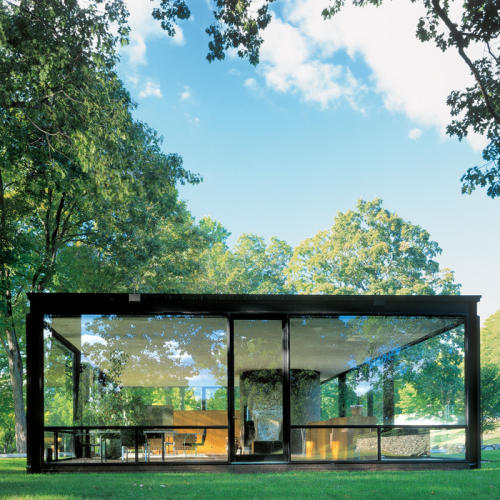
I think the retail around the base of the arch should be based along the lines of Philip Johnson's "Glass House" It doesn't discrupt the "serenity" of the arch grounds, but accomplishes the goal of adding retail, shops, cafes, etc. It is is minimalist and architecturally inspiring. Any other type of building on these grounds, is NOT an option imho.