Very, very interesting read about the fight over an old elevated freeway in Syracuse, New York.
You could write the same article about St. Louis and most other cities too.
Nice to see one of my ScienceDaily emails come into play on this site with this interesting little study.
Some of it is a bit common sense, but it's always nice to see urban theory be given a scientific treatment and some data.
If city planners want more people to visit community greenspaces, they should focus on "putting humans in the equation," according to a new study from University of Arizona researchers.
The main finding, lead researcher Adriana Zuniga-Teran says, is simple: the easier and safer it is to get to a park, the more likely people are to visit the park frequently.
The paper is available online and set for publication in October in Landscape and Urban Planning.
Zuniga-Teran, assistant research scientist at the College of Architecture, Planning and Landscape Architecture and the Udall Center for Studies in Public Policy, studies greenspace in cities. She says walkability -- or how easy and safe it is for someone to walk from home to a greenspace -- is a deciding factor in how often people visit parks.
Tucson was an ideal location for the study because it is "almost surrounded by protected land" and features hundreds of parks scattered throughout the city, she said. Researchers gathered data from people in parks as well as from people in their homes, which Zuniga-Teran says is significant, as most similar previous efforts she could find focused exclusively on one group or the other.
Results From Residents
The data from those surveyed in their homes show that several factors that play into a neighborhood's walkability can significantly increase how often people visit greenspaces. For example, higher levels of perceived traffic safety and surveillance -- or how well people inside nearby buildings can see pedestrians outside -- corresponded with more frequent visits.
The research also suggests that people who travel to greenspaces by walking or biking are three-and-a-half times more likely to visit daily than those who get there by other means. Residents who have to drive are more likely to go only monthly.
Proximity to a park, though, played no significant role in how often people visited a park, Zuniga-Teran said.
"This was surprising because oftentimes we assume that people living close to a park are more likely to visit the park and benefit from this use."
Different levels of walkability may explain this result.
"Let's say you live in front of a huge park, but there's this huge freeway in the middle," Zuniga-Teran explained. "You're very close, but just crossing the major street, you might need to take the car and spend a long time in that intersection."
In situations like that, she said, a person probably won't visit that park frequently despite living close to it.
Results From Greenspace Users
The team of researchers, all from the UA, gathered data from more than 100 people visiting Rillito River Park and found only one walkability factor was significantly linked to more frequent visits: traffic safety. Those in the park who indicated their neighborhoods have fewer traffic-related safety concerns were one-and-a-half times more likely to visit greenspaces daily than those who reported concerns about traffic-related safety.
Unlike the people surveyed in their homes, those surveyed at greenspaces indicated that proximity is a major factor in how often they visit, with those who live close to greenspaces being six times more likely to go daily.
Moving Forward
It's important to gather and use this kind of information for the sake of human and environmental health, Zuniga-Teran says. Greenspaces clean the air and water, which benefits every resident of a community, she said. And when people use parks, that greenspace is more likely to be preserved.
It's up to community planners to use the research to shape policy, so that neighborhoods are developed in ways that connect residents more easily and safely with public greenspaces. For example, she said, the continuing emergence of gated communities can interrupt the flow to greenspaces. Cul-de-sac-heavy neighborhoods can do the same thing. Developers of those types of neighborhoods, Zuniga-Teran suggested, could work with city planners to "open a door to the park" by creating pathways that enhance connectivity.
Developers also could use the findings as a springboard into looking into whether their perceptions of walkability match those of the residents living in their communities, she says.
"We might think we are designing walkable neighborhoods," Zuniga-Teran says, "but people might not feel like that."
The next step, she hopes, is that researchers will take a deeper dive into what amenities or design features can draw new people into parks. Those could range from additional lighting and separate bike lanes to more accessibility for people with disabilities. Her team is continuing the effort with more detailed surveys in Tucson this summer.
Philip Stoker, co-author and assistant professor of planning and landscape architecture, says he hopes other research teams follow suit.
"I would like to see researchers across the country replicate this study to add external validity to our case study of Tucson. It is an interesting line of research that connects how people see their world with their own behaviors," he said. "In our context, we hope to see further evidence to support which perceptions influence the probability of visiting urban parks."
Zuniga-Teran says she hopes this and future research into greenspace use will show community leaders that, when it comes to improving public and environmental health by getting people into parks, "urban planning and architecture matter."
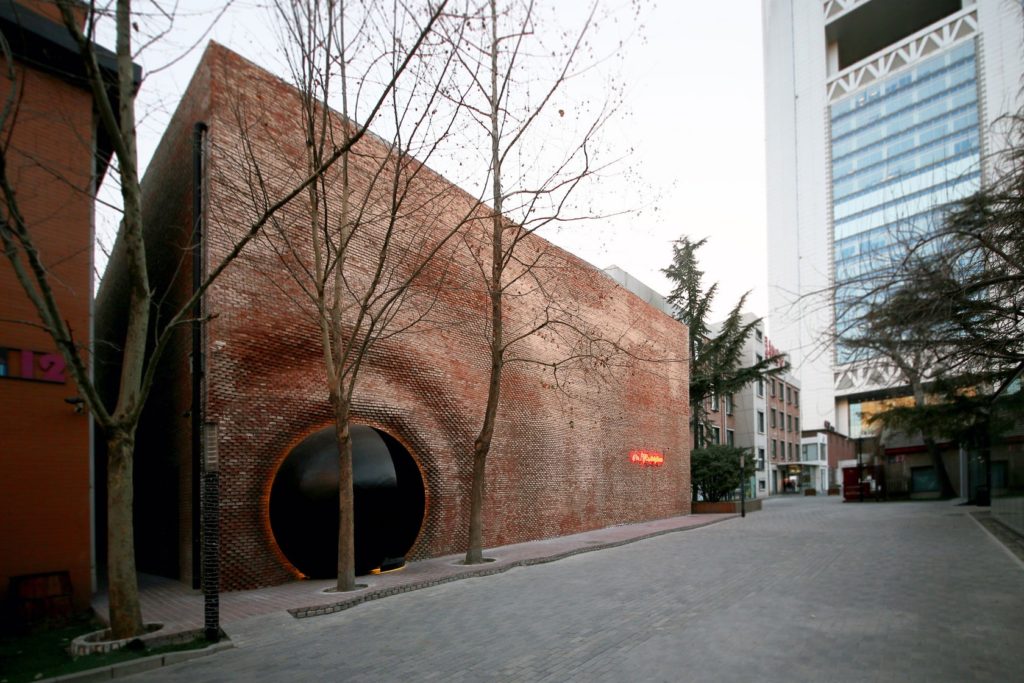
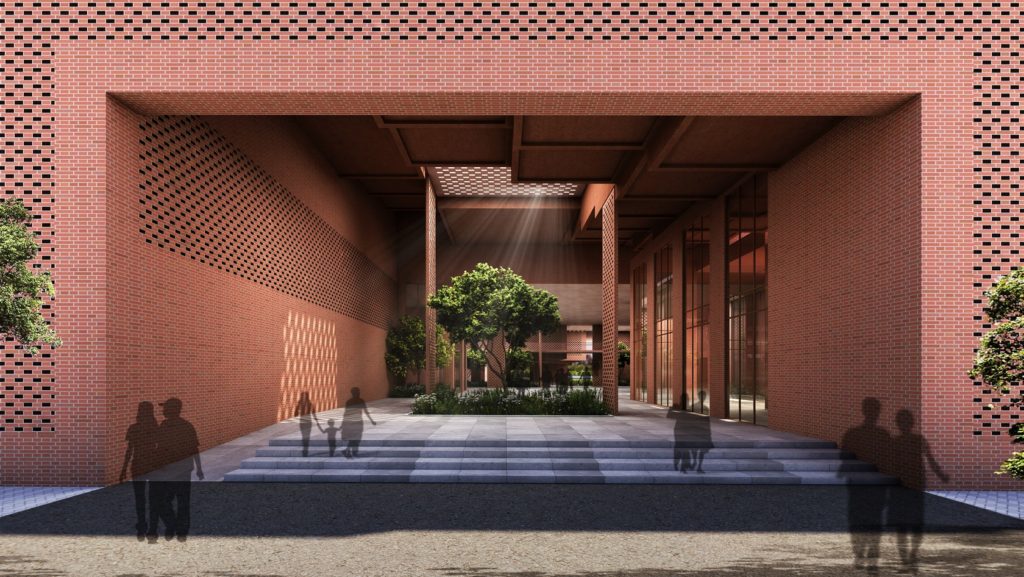
St. Louis is well known as a brick city. But using brick doesn't have to limit us to neo-traditional architecture or modernist boxes. I'd love to see some local developers push the envelope of what can be done with brick.
This was sparked, or at least nudged along, by the 14th street "closure" in NYC, in case you haven't been following it. Basically private cars are banned on most of 14th There were several op-eds and even lawsuits crying fears of increased traffic on 13th & 15th streets, or any nearby streets and avenues. Since the implementation, measured traffic on 13th street actually decreased. I can't find exact numbers right now but iirc bus ridership on 14th street has increased 4% on weekdays and 30% on weekends over September.
I'm not a huge proponent of bus lanes in STL, primarily because we don't really have any spots with both high bus frequency (multiple route on one road) and huge congestion. Chippewa and Grand are our two highest ridership routes, and both have decent traffic, but lack the frequency to justify bus lane IMO. I'd much rather see a GPS signal priority system. Simply cutting out red light time from our bus routes would do wonders.
An interesting engineering podcast I have lately been following goes into the development of traffic engineering and the history of some of the figures and ideas we have to thank for our current system: "Left to their own devices traffic engineers will always build New Jersey."
The Sunday PD had a story where several prominent locals revealed the books that "changed their lives". Mayor Krewson named "The Death and Life of Great American Cities", by Jane Jacobs.
Excerpt from the New York Times article - "The myth of the urban boomer"
Baby boomers are such a large group that you can find them practically everywhere in great numbers, including in urban areas.
Maybe that’s the reason many news media accounts have promoted the idea that boomers are returning to cities at a rapid rate. It seems to make sense. Many downtowns are safer and livelier than they were 30 years ago. At a certain point, downsizing and moving back to the city has appeal — it’s closer to work and all those interesting things to do, and the children might have finally left the nest.
There’s one problem. The storyline is wrong: Boomers today are actually less urban than previous generations of older people. In 2018, 17.8% of people ages 54-72 lived in urban neighborhoods, defined based on neighborhood density. That’s down from 18.2% for that age group in 2010, 19.9% in 2000, and 21.6% in 1990. The downward trend is similar whether looking at all urban neighborhoods or just the highest-density ones.
People in this age group are increasingly living in ways usually associated with cities. In 2018, people ages 54-72 were (1) more likely to rent and (2) more likely to live in multiunit buildings than adults of similar ages in the past. Older adults of today are less likely to own suburban single-family homes than was the case 10 or 20 years ago. However, the big increase in renting and apartment living for this age group has not been in urban neighborhoods. Instead, it has been in suburban rentals, both for apartments and for single-family homes.
For developers and public officials in cities, the rising number of older city dwellers is real, and it matters. There is growing demand for the housing features and public services that many older adults prefer. More of the urban housing stock will need to be homes that work for seniors. But that’s not because boomers love cities or are more drawn to urban living than previous generations — just the opposite. It’s simply that there are more of them, almost everywhere.
This is similar to an article I wrote for CitysceneSTL around this time last year proposing that local developers should look at using wood/ CLT as a cheap alternative to constructing new infill. I could see a tower rising in the Cortex or Downtown West similar to that of Reverb in KC using CLT. What I like about this video is that it provides specific examples of where each method is used and goes more in-depth. I love The B1M!
^ Love their idea for the space under the 3rd Street Viaduct.
Read through this tonight and found it interesting. While there is no mention of '80s Union Station or St. Louis Centre, the Rouse Company and their festival marketplaces feature prominently. https://www.citylab.com/design/2020/02/ ... ll/602935/
Are car-free streets becoming a thing? Didn't we try this in the '70s and decide it didn't work? Seems more and more cities are thinking about it again.
"Downtown Los Angeles’s Broadway Street may soon go car-free"
Are car-free streets becoming a thing? Didn't we try this in the '70s and decide it didn't work? Seems more and more cities are thinking about it again.
There is a night and day difference between the car free streets of '70s town centers and 2020 NYC 14th Street / SF Market Street. The latter of which L.A. is trying to emulate. The biggest distinction being that they're doing this to improve bus service. The other distinction is that the '70s applications were carried out to try and save or revive dying streets. 14th Street and Market Street are thriving streets in thriving cities. I don't know whole lot about downtown L.A. but in the brief time I've spent there, I'd say it's much busier than Minneapolis, Nashville, or Denver but not a busy as the Chicago Loop, if that will give you some frame of reference. Broadway was pretty busy when we were there, comparable to State in Chicago. I think it would do well. A lot of residents were pushing for Hollywood Blvd to go car free as well, which would be pretty incredible to see.
The article's author seems to be a bit mixed up, at first describing a "pedestrian-only zone", then going on to describe how bikes and buses would be allowed, similar to NYC's and SF's experiments.
Interesting Article from Zillow about Growth trends in American Cities. Check out the interactive map in the article and select St. Louis to see where our growth is and what type of housing stock is being built where:
Interesting Article from Zillow about Growth trends in American Cities. Check out the interactive map in the article and select St. Louis to see where our growth is and what type of housing stock is being built where:
Very cool. I would like to see more growth/new construction, particularly in multifamily construction, in So City neighborhoods (SoHa, NoHa, Clifton Heights, STL Hills, etc.), and the "suburbs" touching/nearby the city limits like Shrewsbury, Webster, Maplewood, and Affton. I realize So. City is already dense and not a ton of options, but it would be nice to see some of the underutilized commercial properties along S. Kingshighway, Gravois, and Chippewa/Watson redeveloped with adaptive reuse or blending.
^ good analysis from Kc.
KC and many other major cities across the US are going to face budgetary crisis between 2025 and 2040 caused by over annexation, too little density, and an infrastructure bill that far exceeds possibility.
In all of the City’s history, it got one thing right...
Don’t chase the suburbs....