Tapatalk

Lost Lindell House (5065 Lindell)

Lost Lindell House (5065 Lindell)

3,311
Life MemberLife Member
3,311

PostJun 24, 2010#1

This is so sad that this house was lost in the 40s(?) most likely to avoid paying taxes on it. We still have a majority of these, but it's still sad to see that something this great will NEVER be built again.

12K
Life MemberLife Member
12K

PostJun 24, 2010#2

There was a fantastic house at 3693 Lindell (the Castleman/MacKay Mansion) until not too many years ago. Right next to the Scottish Rite Cathedral. It's a parking lot now.

8,913
Life MemberLife Member
8,913

PostJun 24, 2010#3

One of the Roberts brothers lives there now.

2,190
Life MemberLife Member
2,190

PostJun 24, 2010#4

Moorlander wrote:One of the Roberts brothers lives there now.
Bygone St. Louis says otherwise. The Robertses live on the corner; Google satellite seems to confirm that 5065 is a vacant lot (and maybe part of the Roberts' current landholdings as well). I'll drive by soon and see what I can remember.

PostJun 24, 2010#5

Scary what you can find out immediately on the interwebs. 5061 is a vacant lot; 5045 is owned by Drs. Christopher and Kimberly Perry; 5035 is the Giganti house; the Robertses live at 5025, which doesn't extend to the corner; and 5015 and the corner lot are owned by Charlie Schmitt (!).

The oddball one is the Carney house (the one you dead-end into coming out of West Pine). It looks like its plat is part of 16 Westmoreland, but that doesn't make a whole lot of sense. I still have to drive by and see what its address is.

10K
AdministratorAdministrator
10K

PostJun 24, 2010#6

I wish the house at the northeast corner of Spring and Lindell was still standing.


12K
Life MemberLife Member
12K

PostJun 26, 2010#7

^That's the Castleman/MacKay Mansion I mentioned. Thanks for posting a photo. Can we blame this one on SLU too?

2,190
Life MemberLife Member
2,190

PostJun 28, 2010#8

I think it's a SLU parking lot now, but I'm almost certain SLU didn't own it when I was there (around 1980).

3,311
Life MemberLife Member
3,311

PostJun 28, 2010#9

I'm almost positive SLU had it torn down. they are pretty good at tearing down the density around their campus and putting up "green space" with gates and chintzy "art".. overall, an incredible asset to Midtown, but they could be SO much better. There was also a hotel at the corner of West Pine and Vandeventer that they tore down for a surface lot.
http://stldotage.blogspot.com/2008_10_01_archive.html

10K
AdministratorAdministrator
10K

PostJun 28, 2010#10

Yeah, I'd always heard that SLU was behind it as well. I'm pretty sure that the house was gone by the time I started school in 93.

2,190
Life MemberLife Member
2,190

PostJun 28, 2010#11

First reference I can find is that Scottish Rite did it:
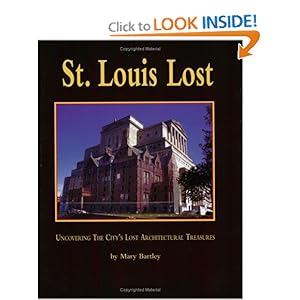
Bartley's book describes the red brick mansion that now is a ghost, up the street on the northeast corner of Lindell and Spring Avenue. It was built in 1897 for Judge Arthur Castleman and his wife, Lucie, who had no children. When Mrs. Castleman died as a widow in 1926, her house went to a niece, Suzanne Mackay, whose family lived in it for several generations until 1971.

Despite an effort by Landmarks Association to save it, the building was razed in 1982 and the site used as a parking lot for the nearby Scottish Rite Cathedral. The lot is now owned by St. Louis University.
A second, earlier reference (1985) says that the 1982 date is wrong, which I would tend to agree with, since I lived in Lewis Hall overlooking that corner in 1978.
He estimated that 10 percent of his plants came from the grounds of the old Castleman-Mackay house at Lindell and Spring, which was razed in 1973.
And Bobby Duffy wrote this in 1982, which is probably where the error (razed in 1982) in the most recent story came from:
Leon Strauss is president of Pantheon Corp. and developer of the Fox Theater on Grand Boulevard, around the corner from where the Castleman-Mackay House stood. Mary Strauss is responsible for refurbishing the interior of the movie house. The Strausses bought large sections of the fence that once surrounded the house, and they hope to bring the fence back to its old neighborhood.

'I'd like to see it used in the park directly across Grand from the theater, 'Strauss said.

Prices, according to William Fellenz, an antique dealer who specializes in architectural ornament, were 'fair. 'A stack of slate radiator covers went for $8, oak mantels were knocked down in the $200 to $300 price range, a pair of the terra cotta lions went for $400. The entrance door, which auctioneer Bruce Selkirk described as the 'piece de resistance 'of the sale, fetched $475.

The property sold at auction had been in storage and was from the estate of the late Albert Finer, who was in the scrap metal business. Finer bought the house from a tax- paying holding company of the Masonic Scottish Rite, which had acquired the house and land in 1972 from Judge Castleman's descendents.

2
New MemberNew Member
2

PostOct 25, 2015#12

I'm a little late to this discussion, but..
The Castleman-McKay house was vacated in 1971 and demolished in '73. I remember the sickening feeling I had the day I drove by and saw the front doors and windows removed. I attended the auction of the artifacts a few years later and acquired two pair of phenomenal interior sliding doors for $200.
The house was extraordinary, I always gave it a good look every single time I went by. In my opinion it was the finest (not necessarily the largest) of all the mansions ever built on Lindell, the raised site on the corner of Spring making it even more imposing. What you don't get from the photos is the beautiful coloring - it was built of a deep red face brick with sharp tiny joints, and matching terra cotta trim. The iron fencing was painted a similar color, and the whole effect was just incredible. It had a much more "urban" feel than the Lindell homes on larger lots west of Kingshighway. More like something in Boston where the tighter lots give the large houses a real big city feel. The architects were, in fact, from Boston, Renwick and Aspinall.

PostOct 25, 2015#13

BTW, at the time it was torn down the Castleman-Mackay mansion was allegedly to be replaced by a hotel that was never built. To add insult to injury, the vacant lot sat "unimproved" for several years before it was even paved to make a lousy surface parking lot. The most tragic residential loss ever on Lindell Blvd. which was once lined with large homes all the way from Grand to Kingshighway.

738
Senior MemberSenior Member
738

PostOct 31, 2015#14

Urban renewal can be measured in what's lost: village-like neighborhoods, creativity, crime, serendipity, some poverty. Consider Paris...
http://www.newrepublic.com/article/1232 ... -wild-once